Friday, October 28, 2011

MICROSCOPIC HAIR ANALYSIS: GRITS FOR BREAKFAST: "A FORENSIC TECHNIQUE THAT WAS "JUDICIALLY ACCEPTED FOR DECADES" CALLED "HIGHLY UNRELIABLE".

"The 2009 NRC-NAS report contained an assessment of hair analysis, says the manual, "observing that there are neither 'scientifically accepted [population] frequency' statistics for various hair characteristics nor 'uniform standards on the number of features which must agree before an examiner may declare a 'match'" The report concluded that "testimony linking microscopic hair analysis with particular defendants is highly unreliable," recommending DNA testing of the evidence where practical. Hair analysis is better at excluding suspects than individuating them: E.g., they could tell if someone had blonde with straight hair vs. curly hair from an African American, whether hair had been died, etc.. But even the best estimates of the technique's accuracy say the possibility of a false match is 1 in 4,500 for scalp hair and 1 in 800 for pubic hair. Other proficiency studies, have found much higher "false positive" rates - sometimes above 12%. Even more damning, an examination of the first 137 DNA exonerations found that 38% included invalid hair comparison testimony, with most of the cases involving "invalid individualizing claims.""

GRITS FOR BREAKFAST; "Grits for Breakfast says it "looks at the Texas criminal justice system, with a little politics and whatever else suits the author's (Scott Henson) fancy thrown in. All opinions are my own. The facts belong to everybody." Its motto: "Welcome to Texas justice: You might beat the rap, but you won't beat the ride."

Reminder: Association in the Defence of the wrongly Convicted colloquium "Injustice Speaks"; Friday October 28, 2011;

----------------------------------------------------------------------------------

""Having recently examined advice being given to judges on how to interpret the science or lack thereof behind ballistics evidence, I thought I'd continue in that vein with a discussion of "microscopic hair analysis" from the same source (see the online version here, beginning on p. 112)," the Grits for Breakfast post published on October 27, 2011 begins, under the heading, "Forensic technique that was "judicially accepted for decades" called "highly unreliable".

"Both analyses are drawn from the third edition of the "Reference Manual on Scientific Evidence," produced by the Federal Judicial Center and the National Research Council of the National Academies of Science," the post continues.

"While microscopic hair evidence has been "judicially accepted for decades," says the manual, you can add it to the list as "another forensic identification discipline that is being reappraised today."

The 2009 NRC-NAS report contained an assessment of hair analysis, says the manual, "observing that there are neither 'scientifically accepted [population] frequency' statistics for various hair characteristics nor 'uniform standards on the number of features which must agree before an examiner may declare a 'match'".

The report concluded that "testimony linking microscopic hair analysis with particular defendants is highly unreliable," recommending DNA testing of the evidence where practical.
Hair analysis is better at excluding suspects than individuating them: E.g., they could tell if someone had blonde with straight hair vs. curly hair from an African American, whether hair had been died, etc..

But even the best estimates of the technique's accuracy say the possibility of a false match is 1 in 4,500 for scalp hair and 1 in 800 for pubic hair.

Other proficiency studies, have found much higher "false positive" rates - sometimes above 12%. Even more damning, an examination of the first 137 DNA exonerations found that 38% included invalid hair comparison testimony, with most of the cases involving "invalid individualizing claims."


In the courtroom, prior to the US Supreme Court's Daubert opinion in 1993, "an overwhelming majority of courts accepted expert testimony that hair samples are microscopically indistinguishable."

However, 1990 decision in North Carolina held it an error to admit testimony that"it would be improbable that these hairs would have originated from another individual.".

The court held that such testimony amounted "effectively to positive identification of the defendant."

The first, significant post-Daubert challenge to such evidence came in Williamson v. Reynolds out of Oklahoma in 1995, where a district court was "unsuccessful in its attempt to locate any indication that expert hair comparison testimony meets any of the requirements of Daubert."

Before retrial, that particular defendant was exonerated by exculpatory DNA evidence.
The section of the manual on microscopic hair analysis concludes:
Post-Daubert, many cases have continued to admit testimony about microscopic hair analysis. In 1999, one state court judicially noticed the reliability of hair evidence, implicitly finding this evidence to be not only admissible but also based on a technique of indisputable validity. In contrast, a Missouri court reasoned that, "without the benefit of population frequency data, an expert overreached in opining to "a reasonable degree of certainty that the unidentified hairs were in fact from" the defendant. The NRC report commented that there appears to be growing judicial support for the view that "testimony linking microscopic hair analysis with particular defendants is highly unreliable."
RELATED: Go here to read the manual online or purchase a hardcopy. See also: Judges cautioned against reliance on overstated ballistics testimony.

The post can be found at:

http://gritsforbreakfast.blogspot.com/

PUBLISHER'S NOTE: The Toronto Star, my previous employer for more than twenty incredible years, has put considerable effort into exposing the harm caused by Dr. Charles Smith and his protectors - and into pushing for reform of Ontario's forensic pediatric pathology system. The Star has a "topic" section which focuses on recent stories related to Dr. Charles Smith. It can be found at:

http://www.thestar.com/topic/charlessmith

Information on "The Charles Smith Blog Award"- and its nomination process - can be found at:

http://smithforensic.blogspot.com/2011/05/charles-smith-blog-award-nominations.html

Harold Levy: Publisher; The Charles Smith Blog; hlevy15@gmail.com;

Thursday, October 27, 2011

HANK SKINNER: PROMINENT TEXANS - INCLUDING A FORMER CRIMINAL APPEALS JUDGE - URGE TESTING THE UNTESTED DNA EVIDENCE; THE LETTER;


"Executing Mr. Skinner without testing all therelevant evidence would suggest official indifference to the possibility of error in this case and needlessly undermine public confidence in Texas’s criminal justice system."

LETTER FROM PROMINENT TEXAS OFFICIALS INCLUDING A FORMER GOVERNOR, A FORMER CRIMINAL APPEALS JUDGE, FORMER DISTRICT ATTORNEYS AND CURRENT TEXAS LEGISLATORS TO GOVERNOR RICK PERRY AND OTHERS;
--------------------------------------------------------

PUBLISHER'S NOTE: The American Civil Liberties association warns in its "Blog of Rights" that:


"If prosecutors don’t change course, on November 9th Hank Skinner could be the 476th person executed by the State of Texas since 1976. Problem is, Skinner, like Troy Davis, may well be innocent, and Texas prosecutors have so far blocked DNA testing of evidence that could prove it.

In March, over the objection of prosecutors, the United States Supreme Court cleared the way for Skinner to bring a federal civil rights lawsuit to compel DNA testing of the untested evidence. Even though that litigation remains pending and unresolved, prosecutors have obtained an execution date for Skinner and appear poised to execute him before the court rules on his claim.

The prosecutors’ stubborn combination of refusing to allow this DNA testing and insisting that the execution go forward is unconscionable.

A letter today from prominent Texas officials including a former governor, a former criminal appeals judge, former district attorneys and current Texas legislators, eloquently spelled out why the testing should be done before Skinner’s execution date:

Executing Mr. Skinner without testing all the relevant evidence would suggest official indifference to the possibility of error in this case and needlessly undermine public confidence in Texas’s criminal justice system.

We would add that testing this evidence is necessary to make sure another innocent man is not executed this year. Is that too much to ask?"

----------------------------------------------------------

The letter:

October 27, 2011 The Honorable Rick Perry Governor of Texas 1100 San Jacinto Street, Suite 412 Austin, TX 78701 The Honorable Greg Abbott Attorney General of Texas 300 W. 15th Street Austin, TX 78701 The Honorable Lynn Switzer District Attorney, 31st Judicial District of Texas 205 N. Russell Street, Suite 413 Pampa, TX 79065

Dear Governor Perry, Attorney General Abbott and District Attorney Switzer, We, the undersigned current and former elected officials and former prosecutors and judges, write to urge you to test the untested DNA evidence in the Hank Skinner case before proceeding with his execution, presently set for November 9.

We are all Texans, and we have great respect for each of you and the offices you hold. At the
same time, we all also share grave and growing concerns about the State’s stubborn refusal to date to test all the evidence in the Skinner case. Executing Mr. Skinner without testing all the relevant evidence would suggest official indifference to the possibility of error in this case and needlessly undermine public confidence in Texas’s criminal justice system.

We believe that the death penalty is an appropriate punishment for certain crimes, and we understand that the DNA testing might well show that Mr. Skinner is deserving of that punishment. But we are also steadfast in our belief that when it comes to the ultimate penalty, we must do everything in our power to ensure certainty before taking the irreversible step of carrying out an execution.

We are not alone in this view. There is widespread public support in
Texas for using DNA testing, whenever it is available, to ensure the greatest possible accuracy in our criminal justice system.

As you all know, in May the Legislature enacted reforms to Texas’s
post-conviction DNA testing law precisely to eliminate procedural barriers that in some cases – like Mr. Skinner’s – had gotten in the way of the search for the truth.

That legislation passed
with overwhelming bipartisan support, not least because polls show that eighty-five percent of Texans agree that prisoners should have broad access to DNA testing.

Testing the DNA evidence in Mr. Skinner’s case is not only common sense, it is a public safety issue of great consequence.

This month’s exoneration of Michael Morton, after 25 years of
wrongful imprisonment, highlights why state officials should consent to DNA testing when untested evidence is available.

In Mr. Morton’s case, the DNA testing not only proved his
innocence, but identified the true perpetrator of the crime. In many cases, there is no DNA evidence available to be tested.

That is not true in Mr. Skinner's
case. Indeed, there are multiple pieces of key untested evidence found at the crime scene, including a blood- and sweat-stained windbreaker jacket similar to one regularly worn by an alternative suspect; two knives, at least one of which was a likely murder weapon; a bloody towel; the victim’s fingernail clippings, which may have the perpetrator’s blood under them; and swabs from a sexual assault examination kit.

There is simply no justifiable reason why Texas continues to waste taxpayer dollars in its decade-long fight to prevent scientific testing in Mr. Skinner’s case.

We implore you to take the
lead in the search for truth in this case. Test the DNA evidence before moving forward with Mr. Skinner’s execution.

If that requires a brief reprieve of Mr. Skinner’s scheduled November 9
execution, that short delay will be a small price to pay to maintain public confidence in Texas’s criminal justice system.

Sincerely,
Jim Dunnam, Texas State Representative, District 57, 1997-2011; Senior Fellow, Texas First Foundation Rodney Ellis, Texas Senator, District 13, 1990 – present James A. Fry, James Fry P.C. 1982-present; Assistant District Attorney, Dallas County, Texas, 1980-1982; Former Chairman, Texas State Bar Grievance Committee Pete P. Gallego, Texas State Representative, District 74, 1991-present Carlos Garcia, Assistant District Attorney, Starr County, Texas, 1989-1991 Assistant District Attorney, Travis County, Texas, 1991-1995 Juan “Chuy” Hinojosa, Texas State Senator, District 20, 2002-present Norman E. Lanford, Judge, 339th District Court, 1985 – 1992, Visiting Judge, 1992 - 1997 Kenneth J. Mighell, United States Attorney, Northern District of Texas (1977-1981); Assistant United States Attorney, Northern District of Texas (1961-1977) Sam D. Millsap, Jr., District Attorney, Bexar County, San Antonio, Texas, 1983-1987 Joanne Musick, Assistant District Attorney, Harris County, 1998 – 2003 Earl D. Musick, Houston Police Dept., 1966-1999 (retired as lieutenant) Assistant District Attorney, Harris County Police Department, 1999-2003 Michol O’Connor, Justice, Court of Appeals, First District of Texas, 1988-2000; Assistant U.S. Attorney, Southern District of Texas, 1975-1978 Wendell A. Odom, Jr., Assistant District Attorney, Harris County, Texas, 1974-1978 Assistant United States Attorney, Southern District of Texas, 1978-1982 Morris L. Overstreet, Judge, Texas Court of Criminal Appeals, 1990-1998; Assistant District Attorney, Potter County, 1975-1980 Nat C. Perez, Jr., Brownsville Police Department, 1980 - 1989; Air Force Military Policeman, 1976-1980 Eddie Rodriguez, Texas State Representative, District 51, 2003-present Mark White, Chairman, Geovox Security, Inc.; Governor of Texas, 1983-1987; Attorney General of Texas, 1979-1983; Secretary of State of Texas, 1973-1977; Partner, Reynolds, White Allen & Cook, 1969-1973; Assistant Attorney General of Texas, 1965-1969

http://www.aclu.org/blog/capital-punishment/prominent-texans-call-dna-testing-november-execution-date

PUBLISHER'S NOTE: The Toronto Star, my previous employer for more than twenty incredible years, has put considerable effort into exposing the harm caused by Dr. Charles Smith and his protectors - and into pushing for reform of Ontario's forensic pediatric pathology system. The Star has a "topic" section which focuses on recent stories related to Dr. Charles Smith. It can be found at:

http://www.thestar.com/topic/charlessmith

Information on "The Charles Smith Blog Award"- and its nomination process - can be found at:

http://smithforensic.blogspot.com/2011/05/charles-smith-blog-award-nominations.html

Harold Levy: Publisher; The Charles Smith Blog; hlevy15@gmail.com;

BRENDA WAUDBY: SHE TAKES ANOTHER STEP IN BID TO CLEAR HER NAME. CLAIMS GUILTY PLEA TO CHILD ABUSE COERCED FOR WITHDRAWAL OF MURDER CHARGE;


""Madam Justice Michelle Fuerst ordered that Waudby's lawyer Julie Kirkpatrick is allowed to forward copies of interviews prepared during the Goudge Inquiry to three people interviewed during that inquiry. They include former Crown attorney Brian Gilkinson and Waudby's former lawyer James Hauraney.

The documents were protected by a ban during the Goudge Inquiry, which examined the work of disgraced pathologist Dr. Charles Smith."

REPORTER SARAH DEETH; PETERBOROUGH EXAMINER;

REMINDER: Association in the Defence of the wrongly Convicted colloquium "Injustice Speaks"; Friday October 28, 2011;

--------------------------------------------------------

PUBLISHER'S NOTE: It is clear from the evidence called at the Goudge inquiry that Brenda Waudby - an utterly innocent individual who's baby daughter had been murdered by her babysitter - had been required to plead guilty to a charge of child abuse under provincial legislation before the Crown would withdraw the the second-degree murder charge on the basis of medical opinions which showed she could not possibly have committed the crime. It is also clear that Dr. Charles Smith's opinion that there were injuries which preceded the attack on Baby Jenna - which led to her being wrongfully charged with murder - was also the basis for the provincial charge, along with what the police claimed to be a confession. Instead of receiving the sympathy and compassion she deserved as a grieving mother whose baby daughter had been murdered, Ms. Waudby, a grieving mother, was herself charged with the horrific crime and not surprisingly became a pariah in her community. Brenda Waudby has been given a raw deal by Ontario's criminal justice system. We can only hope that the Court will strike the plea that she felt compelled to make in the circumstances, allow her to call the fresh evidence which she says clears her of this offence, and go the rest of the distance necessary to fully clear her name.

HAROLD LEVY; PUBLISHER; THE CHARLES SMITH BLOG.

----------------------------------------------------------

"Brenda Waudby's attempts to get a child abuse conviction overturned continues to move forward in incremental steps," the Peterborough Examiner story by reporter Sarah Deeth published earlier today under the heading, "Waudby takes another step to clear her name," begins.

"Her case was spoken to in a Newmarket courtroom Wednesday morning," the story continues.

"Madam Justice Michelle Fuerst ordered that Waudby's lawyer Julie Kirkpatrick is allowed to forward copies of interviews prepared during the Goudge Inquiry to three people interviewed during that inquiry. They include former Crown attorney Brian Gilkinson and Waudby's former lawyer James Hauraney.

The documents were protected by a ban during the Goudge Inquiry, which examined the work of disgraced pathologist Dr. Charles Smith.

Smith erroneously stated that Waudby's daughter, 21-month-old Jenna Mellor, received her fatal injuries while in Waudby's care.

That finding pointed police investigators in Waudby's direction, who charged her with Jenna's murder in 1997.

That charge was withdrawn in 1999, weeks after Waudby pleaded guilty to a charge of child abuse.

Waudby has since claimed she was coerced into pleading guilty to that charge.

Waudby learned of the interviews following the inquiry and has argued that they hold new evidence that prove her innocence.

Giving Kirkpatrick permission to forward the documents could help put the documents into the hands of Crown attorney Alison Wheeler, who told The Examiner Oct. 19 that the appeal couldn't move forward until she had seen them.

Jenna's babysitter, 14 at the time of the killing, eventually pleaded guilty to manslaughter.

The case will be addressed in court again Nov. 29 in Newmarket."

The story can be found at:

http://www.thepeterboroughexaminer.com/ArticleDisplay.aspx?e=334

PUBLISHER'S NOTE: The Toronto Star, my previous employer for more than twenty incredible years, has put considerable effort into exposing the harm caused by Dr. Charles Smith and his protectors - and into pushing for reform of Ontario's forensic pediatric pathology system. The Star has a "topic" section which focuses on recent stories related to Dr. Charles Smith. It can be found at:

http://www.thestar.com/topic/charlessmith

Information on "The Charles Smith Blog Award"- and its nomination process - can be found at:

http://smithforensic.blogspot.com/2011/05/charles-smith-blog-award-nominations.html

Harold Levy: Publisher; The Charles Smith Blog; hlevy15@gmail.com;

HOUSTON CRIME LAB; MOBILE ALCOHOL TESTING UNIT SCANDAL; HOUSTON CHRONICLE SCRIBE MURRAY NEWMAN CALLS IT "WATERGATE ON THE BAYOU".

"So the issue is now a relatively tremendous thing in the Criminal Justice world. If police officers were telling prosecutors that the B.A.T. vans had problems and couldn’t be relied on, then why did those cases continue? And what happened? Did a prosecutor ignore the exculpatory evidence and proceed anyway? Did they tell a supervisor who told them not to disclose it to the defense? Did they tell the police officer not to mention his or her reservations again? The answers to those questions can make a big difference in what the Grand Jury does with their information.

MURRAY NEWMAN; THE HOUSTON CHRONICLE;

Reminder: Association in the Defence of the wrongly Convicted colloquium "Injustice Speaks"; Friday October 28, 2011;

---------------------------------------------------------

"As a history major at Texas A&M back in the early 1990s, one of my favorite eras of history that I studied was the 1960s and 1970s in America," the Houston Chronicle commentary by Murray Newman published earlier today under the heading, "Watergate on the Bayou," begins.

"With the recent happenings with Pat Lykos and the 185th Grand Jury, I couldn’t help but be reminded of Richard Nixon and the Watergate scandal that ultimately toppled his Presidency. No, I’m not predicting that this latest scandal will be the demise of Pat Lykos’ career, but some of the similarities so far are pretty striking," the commentary continues.

"As most of you probably are already aware, the Lykos Administration has a big issue with former-HPD Intoxilyzer technician, Amanda Culbertson, who made it publicly known that HPD’s mobile “B.A.T. Vans” were unreliable. If you are not up on your Richard Nixon history, his paranoia and obsession with “enemies” first became prominent with a man named Daniel Ellsberg. Ellsberg was the Pentagon employee who released the infamous Pentagon Papers to a reporter, papers that ultimately ended up in the New York Times.


Much like Pat Lykos’ ire with HPD technician Culbertson, Nixon was furious with Ellsberg bringing to light information that was damaging to his Administration’s goals. Nixon’s obsession with Ellsberg would ultimately lead to the creation of the “White House Plumbers” who would go to great lengths to do everything they could to discredit Ellsberg. They even broke into his psychiatrist’s office in an attempt to find notes on him to prove he was mentally unwell.
No, I’m not suggesting that Pat Lykos sent burglars to break into Amanda Culbertson’s home, office, or anything like that. However, the personal attack on Culbertson has been very Nixonian.


As I’ve mentioned before (and as Lisa Falkenberg wrote in her column here), Culbertson left HPD and went to work for Lone Star College, where she continued her previous job description by maintaining the Intoxilyzers used by county agencies on Driving While Intoxicated cases. The contract with Lone Star College had been in place with Harris County law enforcement agencies for 20 years, yet Lykos suddenly demanded that contract be terminated. She had her upper Administration deny involvement to Falkenberg when she was working on the article.
“I’ve been told that the decision really rests with the county commissioners,” [Harris County District Attorney's Office Assistant General Counsel Scott] Durfee said, adding “that we’re not going to be involved in that process.”
However, when the contract was ultimately terminated, Commissioner Steve Radack was quite candid in letting the media know that the District Attorney’s Office had been the entity behind canceling the contract.
Emmett, Commissioners El Franco Lee and Steve Radack, and Commissioner Jack Morman – through a spokesman – all deferred to the district attorney and sheriff’s offices.
“I’m sure the district attorney has their reasons,” Radack said. “The DA is the user, they’re the ones that asked the purchasing agent to get involved.”
Lykos would be hard pressed to explain that this wasn’t a vendetta against Culbertson, so instead, she just refused comment on the situation. In the meantime, the Office was making a lot of rumblings about investigating Amanda Culbertson for perjury.

Fast forward to last week’s revelation that the 185th Grand Jury was investigating the B.A.T. van scandal, and an eerily familiar phrase from the Watergate investigation is shaping up to be the theme of the day: Who knew what? And when?
On Monday, Ted Oberg caught up with District Attorney Pat Lykos for an interview about what was going on in the Grand Jury. Lykos let her inner-politician get the better of her as she condemned HPD, saying she had no faith in them or their B.A.T. van. In tonight’s (Tuesday’s) news report, Oberg points out how Lykos verbally danced around the issue of when her Office was notified of the B.A.T. van problems. Lykos states on camera:
The Houston Police Department Crime Lab has never notified us of any questions or any issues with respect to the B.A.T. vans, and that includes as of today.
To which Ted Oberg responds:
She was right. If you listen very very carefully . . . Officers from the Houston Crime Lab never came to her office, but other police officers spoke up months earlier. She didn’t tell us about that. In court testimony, one police officer testified he knew of issues a year before and told prosecutors about them more than once without questioning the admissibility of the evidence.
So the issue is now a relatively tremendous thing in the Criminal Justice world. If police officers were telling prosecutors that the B.A.T. vans had problems and couldn’t be relied on, then why did those cases continue? And what happened? Did a prosecutor ignore the exculpatory evidence and proceed anyway? Did they tell a supervisor who told them not to disclose it to the defense? Did they tell the police officer not to mention his or her reservations again?

The answers to those questions can make a big difference in what the Grand Jury does with their information. It could range from an ethical violation not punishable as an actual crime to an Official Oppression Charge to Witness Tampering to Retaliation. Just like in the Watergate investigation, look for them to start with the least glamorous witnesses first. The investigation should start with the Misdemeanor prosecutors who were handling DWI cases with B.A.T. vans and then move on up the chain of command. Next comes the court chief, then the Deputy Division Chief of Misdemeanor, the Division Chief of Misdemeanor, and all the way up the line to the elected District Attorney.

Here’s another familiar term from the Watergate Era that Pat Lykos should be cringing to hear:

The commentary can be found at:

http://blog.chron.com/criminalbackground/2011/10/watergate-on-the-bayou/

PUBLISHER'S NOTE: The Toronto Star, my previous employer for more than twenty incredible years, has put considerable effort into exposing the harm caused by Dr. Charles Smith and his protectors - and into pushing for reform of Ontario's forensic pediatric pathology system. The Star has a "topic" section which focuses on recent stories related to Dr. Charles Smith. It can be found at:

http://www.thestar.com/topic/charlessmith

Information on "The Charles Smith Blog Award"- and its nomination process - can be found at:

http://smithforensic.blogspot.com/2011/05/charles-smith-blog-award-nominations.html

Harold Levy: Publisher; The Charles Smith Blog; hlevy15@gmail.com;
Wednesday, October 26, 2011

"INJUSTICE SPEAKS"; TORONTO EVENT SPONSORED BY ASSOCIATION IN DEFENCE OF THE WRONGLY CONVICTED; FRIDAY 28 OCTOBER, 2011; JUAN MELENDEZ-COLON ET AL!


PUBLISHER'S NOTE: The Association in Defence of the Wrongly Convicted (AIDWYC) has built up an extraordinary track record in exonerating wrongly accused individuals in Canada and abroad - often through the use of DNA technology. Indeed AIDWYC has played the key role in the exoneration of the all too many people convicted as a result of the opinions of the notorious Dr. Charles Randal Smith. Here are some of the details on AIDWYC's upcoming event, called "Injustice Speaks" It should be very much of interest to the readers of this Blog.:

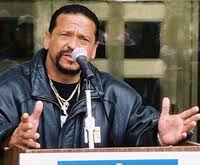
PHOTO: JUAN ROBERTO MELENDEZ-COLON;

DATE: FRIDAY 28 OCTOBER, 2011;

LOCATION; ONTARIO BAR ASSOCIATION CONFERENCE CENTRE: 20 TORONTO STREET; TORONTO;

TIME: 5.30 TO 7.30 PM;


PANEL:

MIKE FARRELL: BEST KNOWN AS CAPTAIN B.J. HUNNICUTT IN THE EVER POPULAR SERIES M*A*S*H. A POLITICAL AND SOCIAL ACTIVIST HE IS PRESIDENT OF “DEATH PENALTY FOCUS,” AN ABOLITION GROUP BASED IN CALIFORNIA;


JUAN ROBERTO MELENDEZ-COL0N: SPENT MORE THAN 17 YEARS ON FLORIDA’S DEATH ROW BEFORE BEING EXONERATED; HIS STORY WAS THE SUBJECT OF A DOCUMENTARY CALLED “JUAN MELENDEZ 6446 “ WHICH WAS DESCRIBED BY SISTER HELEN PREJEAN AS A “POWERFUL FILM THAT IS HEARTBREAKING AND MADDENING AND STIRS THE SOUL.”

PAT O’CONNOR: AUTHOR OF “THE FRAMING OF MUMIA ABU-JAMAL PUBLISHED IN 2008 AND SCAPEGOAT; THE CHINO HILL MURDERS AND THE FRAMING OF KEVIN COOPER.

EDWARD GREENSPAN: THE TORONTO LAWYER WHO HAS FOUGHT VALIANTLY AGAINST THE RETURN OF THE DEATH PENALTY IN CANADA AND OTHER CANADIAN ACTIVISTS.

TRACY LAMOURIE AND DAVE PARKINSON FOUNDERS OF “THE CANADIAN COALITION AGAINST THE DEATH PENALTY” WHICH FIGHTS THE DEATH PENALTY AROUND THE WORLD.

THE PANEL WILL HEAR A PRE-RECORDED MESSAGE FROM STEVEN TRUSCOTT WHO WAS SENTENCED TO DEATH IN 1949 WHEN HE WAS A 14-YEAR-OLD STUDENT, FOR THE MURDER OF A CLASSMATE LYNNE HARPER . AFTER HIS SENTENCE WAS COMMUTED TO LIFE IMPRISONMENT, STEVEN TRUSCOTT CONTINUED TO MAINTAIN HIS INNOCENCE UNTIL 2007 WHEN HIS CONVICTION WAS DECLARED A MISCARRIAGE OF JUSTICE AND HE WAS ACQUITTED OF THE CRIME.
FURTHER INFORMATION CAN BE FOUND AT:


PUBLISHER'S NOTE: The Toronto Star, my previous employer for more than twenty incredible years, has put considerable effort into exposing the harm caused by Dr. Charles Smith and his protectors - and into pushing for reform of Ontario's forensic pediatric pathology system. The Star has a "topic" section which focuses on recent stories related to Dr. Charles Smith. It can be found at:

http://www.thestar.com/topic/charlessmith

Information on "The Charles Smith Blog Award"- and its nomination process - can be found at:

http://smithforensic.blogspot.com/2011/05/charles-smith-blog-award-nominations.html

Harold Levy: Publisher; The Charles Smith Blog; hlevy15@gmail.com;

ARSON INVESTIGATIONS: "DISCOVER" MAGAZINE ASKS IF SCIENCE CAN BRING JUSTICE TO ARSON TRIALS; BY DOUGLAS STARR; GREAT READ;


“"A lot of bad science has been applied to arson investigation,” says John Lentini, a renowned fire expert who has given exculpatory testimony in at least 40 arson cases since 2000. His most recent case, now under review, involves a Massachusetts man convicted of arson by Molotov cocktail, even though not a single glass fragment from the supposed bottle bomb was found at the scene.
“I shudder to think how many wrongful convictions there are,” says Richard Roby, president and technical director of Combustion Science and Engineering, a fire-
protection engineering firm based in Columbia, Maryland. Roby has testified for several men charged with arson. One, named Michael Ledford, could not have been 
at the scene when the fire that killed his son was allegedly set, according to Roby’s calculations, yet he is now serving a 50-year sentence. “It’s amazing to think how long it takes for basic science to be accepted,” Roby says. “I lose sleep over this every week.”".........
Despite the surge in fire science, pseudoscience remains entrenched in arson investigation. Most states have no legal requirements for a person to become a fire investigator, although they prefer him or her to take in-person or online training courses and pass rudimentary tests. In some states, including Indiana, a private investigator’s license is enough to give you legal authority to investigate a fire and testify about its origins. In other words, someone who makes his living spying on his clients’ spouses in hotel rooms can become an expert in fire analysis after an optional training period of just a couple of weeks. “It’s still the Wild West out there,” says Justin McShane, a Harrisburg, Pennsylvania, attorney who has defended many arson cases. “You’ve still got people talking about crazed glass or using the most damage as an indicator of the source. One can only hope that in ten to twenty years we get trained scientists doing these investigations.”.........
Three years ago, a few faculty members at the John Jay College of Criminal Justice in New York set up a national clearinghouse for arson appeals and began collecting dossiers from prisoners around the country. Once they completed their review, they planned to submit the files to attorneys to take to court. “We had about 20 cases that met our criteria for deficiency in science,” says Peter Diaczuk, a forensic scientist at the college. But the philanthropy that supported the project, the JEHT Foundation, had invested its money with Bernard Madoff. The foundation went bankrupt, and last summer the project collapsed. “I think we were on the brink of making an important contribution” to freeing potentially innocent prisoners, says Diaczuk. “Unfortunately for some of them, now it’s as if we never existed.”
DOUGLAS STARR: DISCOVER;
---------------------------------------------------------
Douglas Starr is codirector of the graduate program in Science and Medical Journalism at Boston University. His most recent book, The Killer of Little Shepherds: 
A True Crime Story and the Birth of Forensic Science, is now out 
in paperback.
----------------------------------------------------------
"On a rainy spring morning in eastern Kentucky, Greg Gorbett prepares to commit arson," the Discover article by Douglas Starr published on October 24, 2011 begins, under the heading, "Spark of truth: Can science bring justice to arson trials: Fire researchers have shattered dozens of arson myths in recent years. Yet American courts continue to convict people who are likely innocent of the crime. Fire researchers have shattered dozens of arson myths in recent years. Yet American courts continue to convict people who are likely innocent of the crime."
"His target is a tidy but cheerless one-bedroom apartment with the kind of mauve-colored carpet, couches, tables, and lamps you would find in a cheap motel," the article continues.
"Gorbett is not the only one eager to see the place burn. A handful of other fire scientists and grad students from Eastern Kentucky University (EKU) are checking equipment in the test room as well. They have gathered at the EKU fire lab, a concrete structure in an open meadow as close to nowhere as possible, to document in exacting detail the life cycle of a blaze.
Gorbett scans the setup one last time. A foil-covered wire studded with metal probes—a thermocouple array—crosses the ceiling and hangs down the center of the space; it will measure the temperature at one-foot intervals every two seconds. A radiometer shaped like a soup can will detect changes in radiant energy. Bundles of yellow wires will carry the data to a computer-equipped truck sitting out back. There is also a man lying on the floor: James Pharr, a former fire investigator from Charlotte, North Carolina, wearing a fire-resistant suit and oxygen mask, who will record the event with a thermal-
imaging camera.


Gorbett lights a pan of flammable heptane under an end table and then quickly exits the room. The fire begins as a glowing ball and then reaches up and curls around the tabletop like a claw. Quickly it moves to the adjacent couch, which bursts into flames. Modern cushions are made of polyurethane foam, and despite their fire resistant–covering (introduced in the 1970s to protect against smoldering cigarettes), they are basically solidified petroleum. A modern couch can release the heat equivalent of a 3 million watt lightbulb.
The fire doesn’t burn the couch so much as melt it, like a marshmallow over a campfire. Flaming liquid drips onto the floor, forming fiery puddles, some of which burn through the carpet. Pharr squiggles out of the room, dragging his camera. Curtains drop burning fragments that in turn start their own flames. The couch across the room catches fire, although no other source of fire has touched it. “Radiant heat,” Gorbett explains.
Bill Hicks, monitoring the fire on his computer in the truck, is calling out temperatures over the walkie-talkie. “Five ninety,” he says, reading the measurement at the ceiling in degrees Celsius. That translates to almost 1100 degrees Fahrenheit. The room is obscured by a layer of roiling black smoke. A lightbulb pops. The carpet catches fire. The window cracks. “Better get back,” Gorbett says, and we retreat from the window. The smoke layer descends like a curtain almost to the floor. “Seven sixty at the ceiling,” calls Hicks. Fourteen hundred Fahrenheit. The radiometer spikes.
“Flashover!” yells Hicks.
A furious orange flame explodes out the window and door. The room has gone from being the scene of a fire to being completely on fire. Everything has ignited—carpet, furniture, combustible vapors. A few minutes later, a crew of firemen move in to extinguish it.
Afterward Gorbett and his colleagues walk through the rubble, take photos of the burned furniture and walls, measure the depth of charring, tabulate the results, and compare them to other trials in the experiment. They are not alone. At laboratories throughout the United States—some large enough to contain a three-story house—researchers have been lighting rooms and houses on fire and analyzing the results with the kind of scientific scrutiny that has upended several deeply entrenched misconceptions about how fires behave. The upheaval is more than academic. For generations, arson inspectors have used outmoded theories to help indict and incarcerate many suspects. But as new science is brought to bear on old cases, it is becoming clear that over the past several decades, dozens, perhaps hundreds, of people have been convicted of arson based on scant research and misguided beliefs. Many of those people are still in jail, hoping that someone will take up their cause.
“A lot of bad science has been applied to arson investigation,” says John Lentini, a renowned fire expert who has given exculpatory testimony in at least 40 arson cases since 2000. His most recent case, now under review, involves a Massachusetts man convicted of arson by Molotov cocktail, even though not a single glass fragment from the supposed bottle bomb was found at the scene.
“I shudder to think how many wrongful convictions there are,” says Richard Roby, president and technical director of Combustion Science and Engineering, a fire-
protection engineering firm based in Columbia, Maryland. Roby has testified for several men charged with arson. One, named Michael Ledford, could not have been 
at the scene when the fire that killed his son was allegedly set, according to Roby’s calculations, yet he is now serving a 50-year sentence. “It’s amazing to think how long it takes for basic science to be accepted,” Roby says. “I lose sleep over this every week.”
----------------------------------------------------
The modern study of fire in America was born in the 1970s, when funding was plentiful and consumer protection politically popular. According to a 1973 Nixon administration report called America Burning, fires in the United States caused more than $11 billion in annual damage and took an estimated 12,000 lives. The numbers were later found to be exaggerated, but the report galvanized Congress to support the young field of fire research. As part of that support, Congress created a Center for Fire Research at the National Bureau of Standards (NBS), which has since become the National Institute of Standards and Technology (NIST) in Gaithersburg, Maryland. “Until then, there really was no fire safety science,” says Vytenis Babrauskas, who in 1976 became the first American to receive a Ph.D. in fire science, from the University of California, Berkeley. With the budget to hire more than 100 bright young engineers, including Babrauskas, NBS began with a fundamental question: How do you quantitatively measure a fire?
Working at NBS in the early 1980s, Babrauskas invented a device that accomplished that purpose. The cone calorimeter resembled a vent hood with a series of ducts attached to the top of a small sealed chamber. When an object, such as a piece of plastic or wood, was burned in the chamber, the device measured a range of variables. It registered the chemical composition of the fumes, the accumulated energy released, and the rate of that release; the temperature, pressure, and opacity of escaping gases; the opacity of the smoke; even the weight of soot compared with the weight of the original substance. It measured so many characteristics that it became known as the Swiss Army Knife of fire research. The first calorimeter could handle small objects a few inches on each side. Later, Babrauskas designed a model big enough to test burning furniture, aptly called the Furniture Calorimeter. “It was basically a big hood with all sorts of instrumentation to capture and measure the gases,” he says.
Engineer measures a lab fire to see whether he
has successfully replicated prior fires used for
fire pattern experiments.

Courtesy of NIST
Babrauskas’s invention made it possible to investigate fire using classical scientific methodology: setting a fire, measuring the results, reproducing those results, and then repeating the experiment with a new set of variables. Over the next decade, these and other tools shattered long-standing beliefs about fire. The first to go was the assumption that fire always originated in the area of deepest charring, where intense heat creates partial burns marked by a charcoal residue. The idea had seemed to make sense because charring was thought to occur in areas where the fire had burned the longest. Babrauskas and his colleagues found that fire does not progress in a linear way, however. For a time it grows steadily as it consumes fuel and oxygen, but after a while the fire depletes the oxygen and begins to die out. In the absence of air, the energy output, also called the heat-release rate, declines. At this point, if a window breaks or a door opens, air rushes in and the fire shoots in that direction with jetlike intensity, causing the heat-release rate to jump. Researchers now know that the deepest charring sometimes occurs not at the fire’s origin or the location of the most fuel but at the source of ventilation—the target of that jet.


The understanding of such ventilation-controlled fires helped explain another phenomenon that turned fire investigation on its ear, says Richard Custer, a former fire researcher who is now a senior fire consultant with Arup, an international engineering firm. That phenomenon, called flashover, occurs when a fire seems to burst out a room’s windows and doors. As a fire in an enclosed space progresses, Custer explains, smoke filled with unburned particles and combustible gases accumulates near the ceiling. When the smoke layer descends to almost floor level, a mass of air violently 
rushes in, igniting the entire flammable mixture. Flames rip across the ceiling, the energy from the fire skyrockets, and the whole compartment becomes engulfed in a blaze. The carbon monoxide the fire pumps out can increase dramatically. Floors burn, and new fires, many of which are also capable of deep charring, spontaneously ignite. Liquid accelerant, the arsonist’s tool, is far from the only possible cause. “In the past, investigators had a sense that a certain pattern meant a certain thing,” Custer says. “But post-flashover patterns can have many different sources.”
Such insights have helped solve crimes. On New Year’s Eve in 1986, a fire broke out in a ballroom at the DuPont Plaza Hotel in San Juan, Puerto Rico. Within minutes it spread to a foyer, then exploded into a second-story casino, killing 98 people. Agents from the FBI and the ATF (Bureau of Alcohol, Tobacco, and Firearms) rushed to the scene and began their investigation old style, interviewing witnesses and sifting through 
rubble. A couple of days later, two scientists arrived—Harold “Bud” Nelson of the NBS and his boss, James Quintiere, a Ph.D. who had never been to an actual fire scene. At first they were barred from the scene—ATF controlled access tightly—but once they briefed the agents on how their scientific methods could aid the investigation, they were allowed to look around.
“Bud had this little computer with him and began running calculations,” recalls Quintiere, who is now John L. Bryan Professor of Fire Protection Engineering at the University of Maryland. Nelson would collect data from the scene, like the room dimensions and the quantity and identity of burned materials. To that data he added known mathematical values for the combustion characteristics of the materials, and he fed all that information into his computer, which simulated the progression of the fire. His mathematical reconstruction worked so accurately that each stage of it matched the recollection of witnesses. Eventually the agents arrested three disgruntled employees who had set fire to furniture in the ballroom. Quintiere and his colleagues were ultimately recruited to train the ATF.
Since then, other high-profile disasters attracted extensively trained scientists with their expensive technology, but the average fire did not. The typical local arson investigator, assigned from the police force or the fire department, had never taken college-level chemistry or physics. He learned on the job, by watching other arson investigators, many of whom had learned the trade from their superiors. The misguided notions that older arson investigators subscribed to seemed commonsensical, if you didn’t insist on seeing lab work to support them.
------------------------------------------------------------
As a rookie arson investigator in Marietta, Georgia, John Lentini never questioned his training. He once believed the old saw that the spalling of concrete, in which the surface chipped after a blaze, resulted from the kind of high heat indicating use of a liquid accelerant and arson. Likewise, he thought that only intentional use of a flammable liquid could explain walls with burn marks resembling a sharp-angled V or the charring of a floor.
That was before Lentini was called to work on a case in Jacksonville, Florida. In 1990 prosecutors charged Gerald Wayne Lewis with setting a house fire that killed his pregnant wife, her sister, and her sister’s four children. The fire showed all the classic signs of arson, including “pour patterns” on the floor: demarcation lines between burned and unburned areas that suggested a flammable liquid had been poured and ignited. But the suspect, who claimed his innocence, said he had no idea how the fire started.
Given the extensive publicity the case attracted and the fact that the murder charge carried a possible death penalty, prosecutors hired Lentini and John DeHaan, coauthor of a standard fire investigation text, to double-check and rule out other possibilities—including the hypothesis that one of the kids, playing with matches, had started the fire on a couch. As it happened, two doors down from Lewis’s house stood a nearly identical structure slated for demolition. Lentini and DeHaan got permission and funds to furnish the house with the same kind of carpeting and furniture as Lewis’s and wire the place with sensors. Then they lit the couch and got out.


Within minutes the living room had burst into flames, followed quickly by the entire house. The blaze went up much faster than investigators imagined was possible without an accelerant. Clearly flashover had occurred. After the fire Lentini and DeHaan found the same patterns on the floor that prosecutors had thought indicated arson in Lewis’s house. But rather than being produced by a liquid, the markings had been burned into the floor by the radiant heat released during flashover. The experiment, which became known as the Lime Street Fire [pdf], stunned everyone, and prosecutors dropped the charges. “That case opened my eyes,” Lentini recalls. “I was ready to send 
Lewis to the electric chair.”
The following year Lentini had another conversion experience in a fire that became known as the Oakland Black Hole. A brush fire swept into that California city, killing more than two dozen people and destroying more than 3,000 homes. Eager to study fire in its natural habitat, Lentini and a crew of investigators moved in, examining 50 houses for postfire patterns. They knew the fire had been accidental, yet they found classic signs of arson: large, shiny blisters on wood resembling alligator skin, chipping concrete, and melted metal doorway thresholds, all typically attributed to accelerant and accelerant runoff, resulting in excessively high heat.
Lentini was particularly struck by the presence of tiny cracks, or crazing, in the window glass in a dozen houses around the periphery, where the firemen had been able to reach with their hoses. Crazing was commonly thought to indicate rapid heating and therefore, once again, the use of a fire accelerant. Back at the lab Lentini tested the idea, taking a dozen samples of window glass and heating them to 1400 degrees Fahrenheit in various ways—rapidly, slowly, some in an oven, some in an open flame. None of the samples exhibited crazing, but they all cracked when he sprayed them with cool water. Rapid heating did not cause the crazed pattern, he determined; rapid cooling did. In other words, one of the classic indicators of arson—one that had been used countless times in court to send suspects to prison—was probably caused by firemen spraying water on hot windows.
Lentini became a science convert, but most of his contemporaries did not. Year after year, poorly trained police or fire department officials contributed to faulty convictions. The most notorious such case reached a tragic conclusion in 2004, when the state of Texas executed a man for a fire that almost certainly was accidental. In 1991 Cameron Todd Willingham was accused of setting fire to a house and killing his three daughters. The prosecution relied on all the usual arson indicators: crazed glass, charred wood at the floor level, a melted aluminum threshold, and pour patterns of a flammable liquid. Witnesses had reported flames exploding out the windows—the main indicator of a flashover fire. Scientists and some field investigators, such as Lentini, knew that flashover fires could char wood at the floor level, melt metal, and create burn patterns that might suggest poured flammable liquid. Yet that information had not reached or convinced the state’s deputy fire marshal, Manuel Vasquez (who died in 1994). In 1992 Willingham was found guilty of murder and sentenced to death.
Years went by, and Willingham lost one appeal after another. Finally, in 2004, just weeks before Willingham’s scheduled execution, Gerald Hurst, an internationally known fire and explosives expert from Texas, was brought in to support a petition for clemency. 
After reviewing the evidence and videotapes of the fire scene, Hurst wrote a report debunking the Vasquez findings, calling them “invalid in light of current knowledge.” Hurst said the blaze was almost certainly accidental, perhaps caused by a faulty space heater or electrical connection. But even that would be difficult to prove, because the house had been shoveled out by investigators. The cause of the fire should have been labeled “undetermined,” Hurst said, because there was no evidence a crime had actually been committed.
The Texas Board of Pardons and Paroles disagreed and denied the petition. After Willingham was executed, the Innocence Project, a national nonprofit legal organization focused on overturning wrongful convictions, assembled a team of leading arson investigators, who concluded that none of the evidence for arson in the case was scientifically valid. The project’s lawyers later filed an allegation with the newly formed Texas Forensic Science Commission alleging professional misconduct by the fire marshal’s office. The case was such an outrageous example of junk science in the courtroom that it was the subject of several newspaper investigations, a major story in The New Yorker, and a PBS Frontline documentary. Last spring, seven years after his death, a special state commission concluded that the forensic evidence in Willingham’s case was deeply flawed but failed to address whether the original fire inspector had been negligent.
----------------------------------------------------
To many, the Willingham case was a tipping point in the effort to advance the science of arson and bring it into public view. At the fire lab in Kentucky, Gorbett has been examining one piece of the puzzle: how burn patterns might evolve during a flashover fire. For a half-dozen years he and his colleagues have been repeating the same experiment: furnishing a room, setting it on fire, and then recording the blaze with video and electronic sensors until the flashover ends. After each experiment they enter 
the burned room and scrutinize the furniture, floors, walls, and ceilings. Their investigation has been exhaustive. Instead of just looking at the visible burn patterns on walls, for instance, they photograph them and use a probe to map calcination—the dehydration and subsequent crumbling of wallboard that results from exposure to intense heat. “We’re not just looking at patterns, we’re measuring them,” Gorbett says.
At NIST, engineer Dan Madrzykowski employs a similarly painstaking methodology. For the past 22 years he has been setting fire to bedrooms, office cubicles, and kitchens, all constructed beneath a huge calorimeter. It was during one of these experiments a few years ago that he and his colleagues stumbled upon a mystery. They were inspecting the charred remains of an intentionally torched living room, built with an open doorway and furnished with a couch and polyurethane chairs, when they noticed some V-shaped burn patterns on a wall behind a chair. According to conventional wisdom, the markings indicated the chair as the source of the fire. By then the NIST team 
knew better, but they were still stumped: The chair had not been placed near a source of ventilation, another possible explanation for the burn marks. So they played with the variables, building and burning the room several times and changing 
the location of the chair and the door. Eventually they noticed that the V-shaped burn mark would always appear on the wall opposite the open doorway.
It was then that Madrzykowski realized his group had uncovered a new phenomenon in fire behavior. As the fire is burning and smoke descends toward the floor, cool air rushes in through the bottom of the open doorway. It then races across the floor and mixes with unburned gases, causing them to ignite. And so a classic V-pattern appears in a location that had neither fuel nor ventilation.


Last year Madrzykowski and his colleagues, along with the Chicago Fire Department and representatives from the ATF, replicated those results in condemned town houses near Chicago’s O’Hare airport. They fitted the two-story town houses with generic furnishings and lit a fire next to the living-room sofa. By opening and closing different windows on different floors, they were able to manipulate airflow to make it look as if the fire had started at a wide range of spots, even the opposite end of the room from where it actually began. “You’ve got to get away from this thought that the site of the most damage is where the fire began,” Madrzykowski says.
After Cameron Todd Willingham was executed, the 
Innocence Project concluded that none of the evidence 
for arson in the case was scientifically valid.
Scientists continue to discover new fire clues. At several labs, investigators are examining the burn patterns resulting after they pour a range of flammable liquids on floor surfaces, including vinyl, wood, carpet, and concrete, and set them ablaze. In some cases, they have found, a flammable liquid actually protects a floor from bursting into flames because the liquid shields it from radiant heat. At Hughes Associates, a Baltimore-based fire science and engineering firm, senior engineer Dan Gottuk was struck by one experiment in which he compared burn patterns left by a liquid-fueled fire to those left by a melting polyurethane couch. “We showed that in many situations you really can’t tell the difference,” he says.
---------------------------------------------------
Other investigators are studying arcing—a phenomenon that occurs when a fire is hot enough to melt the insulation off the electrical wiring in the walls. At places where the insulation between two wires chars, current can leap from one wire to the next and melt the metal. This in turn can sever the wire or cause a circuit breaker to trip, cutting off electricity. Since unpowered wires cannot arc, mapping these breaks can give a general idea of the fire’s progression.
The human body has proved another valuable source of evidence. Richard Roby and colleagues have used toxicology reports from the bodies of fire victims to help determine where a fire originated, what stage it reached, and how long it burned. Not all fire-related deaths are the same. Victims who collapse away from a fire generally die from carbon monoxide, which, pumped out in great volume by flashover fires, can kill in just a few breaths. But victims who die close to the fire perish either from edema (heat-caused swelling of the airways) or heat exposure, in which the organs shut down “like a super heatstroke,” Roby says.
Roby has been creating computer models of his findings in the hope they will one day make their way into the courtroom. One case that could benefit involves a woman who died in a trailer fire last year in West Virginia. Neighbors thought they saw her boyfriend, who had recently been released from prison, set a gasoline fire in an outside corner of the trailer. But Roby has another theory. While the autopsy showed low levels of carbon monoxide in the woman’s blood, it also revealed extensive thermal injuries in her air passages and lungs. This meant that she must have been close to the fire source. Since the woman was a smoker, Roby speculates that a smoldering cigarette may have set her bed on fire and caused the damage documented in the autopsy report.


Assembling such elements can help investigators understand where a fire began and how it progressed, but even with current technology, determining what started a fire—and whether liquid accelerant was used—remains challenging. One confounding factor is that we live in a petroleum-rich environment: furniture, building materials, carpet, athletic shoes, and toothbrushes all contain petrochemicals. Even a straightforward analysis for gasoline is complicated by the fact that it varies from manufacturer to manufacturer and batch to batch. Investigators must precisely identify the compound and show that—unlike lighter fluid in a convenience store—it would not normally be found at the scene.
That is where chemist Michael Sigman of the National Center for Forensic Science at the University of Central Florida comes in. With his colleagues, he has been accumulating the data to help investigators identify flammable liquids at fire scenes. As one of the overseers of the Ignitable Liquids Reference Collection Database, he has run more than 600 commercial products through a gas 
chromatograph and mass spectrometer to record their molecular signatures and uploaded the results to an online database. Investigators who log on can compare chromatographs produced in their labs from fire scene samples with those in a reference collection of flammable liquids. If they find a match, or a near match, Sigman can send them a sample so they can analyze both liquids on their own lab equipment. This provides strong forensic evidence that can form the basis of expert testimony in court. “It’s preferable to saying, ‘This is how it smells,’ ” says Sigman.
Despite the surge in fire science, pseudoscience remains entrenched in arson investigation. Most states have no legal requirements for a person to become a fire investigator, although they prefer him or her to take in-person or online training courses and pass rudimentary tests. In some states, including Indiana, a private investigator’s license is enough to give you legal authority to investigate a fire and testify about its origins. In other words, someone who makes his living spying on his clients’ spouses in hotel rooms can become an expert in fire analysis after an optional training period of just a couple of weeks. “It’s still the Wild West out there,” says Justin McShane, a Harrisburg, Pennsylvania, attorney who has defended many arson cases. “You’ve still got people talking about crazed glass or using the most damage as an indicator of the source. One can only hope that in ten to twenty years we get trained scientists doing these investigations.”
A few states are pushing for higher standards. In New Hampshire, anyone who wants to become a fire investigator for the state fire marshal’s office must earn a two-year associate’s degree in fire science or a related field, take an intensive training course, and continue supervised on-the-job training sessions for at least a year. Yet the problem is not limited to investigators. Despite legal precedents that courts should evaluate forensic data as a provable, quantifiable, peer-reviewed science, many judges remain unconvinced. One scientifically trained investigator, who asked not to be identified, testified last winter at the appeal hearing of a man who had been convicted of murder and arson based on a pour pattern on the floor, with no confirmatory laboratory results. Preparing for the case, the investigator replicated the man’s floor using the same kind of rug and horsehair carpet pad. He then reproduced the same pattern in his tests without using a flammable liquid. The judge denied the convict’s appeal anyway. “I don’t want to see arsonists go free,” said the investigator, “but I certainly don’t want to see innocent people going to jail.”
-----------------------------------------------
Reversing an arson case is notoriously difficult, much more so than, say, a rape or murder case that involves DNA. Analyzing DNA with modern techniques can produce definitive proof of the suspect’s innocence. In contrast, scientists can testify that an arson investigation was done poorly, but rarely can they definitely rule out arson as the source of the blaze, which is often required to win an appeal. Although it has used Willingham’s story to press for changes in policy, even the Innocence Project does not take on arson convictions in court since they cannot be overturned with DNA.
Some other investigative groups are trying to pick up the slack. Local innocence projects in Massachusetts, Pennsylvania, Indiana, Nebraska, California, and several other states are pursuing arson appeals.
Three years ago, a few faculty members at the John Jay College of Criminal Justice in New York set up a national clearinghouse for arson appeals and began collecting dossiers from prisoners around the country. Once they completed their review, they planned to submit the files to attorneys to take to court. “We had about 20 cases that met our criteria for deficiency in science,” says Peter Diaczuk, a forensic scientist at the college. But the philanthropy that supported the project, the JEHT Foundation, had invested its money with Bernard Madoff. The foundation went bankrupt, and last summer the project collapsed. “I think we were on the brink of making an important contribution” to freeing potentially innocent prisoners, says Diaczuk. “Unfortunately for some of them, now it’s as if we never existed.”


Despite some setbacks, Gorbett and other fire scientists remain optimistic that the results of their research are beginning to take hold. For almost a decade, scientists working with the National Fire Protection Association, a professional group of fire fighters and safety engineers, have been publishing a set of standards and procedures that many courts recognize as a gold standard in arson prosecutions. Law enforcement agencies in some states seem to be taking a more nuanced approach to arson analysis.
In Massachusetts, the percentage of building fires determined to be arson has dropped from more than 15 percent in the early 1990s to less than 2 percent in 2009. In Texas the proportion of fires labeled incendiary has declined by more than half in the last decade. Nationwide, according to the National Fire Prevention Association, the number of intentional structure fires declined by about 51 percent between 1990 and 2007, the most recent year for which statistics are available—from 111,900 incidents to 54,700.
Some of that decline resulted from a change in accounting procedures, but the trend indicates that better science is beginning to produce better justice. “Investigators will have to be willing to make the effort,” Gorbett says. “We’re all going to have to work harder to get better data to make a change.”
------------------------------------------
The story can be found at:
http://discovermagazine.com/2011/nov/12-spark-truth-science-bring-justice-arson-trials/article_view?b_start:int=0&-C=

Tuesday, October 25, 2011

HOUSTON CRIME LAB: MOBILE ALCOHOL TESTING SCANDAL; GRAND JURY FLEXES MUSCLES; DISTRICT ATTORNEY'S OFFICE IS NOT AMUSED; HOUSTON CHRONICLE.


An appellate court ruled on Thursday that the grand jury can continue to exclude prosecutors from listening to witnesses testify in secret proceedings in the ongoing investigation.

"Compelling the prosecutors themselves to testify with subpoenas Tuesday is further indication that the grand jury is examining the role the DA's office has played in cases involving breath alcohol testing vehicles known as BAT vans.

Last Tuesday when defense attorney Brent Mayr, an outspoken critic of the BAT vans, was called to testify, the Harris County grand jury kicked out three senior prosecutors - even threatening to have the bailiff arrest them if they did not leave, according to court records.

Brown, who empaneled the grand jury, refused prosecutors pleas to be present during the testimony, and her ruling was upheld Thursday by the 14th Court of Appeals in Houston. District Attorney Pat Lykos has since said her office is considering taking the appellate court's decision to a Texas Court of Criminal Appeals."

REPORTERS ANITA HASSAN AND BRIAN ROGERS: THE HOUSTON CHRONICLE;

---------------------------------------------------------


"After taking several hours of testimony from Harris County prosecutors Tuesday, a grand jury apparently investigating the Houston Police Department's troubled mobile alcohol-testing vehicles asked a district judge to extend its term and assign a special prosecutor," the Houston Chronicle story by reporters Anitaa Hassan and Brian Rogers published on October 25, 2011 under the heading, "Grand jury asks for special prosecutor, term extended in investigation," begins.

"In open court Tuesday afternoon, grand jurors asked state District Judge Susan Brown to extend their three-month term past their scheduled end date in early November. Brown said she would rule on both motions by the grand jury's next session Thursday," the story continues.

"The request came on the heels of the 12 jurors, whom also may be looking into issues with the DA's office, listening to testimony by at least three Harris County assistant district attorneys and a judge, who is a former prosecutor, all of whom have worked on cases involving breath alcohol testing vehicles, according to sources who did not want to be identified.

Excluding prosecutors

An appellate court ruled on Thursday that the grand jury can continue to exclude prosecutors from listening to witnesses testify in secret proceedings in the ongoing investigation.

Compelling the prosecutors themselves to testify with subpoenas Tuesday is further indication that the grand jury is examining the role the DA's office has played in cases involving breath alcohol testing vehicles known as BAT vans.

Last Tuesday when defense attorney Brent Mayr, an outspoken critic of the BAT vans, was called to testify, the Harris County grand jury kicked out three senior prosecutors - even threatening to have the bailiff arrest them if they did not leave, according to court records.

Brown, who empaneled the grand jury, refused prosecutors pleas to be present during the testimony, and her ruling was upheld Thursday by the 14th Court of Appeals in Houston. District Attorney Pat Lykos has since said her office is considering taking the appellate court's decision to a Texas Court of Criminal Appeals.

Because grand jury proceedings are done in secret, their intentions are unclear. However, court documents filed last week shed light on the investigation along with suspicions from defense attorneys involved who believe the investigation centers around allegations about the BAT vans, issues with the police department and possibly the DA's office.

Ex-crime lab official

Along with Mayr, formerly the division chief of vehicular crimes for the DA's office before leaving for private practice, the grand jury also subpoenaed Amanda Culbertson, a former HPD crime lab supervisor, according to her attorney Chip Lewis.

In July, Culbertson testified during a court hearing that she resigned from the HPD crime lab because she could no longer trust accuracy of breath alcohol results from tests performed in the department's BAT vans.

Lykos, who said no one in her office has been informed as to what the grand jury's investigation concerns, said her office is still looking into allegations surrounding the BAT vans and is concerned with those issues having to do with the police department's crime laboratory."

The story can be found at:

http://www.chron.com/news/houston-texas/article/Grand-jury-asks-for-special-prosecutor-term-2236235.php

PUBLISHER'S NOTE: The Toronto Star, my previous employer for more than twenty incredible years, has put considerable effort into exposing the harm caused by Dr. Charles Smith and his protectors - and into pushing for reform of Ontario's forensic pediatric pathology system. The Star has a "topic" section which focuses on recent stories related to Dr. Charles Smith. It can be found at:

http://www.thestar.com/topic/charlessmith

Information on "The Charles Smith Blog Award"- and its nomination process - can be found at:

http://smithforensic.blogspot.com/2011/05/charles-smith-blog-award-nominations.html

Harold Levy: Publisher; The Charles Smith Blog; hlevy15@gmail.com;