Showing posts with label gagnon. Show all posts

Friday, November 13, 2009

UP-DATE; ONE YEAR AFTER RELEASE OF GOUDGE REPORT; MAURICE GAGNON'S REQUEST FOR INFORMATION ON COMPENSATION MET BY WALL OF SILENCE FROM GOVERNMENT;


"WHILE THE PARTICULAR RECOMMENDATION ABOUT COMPENSATION MAY HAVE COME OUT OF THE GOUDGE INQUIRY, ADDRESSING THAT RECOMMENDATION IS AN UNDERTAKING OF THE MINISTRY OF THE ATTORNEY GENERAL. AS SUCH, I AM NOT IN A POSITION TO ADDRESS YOUR REQUEST. NEVERTHELESS, I HAVE TAKEN THE LIBERTY OF FORWARDING YOUR CORRESPONDENCE TO THE HONOURABLE CHRIS BRADLEY, ATTORNEY GENERAL, SO THAT HE MAY BE AWARE OF YOUR COMMENTS. I TRUST THE ATTORNEY GENERAL WILL GIVE CONSIDERATION TO THE CONCERNS YOU ADDRESS."

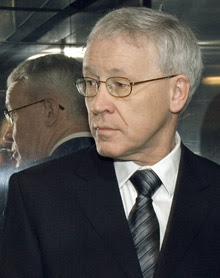
THE HONOURABLE RICK BARTOLUCCI; MINISTER OF COMMUNITY SAFETY AND CORRECTIONAL SERVICES (FORMERLY CALLED MINISTRY OF THE SOLICITOR GENERAL) IN LETTER TO MAURICE GAGNON;

----------------------------------------------------------------------------------

As noted in a recent post, Maurice Gagnon's requests to the Ontario government for information about the compensation process it has pledged to set up for Dr. Charles Smith's victims have been met by a wall of silence.

This must be particularly disturbing to Maurice Gagnon who fought for years to expose Dr. Smith's nefarious involvement in his daughter's case - and who was brushed off time after time by the Chief Coroner - and even the Solicitor General of the time.

As Commissioner Stephen Goudge noted in his report, after Maurice Gagnon filed a 20-page complaint against Smith with the Coroner's Council, "Indeed, there is no evidence that Dr. (James) Young (then Chief Coroner of Ontario) took any measures to investigate the details of Mr. Gagnon's concerns about Dr. Smith's practices in Nicholas' case."

(There was evidence that Dr. Young actively tried to thwart complaints that Mr. Gagnon and two other complainants had attempted to launch against Smith with the Ontario College of Physicians and Surgeons.)

Goudge also noted in his report that Maurice Gagnon's complaint about Smith to the Solicitor General - the same Ministry that has sluffed off his inquiries about compensation - was dismissed in a reply drafted by Young, who also held the position of assistant deputy minister of public safety.

Justice Goudge unequivocally ruled that: "The Solicitor General's response to Mr. Gagnon's complaint, drafted by Dr. Young, was substantively inaccurate."

And now the current "Solicitor General" has passed the buck on Maurice Gagnon's incredibly polite, measured and sincere inquiry about compensation to Attorney General Chris Bradley who has thus far remained silent - and Maurice Gagnon must indeed wonder if anything has changed in the year since Justice Goudge released his report.

Here is the correspondence between Maurice Gagnon and Rick Bartolucci, MPP Sudbury, who is head of the the renamed Ministry of the Solicitor General - Ministry of Community Safety and Correctional Services, commencing with Gagnon's letter dated 23 April, 2009,

"Dear Rick; RE: Goudge Inquiry Report/Compensation;

Ours is one the many families victimized by the reckless and malicious actions of pathologist Charles Smith and your Office of the Chief Coroner, in their investigation of pediatric deaths, including our Nicholas.

Judge Goudge presented his findings some seven (7) months ago. In keeping with an Inquiry recommendation, the Attorney General appointed a three person committee (December 2008), headed by retired Judge Coulter Osborne, to explore compensation for the acknowledged victims.

This initiative by the Government gave everyone a guarded sense of optimism that justice would finally be served. However, it has been over four months since this appointment, without a single word from the compensation committee or the AG. Optimism has been tempered with justifiable apprehension.

Could you provide an update on the status of the compensation committee’s work, when it may be reporting recommendations to the AG, and, finally, when can we (the victims) expect to be contacted, or at least apprised of a time frame for resolution.

Sincerely: Maurice Gagnon;


Here is Bartolucci's response to Maurice Gagnon, dated June 1, 2009:

"Response from Rick Bartolluci; MPP Sudbury Ministry of Correctional Safety and Community Services.

Dear Mr. Gagnon.

Thank you for your letter of April 23, 2009, requesting an update on the status of proposed compensation for families who were victimized as a result of the actions of Dr. Charles Smith. I am pleased to respond.

I appreciate your bringing this to my attention, however, as you state in your letter. the compensation package is being formulated by the committee appointed by the Attorney General. While the particular recommendation about compensation may have come out of the Goudge Inquiry, addressing that recommendation is an undertaking of the Ministry of the Attorney General. As such, I am not in a position to address your request. Nevertheless, I have taken the liberty of forwarding your correspondence to the Honourable Chris Bradley, Attorney General, so that he may be aware of your comments. I trust the Attorney General will give consideration to the concerns you address.

Again, thank you for writing; Sincerely. Rick Bartolucci;


Maurice Gagnon informed the writer earlier today that he has neither heard from Attorney General Bradley, or from Premier Dalton McGuinty, to whom he sent a similar letter.

Premier McGuinty has already played an important public role in coming to grips with the enormous mess left by Dr. Charles Smith and his superiors in the Coroner's Office by calling for the public inquiry and appointing Justice Goudge as Commissioner.

He can now perform another important role by intervening on behalf of Dr. Smith's many victims and ordering his ministers to commence the compensation process without delay - in a clear and public manner.

Harold Levy...hlevy15@gmail.com;

Thursday, November 12, 2009

UP-DATE: CHARLES SMITH; ONE YEAR LATER; WHERE IS THE PROMISED COMPENSATION? A SUDBURY FAMILY ASKS; ONTARIO GOVERNMENT PUT ON THE SPOT...

span style="font-style:italic;">

"GAGNON WROTE A LETTER TO THE GOVERNMENT BACK IN APRIL ASKING FOR AN UPDATE ON THE STATUS OF THE COMPENSATION COMMITTEE'S WORK.

HE WROTE THE FORMATION OF THE COMMITTEE "GAVE EVERYONE A GUARDED SENSE OF OPTIMISM THAT JUSTICE WOULD FINALLY BE SERVED."

HE ADDED, HOWEVER, THE LENGTH OF TIME THAT PASSED "WITHOUT A SINGLE WORD FROM THE COMPENSATION COMMITTEE OR THE ATTORNEY GENERAL" HAS CAUSED OPTIMISM TO BE "TEMPERED WITH JUSTIFIABLE APPREHENSION.""

REPORTER RACHEL PUNCH; SUDBURY STAR;

----------------------------------------------------------------------------------

"It has been almost a year since the province formed a committee to explore compensating innocent people wrongly accused and convicted in child deaths because of a pathologist's flawed work," the Sudbury Star story by reporter Rachel Punch begins, under the heading, "Still waiting for justice" and the sub-heading, "POLITICS: Family that helped expose pathologist Dr. Charles Smith wants word on compensation for victims Still waiting for justice."

"A Sudbury family pivotal in halting the career of Dr. Charles Smith is disappointed it is taking so long for the committee to do its work and for the government to act," the November, 7, 2009, story continues.

"Maurice Gagnon spent more than $237,000 -- his retirement savings -- to defend his daughter Lianne Thibeault, who was wrongly accused in 1995 of killing her infant son, Nicholas.

Thibeault's case was one of 20 child-death investigations Smith was found to have made mistakes in. A five-month judicial inquiry into the practice of pediatric forensic pathology was undertaken last year.

Justice Stephen Goudge, who presided over the inquiry, urged the province to see if a viable compensation process could be set up. The recommendation was made in Goudge's final report, released in October 2008.

In December 2008, the province formed a committee, led by former integrity commissioner Coulter Osborne, to consider the viability of a compensation process.

The committee has still not reported back to the Attorney General's office.

"We look forward to receiving the committee's advice as soon as possible so we can proceed in the fairest and fastest way possible," said Brendan Crawley, a spokesperson for the Ministry of the Attorney General, on Wednesday.

Gagnon wrote a letter to the government back in April asking for an update on the status of the compensation committee's work.

He wrote the formation of the committee "gave everyone a guarded sense of optimism that justice would finally be served."

He added, however, the length of time that passed "without a single word from the compensation committee or the Attorney General" has caused optimism to be "tempered with justifiable apprehension."

Gagnon received a response from Sudbury MPP Rick Bartolucci's office in June stating the letter had been forwarded to Attorney General Chris Bentley's office.

"I trust the Attorney General will give due consideration to the concerns you express," Bartolucci wrote.

Gagnon said Wednesday he had still not heard anything from the Attorney General's office.

Crawley would not comment on whether or not the office planned to respond to Gagnon.

"We treat incoming correspondence, and any responses, as confidential," Crawley said."


The story can be found at:

http://www.thesudburystar.com/ArticleDisplay.aspx?e=2162378

Harold Levy...hlevy15@gmail.com;

Saturday, July 4, 2009

EDITORIAL: COMPENSATION AND ONTARIO GOVERNMENT'S MESSAGE OF INDIFFERENCE TO VICTIMS OF DR. CHARLES SMITH AND THE PROVINCE'S CRIMINAL JUSTICE SYSTEM;


"IN KEEPING WITH OUR COMMITMENT TO THE PEOPLE OF ONTARIO, WE ARE RESPONDING TO JUSTICE GOUDGE'S RECOMMENDATIONS IN AN EXPEDITIOUS MANNER," SAID COMMUNITY SAFETY AND CORRECTIONAL SERVICES MINISTER RICK BARTOLUCCI. LAST MONTH OUR GOVERNMENT ANNOUNCED LEGISLATION TO STRENGTHEN ONTARIO'S DEATH INVESTIGATION SYSTEM. TODAY WE ARE TAKING ANOTHER STEP TO ENSURE CONFIDENCE IN THE SYSTEM AND CORRECT PAST INJUSTICES."

COMMUNITY SAFETY AND CORRECTIONAL SERVICES MINISTER RICK BARTOLUCCI; (ONTARIO GOVERNMENT PRESS RELEASE; 2 DECEMBER 2008); ONTARIO GOVERNMENT PHOTO; PREMIER DALTON MCgUINTY; (lEFT) MINISTER BARTOLUCCI (RIGHT);

-------------------------------------------------------------------------------

"I LOOK FORWARD TO PROVIDING THE ATTORNEY GENERAL WITH TIMELY, APPROPRIATE ADVICE TO ADDRESS THE ISSUE OF COMPENSATION ARISING FROM DR. SMITH'S WORK. MY FELLOW COMMITTEE MEMBERS AND I WILL GET ON WITH THE IMPORTANT WORK AT HAND AS QUICKLY AS POSSIBLE."

JUSTICE COULTER OSBORNE; HEAD OF COMMITTEE ASKED TO PROPOSE COMPENSATION FRAMEWORK;

-------------------------------------------------------------------------------

Globe and Mail Justice Reporter Kirk Makin wrote yesterday about the Ontario government's shameful failure to make timely compensation to Dr. Charles Smith's victims;

The delay is shameful for several reasons;

First, the Ontario government is responsible for the administration of justice (and therefore injustice);

Secondly, it was the province's prosecutor's who wielded the criminal law against Dr. Smith's victims;

Third, it was the province's senior officials in the Chief Coroner's office who failed to supervise Dr. Smith - and to reign him in.

In a press release dated December 2, 2008 the McGuinty government announced that its response to the recommendations set out in the Goudge report included the establishment of "a committee to consider issues of compensation related to Dr. Charles Smith's work."

The release announced that: "A team of legal experts will provide legal advice on the viability of a potential compensation process arising from the work of Dr. Charles Smith."

It said the Committee would be composed of:

"The Honourable Coulter Osborne, former Associate Chief Justice of
Ontario and former Integrity Commissioner - as lead;

Bonnie Tough, a Law Society bencher and senior private sector
litigator with notable experience in compensation issues;

And Michele Smith, Counsel, Crown Law Office Civil."

The release contained top-level assurances, that compensation, along with action on other key Goudge recommendations would be provided expeditiously.

Just for one: "In keeping with our commitment to the people of Ontario, we are responding to Justice Goudge's recommendations in an expeditious manner," said Community Safety and Correctional Services Minister Rick Bartolucci," the press release states;

"Last month our government announced legislation to strengthen Ontario's death investigation system. Today we are taking another step to ensure confidence in the system and correct past injustices."

Here's another:

Justice Coulter Osborne, head of the Committee: "I look forward to providing the Attorney General with timely, appropriate advice to address the issue of compensation arising from Dr. Smith's work."

Mr. Osborne went on to say: "My fellow committee members and I will get on with the important work at hand as quickly as possible."

It is important to note that Justice Osborne and his Committee were not charged with the time-consuming job of fixing compensation in individual cases; All they were asked to do was "provide legal advice on the viability of a potential compensation process."

In short, all they had to do was to propose a system for awarding compensation in individual cases to the government - and that shouldn't have taken many months;

To be fair to the McGuinty Government, the Charles Smith debacle did not happen on it's watch.

Moreover, the Premier McGuinty acted promptly to establish an Inquiry into pediatric forensic pathology in the province, gave it teeth, and made an excellent appointment in Ontario Court of Appeal Justice Steven Goudge;

Unfortunately, Mr. McGuinty's minister's seem more adapt at making promises in press releases than following through with timely actions - now that Charles Smith is no longer in the daily headlines;

The message to Dr. Charles Smith's victims is that the government responsible for their wrecked lives and wrongful convictions is indifferent to their plight - other than to issue misleading press releases from time to time;

Perhaps it's time for Mr McGuinty to get the message to Bartolucci and his bureaucrats that he expects them to prove to the public - and especially the victims of Dr. Smith and Ontario's criminal justice system - that they take the need to compensate the victim's generously - and will waste no more time getting an expeditious compensation system in place;


Harold Levy...hlevy15@gmail.com;

Sunday, May 11, 2008

Part Two: Work Of Other Pathologists Who Conducted Pediatric Autopsies in Ontario Must Also Be Reviewed; Closing Submissions; AIDWYC And M.J. Group;

"THROUGHOUT HIS TENURE, THERE WAS VIRTUALLY NO OVERSIGHT OR PEER REVIEW OF POST MORTEM REPORTS IN THE PROVINCE.

IT IS REASONABLE TO CONCLUDE, THEREFORE, THAT ERRORS ARE LIKELY TO HAVE OCCURRED BY OTHER PATHOLOGISTS DURING DR. SMITH’S TENURE.

A REVIEW MUST THEREFORE BE UNDERTAKEN OF ALL PEDIATRIC AUTOPSIES CONDUCTED IN ONTARIO SINCE 1981 IN CASES THAT RESULTED IN CRIMINAL CONVICTIONS."

CLOSING SUBMISSIONS: AIDWYC AND THE MULLINS-JOHNSON GROUP;

-------------------------------------------------------------------------------

The closing submissions filed jointly by The Association In Defence of the Wrongly Convicted (AIDWYC) and the Mullins-Johnson group contain some extremely interesting information and valuable recommendations.

For this reason, I am devoting several blogs to these submissions over the next few days. They have been prepared by lawyers: James Lockyer, Louis Sokolov, Phillip Campbell, Vanora Simpson and Alison Craig:

Today's focus is on a section in which the two parties point out that the Inquiry has raised doubts about the opinions of other pathologists in Ontario who conducted pediatric autopsies over the years - and recommends a review of all pediatric autopsies in the Province of Ontario Since 1981

(This would include, at a minimum, a review of all of Dr. Smith’s work from 1981 to 1991);

"While efforts have already begun to identify pre-1991 cases, that project must continue," this section of the closing submissions begins.

"There have been consistent problems in Dr. Smith’s cases," it continues;

"His forensic pathology was dreadful, his evidence was over-stated and emotive, and his conclusions were wrong.

Dr. Smith’s own evidence - that his education and training in forensic pathology was ‘woefully inadequate’, that he was ‘profoundly ignorant’ of the role of an expert witness in the courts, and that he did not understand the importance of, nor the procedures for, maintaining the continuity of evidence – suggests that those problems undoubtedly plagued his earlier work.

Again, quoting Dr. Smith’s own words, he had “extraordinarily limited… knowledge or expertise” and it was “potentially dangerous” for him to work on some cases.

His testimony in these cases nonetheless betrayed no uncertainty; he himself described it as “defensive or dogmatic or adversarial”.

Dr. Pollanen has said the reviews of Dr. Smith’s pathology opinions established there “is a reasonable basis to believe that problems might exist with Dr. Smith’s cases prior to 1991”.

All cases which relied on pathology opinions rendered by Dr. Smith require review.

Dr. Smith was not, however, working in isolation; he was the Director of the Ontario Pediatric Forensic Pathology Unit for over two decades.

Several forensic pathologists worked under his influence and administration.

He provided countless consultations (many of them undocumented) to pathologists across the province and across the country, and was viewed as an “icon” by pathologists in the field.

Throughout his tenure, there was virtually no oversight or peer review of post mortem reports in the province.

It is reasonable to conclude, therefore, that errors are likely to have occurred by other pathologists during Dr. Smith’s tenure.

A review must therefore be undertaken of all pediatric autopsies conducted in Ontario since 1981 in cases that resulted in criminal convictions.

Dr. Smith was accorded unparalleled respect and deference by his peers.

They were unwilling to challenge him.

For example, in the case of Valin, Dr. James Ferris, a respected forensic pathologist who had been retained by the defence at trial, admitted in a recent report that:

"…there’s no doubt that, at that time, my opinions were unduly influenced by the apparent authoritative opinions given by Drs. Smith and Mian… I was concerned, at that time, with the opinions expressed by Dr. Smith in the case and, since that time, I found myself disagreeing with his forensic pathology opinion expressed in several cases."

He continued:

"I’m now aware that his professionalism is being questioned by others, and I was clearly in error to accept, so readily, his opinions in the case.

Finally, his report concluded:

"Having reviewed all the evidence and materials referred to, it’s clear that my opinions were unduly influenced by my instructions from [defence counsel] and my ready acceptance of the opinions of Doctors Zehr, Mian, and Smith.

It is now clear to me that these influences reduced the level of objectivity of my opinions that would normally be expected from a Forensic Pathologist of my experience."

In the case of Baby M, a pathologist consulted by defence counsel who testified at the Inquiry indicated that Dr. Smith was the foremost expert in forensic pathology, and that she would not be prepared to challenge his findings.

If independent pathologists retained by the defence were unwilling to challenge Dr. Smith and allowed their judgment to be clouded by his celebrated status, it is a reasonable inference that physicians working beneath him did too.

A particularly disturbing example of this pattern is the meeting that took place regarding Sharon’s case between Dr. Smith, Dr. Wood, Dr. Cairns, Dr. Chiasson, Mr. Blenkinsop and Dr. Queen, not long after the autopsy.

Each expert at the meeting deferred to Dr. Smith’s contention that the wounds were not caused by dog bites, except for Dr. Queen, who believed they might, indeed, have been caused by a dog.

He did not advance these views forcefully, however, likely because he was a relatively junior member of Dr. Smith’s staff.

Dr. Cairns, the Deputy Chief Coroner and Dr. Smith’s superior at the time, now belatedly admits that he “put undue faith in Dr. Smith”, and that he believed that Dr. Smith was ‘the’ pathologist, an opinion shared by many in his office, the media, the Crown and defence bar, and the judiciary.

It took him “a long time to come to the realization (that there was a problem)… because he had put him on such a pedestal”.

Dr. Smith was widely consulted by other pathologists around the country, and was seen as the ‘go-to guy' in pediatric forensic pathology.

Pathologists were advised to call him for a consultation during the course of an autopsy, which may well have affected their conclusions.

It appears that many of those consultations were unlikely to have been recorded, and therefore identifying only the cases in which Dr. Smith was definitively involved would be impossible.

This inability to trace Dr. Smith’s influence is one of the factors which demands a comprehensive review.

There was no adequate supervision of Dr. Smith during his tenure, or of any other pathologist conducting medicolegal autopsies under the auspices of the Chief Coroner.

Dr. Smith had no proper training in forensic pathology.

Yet, he was the one who reviewed every report that came out of the unit.

In a telling exchange, Maxine Johnson, the Hospital for Sick Children Pathology Unit’s administrative coordinator, described the process:

"Commissioner: There was no practice for the CF12 to be reviewed by another pathologist before it was signed out to the Chief Coroner's Office;

A: Not for Dr. Smith. But the other pathologists had to give theirs to Dr. Smith because he was the Director of the Unit. So the pathologists would, you know, do their case. We’ll give it to Dr. Smith. He would review it, you know, make any suggestions to those pathologists –

Q: Right.

A: - and – but as far as Dr. Smith –

Q: So the practice was it would not be signed out by the case pathologist until the CF12 had been reviewed by Dr. Smith?

A: Most of the times, yes."

Until 1994, there was absolutely no formal review mechanism for post-mortem reports issued by pathologists working on behalf of the Chief Coroner’s Office.

In 1995, Dr. Chiasson instituted a bare-bones review process which consisted of simply ensuring the report itself met a basic standard, and attaching a ‘checkmark form’ - as it came to be known - to each completed report.

There was no review of photographs, slides, or underlying histology.

As Dr. Chiasson acknowledged, a review of this nature would not have identified a flawed analysis involving a misinterpretation of an injury or pathological conclusions from microscopic or histologic findings.

Dr. Chaisson had the sole responsibility for reviewing all 1,500 reports each year, which allowed for no more than a cursory scan of the report.

In cross examination by Mr. Campbell, Dr. Chiasson acknowledged that his review process would not have caught many of Dr. Smith’s mistakes:

Q: Knowing now what you didn’t know then, it would be fair to say that you needed a bit more insight into the factual substratum of the – the autopsies to identify some of the things that we now know were in error. Is that – would you accept that?

A: I would accept that, yes. A lot of the issues revolve – specific questions relating to circumstances of a death that were not information that wasn’t provided in the PM reports, yes.

Dr. Chiasson also acknowledged that his own lack of expertise with pediatric cases may have contributed to his inability to provide effective oversight.

He paid little attention to the reports of pathologists whom he knew and respected. As he candidly explained in his testimony:

“I was reviewing pathologists who I got to know very quickly. And – and a review in that case may have been simply looking at the bottom line, looking at the summary, and thank you very much”.

This admission, while commendable, does not inspire public confidence that no other miscarriages of justice occurred during his tenure.

Dr. Smith’s errors went undetected by the only review process in place, and common sense dictates that the errors of others did as well.

The work of Dr. Brian Johnston, who was, and still is, the Director of the Eastern Ontario Regional Forensic Unit is now the subject of controversy.

For over a decade, alarm bells were ringing regarding his competence and his propensity to reach critical conclusions that were not supported by medical or scientific evidence.

In one particularly shocking example, which parallels some of Dr. Smith’s cases, the natural death of an adult was attributed to strangulation causing an innocent person to be held in custody for some time.

Nevertheless, he was allowed for years to continue conducting the majority of criminally suspicious autopsies at the Eastern Ontario unit simply because there was nobody to take his place.

Dr. Chiasson identified persistent problems with the validity of Dr. Johnston’s conclusions and his administrative capabilities.

He made efforts to engage Dr. Johnson in remedial steps, without success, and his repeated pleas to have him removed as Director were ignored by Dr. Young.

It was not until February, 2007 that Dr. Johnston and the rest of the Ottawa staff were formally notified that they were no longer permitted to do homicide or criminally suspicious cases for the Chief Coroner's Office;

This provides one more reason for a Province-wide review.

As well, the lens of the “think dirty” regime that pervaded the death investigation system after the release of “Memo 631” on April 10, 1995 must have tainted the objectivity of pathologists throughout the Province.

As Dr. Chiasson and others acknowledged, pathologists would have been vulnerable to pressure from the police to make findings consistent with their pre-existing theory of the case.

Recommendations from this Inquiry will help to solve these kinds of problems in the future, but future improvements will not uncover past mistakes.

Several highly qualified and knowledgeable witnesses at the Inquiry supported an examination of other cases.

Dr. Crane supported it.

Dr. Butt suggested that it would be “a prudent thing to do”.

Dr. Cairns considered a further review to be an ‘ethical duty’.

Dr. Pollanen, the Chief Forensic Pathologist of Ontario, agreed that to restore public confidence in pediatric forensic pathology, a range of cases much broader than those of Dr. Smith needed to be examined.

There are relatively low numbers of pediatric homicides in Ontario each year.

45 of them have already been examined.

A review of the remaining cases is unlikely to be a great deal more demanding than the review that led to this inquiry.

The number of pediatric homicides and criminally suspicious deaths in Ontario each year can be estimated at between 10 and 20, with 5 to 15 of these occurring in children under the age of five.

Of those, only a fraction would have resulted in criminal convictions.

The number of criminally suspicious pediatric deaths since 1981 therefore falls into a range of approximately to 200 to 300 at the very most, 45 of which have already been reviewed.

In the Goldsmith Review, almost 300 cases were studied within the span of approximately 10 months.

This effort has significant systemic value beyond the obvious utility of correcting errors and doing justice in individual cases.

The evidence heard at the Inquiry suggests that the Chief Coroner's Office has not, until recently, acknowledged, confronted, and worked to correct possible errors resulting from their pathologists' work.

This Inquiry heard evidence about a litany of circumstances that ought to have sparked an earlier, comprehensive review of Dr. Smith's work, including the following:

0: the judgment delivered by Justice Dunn in 1991 acquitting Amber's babysitter of homicide, which seriously criticized Dr. Smith's work and his lack of objectivity;

0: the 1999 abandonment of the Children's Aid Society child protection application after the investigation of Nicholas' death and the receipt of sharply conflicting expert opinions, followed by Maurice Gagnon's litany of complaints between 2000 and 2003 to those whom he hoped would listen;

0: the 1999 withdrawal of homicide charges against Jenna's mother once substantial expert evidence emerged that challenged Dr. Smith's opinion, and,

0: the College of Physicians and Surgeons investigations of Dr. Smith which commenced in 1999.

Instead, in January 2001, after the withdrawal of criminal charges against Tyrell's caregiver and Sharon's mother, an internal review of the pathology in only those two cases was conducted.

A broader, external review of Dr. Smith's work was aborted.

51 Dr. Smith wrote to Chief Coroner Dr. Young and requested he be removed from the roster of pathologists doing medico-legal autopsies.

(He later started again.)

James Lockyer, as a Director of AIDWYC, requested a review following the revelations about these two cases.

Dr. Young responded that no comprehensive review would be performed.

Two articles were published in Maclean's Magazine in May 2001, "Dead Wrong" and "The Babysitter Didn't Do It," which set out some of the history.

No review followed this adverse publicity; Dr. Cairns' comments quoted in the articles were supportive of Dr. Smith.

In December 2001, David Bayliss, as a Director of AIDWYC, wrote to Dr. Cairns to request a review of the pathology in William Mullins-Johnson's case; this would not follow for several years58.

Another internal review of pathology, later supplemented by an external consultation, at the request of the investigating police service, confirmed difficulties in Jenna's case.

It was not until intensifying media scrutiny of the lengthening list of problematic cases in 200360, with the stay of proceedings ordered by Justice Trafford in Athena's case in June of that year, that Dr. Smith resigned from all coroner's autopsy and committee work, and in July 2004, from his position entirely.

A tissue audit was prompted by materials missing in Mullins-Johnson's case, and the media attention and public pressure relating to this and controversy over Jenna's case led to the Chief Coroner's June 2005 announcement of his decision, finally, to review and scrutinize Dr. Smith's cases for errors in pathology opinions.

A decade and a half had passed since Justice Dunn's ruling.

Part of this Commission's mandate is to make recommendations that will assist to "restore and enhance public confidence in pediatric forensic pathology in Ontario and its future use in investigations and criminal proceedings."

Public confidence will be restored not only by changes made to improve the system in the future to avoid the repetition of errors, but also by a scrupulously fair and penetrating review of past cases where those errors may have occurred.

The press releases from the Chief Coroner's Office in 2005 and 2007, as the review of Dr. Smith's work started and finished, explicitly make this connection.

The Chief Coroner's Office stated at the outset that, "Conducting this review is an essential step in maintaining the public confidence in all of the important work that is done, day in and day out, by coroners and pathologists who provide service for the Office of the Chief Coroner and the public," and at the conclusion that, "maintaining public confidence in the Ontario Coroner's System was an underlying reason for conducting this review."

The same holds true for a more comprehensive review.

Even if a difficult or time-consuming process, these reviews are essential to demonstrate to the public that the Chief Coroner's Office has successfully combated the culture of avoidance which created the environment to allow errors to be made and to stand uncorrected."


Harold Levy...hlevy15@gmail.com;

Wednesday, February 6, 2008

Human Failings And Dr. Smith: Good Questions Asked By The Sudbury Star About The Gagnon Case;

Several of this Blog's readers have drawn my attention to a probing editorial that appears in todays's Sudbury Star; (My thanks to them);

It runs under the heading: "Human Failings and Dr. Smith";

"Sudbury Star reporter Denis St. Pierre's exhaustive narrative Friday and Saturday of the nightmare that Lianne Gagnon and her family endured over the death of her 11-month-old son unveiled one astonishing development after another," the editorial begins.

"Just reading about what Gagnon and her family went through was draining. Imagine suffering as they did," it continues.

"There are lessons buried in all this - of oversight, and of human failing.

Dr. Charles Smith's story is now well known. Once an esteemed pediatric child pathologist who vigorously - even belligerently - pursued cases in a manner that was beyond his mandate, he has been thoroughly impugned as an incompetent, under-trained doctor who ignored facts, bullied investigators and lied under oath.

He left a trail of persecuted innocents in his wake, sending some people to jail - a Sault Ste Marie man for 12 years - and subjecting Sudbury's Gagnon family to a dreadful experience.

A panel of outside experts concluded Smith made errors in 20 of 45 criminal investigations into suspicious child deaths from 1991 to 2001.

Gagnon's 11-month-old son Nicholas died in December 1995. She has always maintained he hit his head on a table and stopped breathing shortly thereafter.

The case was reviewed by a pathologist and a coroner and was investigated by the local police, but no charges were laid.

Eighteen months later, in came Smith.

He concluded - incorrectly - that the child had multiple injuries and that Gagnon likely killed her son.

Gagnon, then a 21-year-old Laurentian University student, was subjected to a grueling interrogation by local police, her conversations with intimate friends were eavesdropped twice and her son's body was disinterred.

Despite all this, police concluded after a second six-month investigation that there was no case for criminal charges.

Yet Smith went ahead and contacted the Children's Aid Society, telling officials he was "99-per cent sure" Gagnon killed her son.

The CAS then decided to take custody of Gagnon's second child.

No one can imagine the anguish the Gagnon family went through, dealing with the death of a child and the merciless legal pursuit that followed.

Smith now says he was simply incompetent, tearfully offering apologies to his victims during an inquiry last week.

The police say they were led down the wrong path by a respected pathologist.

But the only real innocent one here is Gagnon.

The lessons involved include the medical community, police and child-welfare authorities. How did Smith, without training in pediatric forensic pathology, achieve virtual star status in that field?

How were his mistakes missed for a decade?

The medical community must become better accustomed to scrutinizing their own.

Even the Ontario College of Physicians and Surgeons didn't stop Smith's carnage.

Why were the Sudbury police so quick to ignore the conclusions of the two initial doctors and their own investigation on the presumption that Smith was so much better?

Do they grant anyone else infallibility status? Are the police subject to tunnel vision once they've made up their minds, the characteristic that is known to lead to wrongful convictions?

In Gagnon's case, though no charges were laid, lead investigator Insp. Bob Keetch, who was then a sergeant, testified the police chief at the time, Alex McCauley, was adamant that Gagnon was guilty even after the second investigation resulted in no charges. (McCauley has denied this.)"


These are all good questions;

Kudos to the Sudbury Star - and reporter Denis St. Pierre - for asking them.

See this Blog's series: Interrogation of an innocent mother: Parts one to fourteen; January, 2008.

Harold Levy...hlevy15@gmail.com;

Thursday, January 24, 2008

Part Fourteen: Interrogation Of An Innocent Woman: Last Installment Of Ground-Breaking Fifth Estate Documentary: "Diagnosis: Murder";

(A CBC Fifth Estate investigation appropriately called "Diagnosis: Murder" exposed the enormous harm Dr. Charles Smith caused to innocent parents and caregivers within Ontario's criminal justice system.

The police probe of Lianne Gagnon - after Smith turned an accidental bump on the head into a suspected homicide - comes under intense scrutiny in the documentary, which ran on November, 10, 1999.

This Blogster would love to see the CBC re-run this powerful program before Dr, Smith enters the witness box at the Goudge Inquiry on Monday under compulsion of a subpoena. (This transcript was filed as an exhibit at the Goudge Inquiry);

It makes us look directly at the human cost imposed on innocent people by Dr. Smith - and those who looked the other way as the evidence of his incompetence mounted - as contrasted with the more abstract systemic issues being explored by the Inquiry.)

------------

"It would be comforting to think that Lianne's ordeal was an isolated case, but it's not. Another occurred in the early nineties in the Northern Ontario lumber town of Timmins. In this case another report by Dr. Charles Smith led to a 12-year-old girl being charged with manslaughter following the death of 16-month-old toddler she was babysitting. The doctor alleged a case of baby-shaking. The baby-sitter swore the child struck its head when it fell down a small flight of stairs.

From the outset the case was embroiled in controversy. Dr. Smith allowed the body to be buried without an autopsy even though he admitted he already had suspicions that the death may not have been accidental. But it turned out that Dr. Smith did have to do an autopsy, and the newly buried body had to be exhumed. Once the autopsy was done, more problems.

Dr. Floyd Gilles, head of Pediatric Neuropathology at the Children's Hospital in Los Angeles testified at the Timmins trial.

Dr. Floyd Gilles: (head of Paediatric Neuropathology Children's Hospital Los Angeles); It's the kind of autopsy that I would report, that I would not allow out of my training program which I had for many years in Boston. It was too lacking in specific detail.

Malarek: According to Dr. Gilles, standard autopsy practices were neglected.

Gilles: For instance, one strips all of the dura form inside the skull and looks for cracks. As far as I could tell from the pictures obtained at the time of the autopsy, the dura had not been stripped, so he could not adequately look for fractures.

Malarek: Dr. Smith said that even if he had found a linear fracture, he still would have concluded death by shaking;

Gilels: Well, I think that's an error. I think that's wrong.

Malarek: Dr. Gilles wasn't the only one who thought Dr. Smith got it wrong. During the trial, numerous medical experts appeared on behalf of the defence, testifying that this wasn't a baby-shaking death. And in his acquittal, the judge was harsh on Dr. Smith. He criticized him for not seriously considering possibilities other than shaking. He was concerned that Dr. Smith's assumptions might "colour his approach to the facts". And he concluded, "For these reasons I am not inclined to put much weight on Dr. Smith's opinion".

(To Dr. Gilles): How serious are the above criticisms? This is what the judge is saying.

Gilles: These are very serious. These are very serious because someone has been charged here and faces a serious outcome. And one has to be very careful about making these statements without adequate evidence.

Malarek: But according to Deputy Coroner James Cairns the judge simply got it wrong.

Cairns: I, with due respect, feel that the medical evidence was confusing and that the judge may not have clearly understood all the evidence that was being given.

Malarek: Although the 12-year-old babysitter was acquitted, (indecipherable)...(suggesting that there is no recourse against incompetent pathologists in an atmosphere where some critics are saying forensic pathology in Canada is in serious trouble.)

Dr. James Ferris: forensic pathologist, Vancouver): It's basically rather unhealthy;

Malarek: Dr. James Ferris is a forensic pathologist working in Vancouver. He was trained and certified through the Royal College of Pathologists in Britain and has worked on many high profile cases.

Ferris: We are short of forensic pathologists, we have really no formal training programs, and there is no such thing as certification in forensic pathology in this country.

Malarek: Although sine Canadian pathologists have gone through the rigorous certification process in the U.S. or Britain, it's not the norm. Most, like Dr Charles Smith, are pathologists who pick up forensic training and experience along the way. Often these pathologists are called in court as so-called experts in areas outside their field of expertise.

(To Dr. Ferris); When pathologists cross their area of expertise what problems can that cause?

Ferris: First of all they may be talking about something they know nothing about, but because the court(s) have qualified them as an expert, they are given authority to talk that is really not justified. And I suppose the danger is that they may be completely wrong.

Malarek: (To Dr. Cairns); So when someone says that the situation in Canada is unhealthy, you're saying in Ontario it's what?

Cairns: I'm saying in Ontario we have recognized for quite a number of years that there needed to be an upgrade in forensic pathology, and we are doing all in our power to, in fact, accomplish that.

Malarek: No formal training, no accreditation, no peer review - it's a worrisome combination when you realize that these people are making crucial decisions in cases where innocent people could end up being dragged through the court system or sent to prison.

Malarek: Today Dr. Smith is at the centre of another controversial case. It involves the death of 7-year-old Sharon Reynolds in Kingston, Ontario. She was found in the basement of the family home with eighty-two (82) wounds to her body; What has aroused attention is another heated debate over medical pathology: Dr. Smith says the injuries are eighty-two (82) stab wound inflicted by the child's mother, Louise. Dr. Ferris has looked at the autopsy results and concludes they weren't stab wounds at all.

Ferris: Well, I believe that all the injuries on (Sharon's) body are consistent with being caused by a dog.

Malarek: Dog bites;

Ferris: Dog bites, because all of those injuries are associated with extensive crushing and splitting and damage to the tissues that you simply do not get in stabbing.

Malarek: Adding to the mystery, a pit bull was seen in and around the house with red stains on its mouth. For now, however, the Louise Reynold's case boils down to a difference of opinion between Dr. Ferris and Dr. Smith. It is schedules to go to trial in the middle of (indecipherable). By then Louise Reynolds will have spent three years in some form of custody, and if the court agrees with Dr. Smith's version, she can face the rest of her life in prison."


(Next posting: Smith takes the stand: The doctor and the judge; Truth or Fantasy? Part One);

(See previous postings:

Lawyers warned "to guard" against Dr. Smith's testimony back in 1993; (October, 2007);

Dr. Smith's "mistakes": The Timmins case: Independent reviewers fond a litany of errors; (November, 2007);

Sharon's Case: Part One: Notable quotes from expanded medico-legal report; (November, 2007);

Sharon's case: Part two: More revelations: Smith claims Solicitor General agrees, "to back me." November, 2007;

Sharon's case: Part three: Kingston police defended Dr. Charles Smith after murder charge withdrawn;

Sharon's case: Part Four: Prosecutor's explanation why murder charge withdrawn; November, 2007;

Sharon's case: Part Five: The Crown's withdrawal statement: A tale of two missing paragraphs; November, 2007;

Sharon's case: Part Six: Kingston police lose bid to keep out documents; November, 2007;

Sharon's case; Part Seven; Police and pathologists and dirt; November, 2007;

Sharon's case: Part Eight; The unravelling of an expert; November, 2007;)


Harold Levy: hlevy15@gmail.com...

Part Thirteen: Interrogation of an Innocent Woman; Third Installment Of Fifth Estate Documentary: "Diagnosis: Murder";

(A CBC Fifth Estate investigation appropriately called "Diagnosis: Murder" exposed the enormous harm Dr. Charles Smith caused to innocent parents and caregivers within Ontario's criminal justice system.

The police probe of Lianne Gagnon - after Smith turned an accidental bump on the head into a suspected homicide - comes under intense scrutiny in the documentary, which ran on November, 10, 1999.

This Blogster would love to see the CBC re-run this powerful program before Dr, Smith enters the witness box at the Goudge Inquiry on Monday under compulsion of a subpoena. (This transcript was filed as an exhibit at the Goudge Inquiry);

It makes us look directly at the human cost imposed on innocent people by Dr. Smith - and those who looked the other way as the evidence of his incompetence mounted - as contrasted with the more abstract systemic issues being explored by the Inquiry.)

------------

The transcript continues at the point where the Children's Aid Society has placed Lianne's name on a child abuse registry and put a plan into motion to seize the baby right after it was born - and Maurice Gagnon decides to fight back.

"When Maurice got wind of the plan, he was furious and vowed there was no way he would let strangers take away his daughter's baby.

Maurice: I knew nothing about the Children's Aid. When I started looking into it and started talking to lawyers that anger turned to fear. I didn't realize the power that these people have.

Malarek: And power it was: Lianne was not allowed to take her baby home.

Lianne: It was a nightmare. The hospital was a police zone. All the nurses were on call and they were notified that I was coming in and that I was never to be left alone with my daughter.

Malarek: Lianne's parents managed to get temporary custody of the new baby, but Lianne was only allowed to see her daughter during supervised visits. Lianne and Pierre returned to their apartment, where their lovingly prepared nursery stood empty.

Maurice realized that the only way Lianne was going to get her baby back was to prove her innocence once and for all. He dipped heavily into his retirement funds, and with The best lawyer he could find, searched for an expert; an experienced neuropathologist to review Dr. Smith's findings.

Dr. William Halliday. now head of Neuropathology at Toronto Western Hospital was that expert. Dr. Halliday concluded that Nicholas did not die from severe brain swelling and he was highly critical of Dr. Smith's methods. He noted that although Dr. Smith said the sutures were "widely" split, the radiologist's report said they were actually (indecipherable). He said that Dr. Smith's failure to consult a specialist in neuropathology was a "serious deficiency", and his conclusion of "non-accidental" went "far beyond the boundaries of scientific and forensic facts." And as for that large head, well. Nicholas was born with a large head.

Yet despite Dr. Halliday's criticisms, the Ontario Coroner's Office initially backed Dr. Smith. It took three highly critical reports before Dr. James Cairns finally took action.

Cairns: At that stage we indicated that we were going to hire an independent forensic pathologist from the United States, a Dr. Mary Case from St. Louis, Missouri. She's also an associate professor of pathology and an expert on child abuse deaths. She reviewed Dr. Smith's report.

Dr. Mary Case (expert on child abuse deaths); I disagreed with it. His conclusion was that the child had died from blunt injury to the head, and my conclusion was that I could see no head injury, so I could not make that diagnosis. To make a diagnosis of head injury, you must see something in addition to brain swelling.

Malarek: According to Dr. Case, the amount of brain swelling Nicholas suffered was only as much as occurs normally from the process of dying.

Case: In my profession as a forensic pathologist, to find that - maybe three to four per cent of all the autopsies we do at any age, we can't determine why the person has died. And if you can't tell why a person has died, the best thing to do is to say, I don't know, because if you call it abuse and it's not, somebody may lose their freedom. It's a very serious problem.

(Dr. Case, speaking at a lecture); The child was autopsied, and there were no findings, other than a very significantly swollen brain. There was no blood in the head.

Malarek: Dr. Case feels so strongly about her findings in this matter that she recently raised it during a lecture in Washington.

Case: (Lecturing): Now, he has made another statement and that was, Well, if it's not head injury, it was asphyxiation by strangulation, but one of those things happened. I consider this in the area of irresponsible testimony.

Malarek (to Dr. Case); Dr. Smith said that in the absence of a credible explanation, the post-mortem findings are regarded as resulting from non-accidental injury. What's he saying here?

Case: I'm not sure exactly what he is saying, other than this is a child that you don't expect to die. It's a child that has no reason that we can find to be dead, and, in his opinion, lacking that, then somebody must have killed that child. But that is , in my opinion, that's not always true. There are children of this age that die that we never know why they have died.

Malarek: Ultimately, it took three experienced pathologists to finally knock down Dr. Smith's opinion of how Nicholas died. On March 24th of this year, after receiving Dr. Case's report, the Children's Aid Society informed Lianne by letter that they were returning her baby and removing her name from the Child Abuse Registry. They expressed their sympathies, but no one has ever offered an apology. So finally, after four torturous years, Lianne's ordeal was over. Today, it's her parents she feels sorry for.

Lianne: My parents supported me through and through, and although they supported me financially and emotionally, financially it killed them. My father's retired, my mother's soon to retire, and they spent their retirement fund.

Maurice: And what really gets me is that they're using the full resources of government to do it to you, which is essentially my tax dollars to really make my life miserable.

Malarek: And then you have to use your savings ... your retirement savings...

Maurice: Then I've got to use my retirement savings to defend against the full forces of the government. I feel sorry for the poor single mother, the young single mother that has no resources, no emotional resources, no support, no financial resources - they're railroaded. They're gone.

Malarek: Deputy Chief Coroner, Dr. James Cairns;

(To Dr. Cairns): You've got one very angry father. He spent well over $100,000 to defend his daughter and to make sure that his daughter would get the new baby back.

Cairns: I think his concerns have been dealt with in the manner in which they could only be dealt with given the mandate of investigating deaths.

Malarek: In his autopsy report on Nicholas' death,Dr. Smith concluded "in the absence of a credible explanation, in my opinion the post-mortem findings are regarded as resulting from non-accidental injury."

(To Dr. Cairns) What do you think of Dr. Smith taking that position?

Cairns: He took that position after he reviewed all the material. We are all aware that, unfortunately, children die as a result of abuse - and I'm talking in general now - and that when we have no explanation for it, we have to consider the possibility that foul play is involved.

Malarek: But you don't charge into the fray holding that assumption, because it would colour the way you would investigate.

Cairns: I don't think it would colour your investigation. I think it will make it a thorough investigation.

Malarek: We wanted to ask Dr. Smith about specific cases, but despite repeated requests for an interview, he was unavailable for this program";


See previous postings related to Nicholas' case:

Nicholas' Case: Questions going to the heart of Dr. Charles Smith's credibility; October, 2007;

Nicholas' Case: Smith accused of "uncivilized conduct" for bringing 11-year-old son to exhumation of 11-month-old baby boy."

Smith and the media: Part Four; Fifth Estate probe triggers plea to Premier Mike Harris for inquiry into Smith cases; Deaf ears; November, 2007;

Goudge Inquiry: Thinking Dirty; Dr. Cairns defends the indefensible; November, 2007;

Interrogation of an innocent woman series: January, 2008;

Next posting: "Diagnosis: Murder"; Last installment; There were others.

Harold Levy; hlevy15@gmail.com...

Part Twelve; Interrogation of an Innocent Woman; Second Installment Of Fifth Estate Documentary: "Diagnosis: Murder";

(A CBC Fifth Estate investigation appropriately called "Diagnosis: Murder" exposed the enormous harm Dr. Charles Smith caused to innocent parents and caregivers within Ontario's criminal justice system.

The police probe of Lianne Gagnon - after Smith turned an accidental bump on the head into a suspected homicide - comes under intense scrutiny in the documentary, which ran on November, 10, 1999.

This Blogster would love to see the CBC re-run this powerful program before Dr, Smith enters the witness box at the Goudge Inquiry on Monday under compulsion of a subpoena. (This transcript was filed as an exhibit at the Goudge Inquiry);

It makes us look directly at the human cost imposed on innocent people by Dr. Smith - and those who looked the other way as the evidence of his incompetence mounted - as contrasted with the more abstract systemic issues being explored by the Inquiry.)

------------

"Malarek: Hearing that Lianne had been taken in for questioning, her father Maurice, jumped into his truck and headed for the police station. Then a senior civil servant not used to taking no for an answer, he wanted to know exactly what was going on.

Maurice: (Lianne's father): Their reply was that the top pediatric pathologist in the province decided this was a homicide and they have to go with it;

Interrogation: You have to understand that these people, they're professionals who...the head pathologist of Ontario...I mean, this is a man who is not making idle speculation. This is a man who knows and who imparted that knowledge to us, that his death was not natural. That's the reality of it.

What had happened was the Ontario Coroner's Office wanted an examination into what caused the baby's death and hired Dr. Charles Smith to look into it. He's the director of the Ontario Pediatric Forensic Pathology Unit at the Hospital For Sick Children/ Although he is not a certified forensic pathologist, Dr. James Cairns, the Deputy Chief Coroner of Ontario, considers Dr. Smith top notch.

Dr. James Cairns: Deputy Chief Coroner of Ontario: He's got his fellowship in pathology, he has his American Fellowship in pediatric pathology - he's only one of four people in Canada who has that. And that particular sub-specialty exam. a considerable amount of it deals with forensic pathology. And he's been doing forensic pathology since 1990.

Malarek: After reviewing the original autopsy report, Dr. Smith came to a chilling conclusion: murder. He based his opinion on an enlarged head, and split skull fractures, which he felt were caused by brain swelling. A possible jaw fracture was further evidence that the boy had been assaulted. Dr. Smith concluded that, in the absence of another explanation, Nicholas' death was attributed to blunt head injury. In other words, it wasn't an accident. Liannes's family was outraged. What they found really odd was the connection Dr. Smith made between brain swelling and Nicholas' head size.

Maurice: Every time we took Nicholas in for his check-up and his inoculations, of course the doctor measured his head. And his head measurements, projected to eleven (11) months old, were forty-nine (49) centimetres - that was the size of the boy's head. It was in the top ninety-eight (98) percentile.

Malarek: So had Dr. Smith checked with the family doctor, he would have found out that the boy had a large head.

Maurice: That was the size of the boy's head in life.

Malarek: The day after the police interrogation of Lianne, Dr. Smith arrived in town to supervise the exhumation of Nicholas' body so he could perform another autopsy. His original concern over a possible jaw fracture turned out to be a mark on bad quality copies of X-rays. Nevertheless, Dr. Smith stood by his conclusion that Nicholas' death was not an accident. He again backed up his theory by the large head, split-skull sutures, and now noted what he thought was a strange discolouration on the boy's skull. For Dr. Smith, this amounted to evidence of foul play.

Chief Alex McCauley was in charge of the police investigation.

Chief Alex McCauley (investigated Nicholas' death); The police obviously didn't have a lot of expertise in dealing with pathology in the medical sense, and so if there's a disagreement amongst the medical evidence that comes forward, then we rely on the Coroner's office to be able to give us their opinion as to which is the more conclusive argument.

Malarek: Armed with Dr. Smith's theory, the police went to the crown attorney. But the theory wasn't enough. Without a confession, the crown knew they wouldn't get a conviction.

McCauley: Well, from our findings, from our investigation, and then from our discussions with the assistant crown attorney, we felt there would not be enough information that would be able to sustain a prosecution.

Malarek: So two years after Nicholas death in December, 1997, Lianne's father was told no charges would be laid.

Malarek: To Maurice: And you thought then, it's all over.

Maurice: But it wasn't. And at that point I think we would've sat back and said, OK, it was a misfortune, an unfortunate incident, sanity finally prevailed and everything is settled. But it wasn't over. It wasn't over by a long shot.

Malarek: When we come back, the troubles get worse.

Pierre: (Lianne's husband): They kept saying that you can be a parent to this child, you can be a parent to this child. Without directly saying it, she was telling me, in my opinion, that if I left my wife, I could have my daughter.

Commercial Break;

Voice-Over Announcer; And now we return to the Fifth Estate;

In August, 1997, Lianne and Pierre got married, and soon she was pregnant. For the first time in what seemed an eternity, Lianne was happy. But that happiness would soon be shattered.

Lianne: About six weeks before the baby was born, my husband got a phone call at work from a Children's Aid worker.

Pierre: She started talking about how the CAS was going to apprehend my daughter the day she was born. And then they kept saying that, you can be a parent to this child, you can be a parent to this child. Without directly saying it. she was telling me, in my opinion, that if I left my wife, I could have my daughter. Otherwise, I could not be a parent to the child.

Lianne: They had received my file from the police, and even though they were unable to lay a charge, that the Children's Aid did not need as much evidence as the police did, and they had enough evidence to apprehend my child when she was born.

Malarek: Despite the fact that there was not enough evidence to charge Lianne, the police had not been prepared to let it drop. They informed the local Children's Aid Society of their suspicion that Nicholas had met with foul play at the hands of his mother. By law, the Children's Aid Society had no choice but to do something about it. They placed Lianne's name on a child abuse registry and put a plan into motion to seize the baby right after it was born."


See previous postings related to Nicholas' case:

Nicholas' Case: Questions going to the heart of Dr. Charles Smith's credibility; October, 2007;

Nicholas' Case: Smith accused of "uncivilized conduct" for bringing 11-year-old son to exhumation of 11-month-old baby boy."

Smith and the media: Part Four; Fifth Estate probe triggers plea to Premier Mike Harris for inquiry into Smith cases; Deaf ears; November, 2007;

Goudge Inquiry: Thinking Dirty; Dr. Cairns defends the indefensible; November, 2007;

Interrogation of an innocent woman series: January, 2008;

Next posting: Maurice Gagnon fights back.

Harold Levy; hlevy15@gmail.com...

Wednesday, January 23, 2008

Part Eleven: Interrogation Of An Innocent Woman: First Installment Of Ground-Breaking Fifth Estate Documentary: "Diagnosis: Murder";

(A CBC Fifth Estate investigation appropriately called "Diagnosis: Murder" exposed the enormous harm Dr. Charles Smith caused to innocent parents and caregivers within Ontario's criminal justice system.

The police probe of Lianne Gagnon - after Smith turned an accidental bump on the head into a suspected homicide - comes under intense scrutiny in the documentary, which ran on November, 10, 1999.

This Blogster would love to see the CBC re-run this powerful program before Dr, Smith enters the witness box at the Goudge Inquiry on Monday under compulsion of a subpoena. (This transcript was filed as an exhibit at the Goudge Inquiry);

It makes us look directly at the human cost imposed on innocent people by Dr. Smith - and those who looked the other way as the evidence of his incompetence mounted - as contrasted with the more abstract systemic issues being explored by the Inquiry);

------------
Host Victor Malarek's opening words were gripping.

"Good evening," Malarek began.

"Your young child has died in a household accident.

You've grieved, vowed to keep your memories alive, and for 18 months you've tried to rebuild your life.

And then there's a knock on the door.

Out of nowhere, on the say so of someone you've never met, you're suspected of murdering that beloved child, and from there, although you think they never could, things get far worse.

Couldn't happen?

It could and did, in Ontario, because of a chain of events surrounding a pathologist who's been at the heart of other highly controversial cases;

For legal reasons we can't tell you where our story takes place or the full names of some of those involved, whose lives were turned down by the diagnosis murder."


"Diagnosis: Murder" continues as follows:

"This is Nicholas and his mother Lianne. It's a home video taken four years ago during a happier times. Back then, Lianne was a single mother, living at home with her parents and studying English and history at university, while caring for her baby.

Lianne: What a happy baby.As soon as people were over, he was a clown and showing off, very quick to crawl, to walk.

Malarek: Then one day there was panic.

Lianne: He was playing in the family room and I was sitting on the couch doing some cross stitching. He went to the corner of the room where he had always gone - there was a sewing machine there and a bunch of Windows and he liked to look out the window underneath the sewing machine - and he went under and bumped his head and let out a cry.

Malarek: Lianne rushed over and picked him up.

Lianne: When I took a look at him, his eyes had rolled back, his eyes were closed and he wasn't breathing. Immediately I just thought, OK I've got to get him to somebody who knows how to do CPR;

Malarek: Lianne grabbed Nicholas and ran across the road to a murder. The boy was given CPR and then transported by ambulance to hospital. But a short while later she got the news: Nicholas was dead.

Lianne: Everyone broke down: I was extremely angry and screaming and crying, and I wanted to see him. I didn't believe it. No one believed it. I think, until we just...saw him.

Malarek: Lianne was desperate to find out why her baby died.

Lianne: When they cam back with the autopsy report there was nothing. They came back a few weeks later with a toxicology report - again nothing. We had no closure, we had nothing, we didn't know why he died.

Malarek: The autopsy was done by Dr. Teh-Chun Chen a local pathologist. He's performed close to 3,000 autopsies, including 100 murder cases.

To Dr. Chen (pathologist): My final cause of death was consistent with Sudden Infant Death Syndrome.

Malarek: Dr. Chen's report said there were no bone fractures and the boy's skull was normal. although there was mild brain swelling. He couldn't determine the cause of death and felt it was just one of those unexplained things that happen sometimes.

Lianne grieved deeply, but slowly moved on. She met her new partner Pierre and, a year and a half later, was making arrangements for her bridal shower when there was a knock on the door.

Lianne: The two police officers showed up at my door and told me they wanted me to come in to close the case officially, is what they told us. They just wanted me to come in to reiterate my story, just tell them everything had told them initially at the hospital the day of Nicholas' death and everything would be closed. That's what they told us.

Malarek: At the police station Lianne found herself in the middle of a murder investigation where she was the only suspect.

Interrogation: You know what your rights are, your legal rights? OK, I'll go over them with you then and you'll probably recognize some of them.

Lianne: Until we got into the interrogation room, I had no idea, and when we got into the room I noticed That they were setting up a video camera. I told them the story, how he bumped his head and died that night, and when all was said and done, they came out and told us, Well, we don't believe your story and we believe that you had a hand in Nicholas' death, and we need you to tell us the truth.

Interrogation; This is a case of someone who's been pushed further than they can stand, and then in a moment, you snap and do something that you wish you hadn't done. In a very short period of time, you've done something that you can't turn back and undo. But you know it, and the pathologist knows it, and Nicholas knows it.

Malarek: With very little to go on, the police knew the only way to make the murder charge stick was to try to get Lianne to confess.

Interrogation: ...somewhere, and you're at a turning point here where you can talk to us and explain to us how it happened, and we are here to listen...

Lianne: But you're asking me to say something I didn't do."


Next posting: Part Twelve: Interrogation of an innocent woman; Transcript of "Diagnosis: Murder" continues as Dr. Charles Smith gets involved in the investigation of Nicholas' death;

See previous postings related to Nicholas' case:

Nicholas' Case: Questions going to the heart of Dr. Charles Smith's credibility; October, 2007;

Nicholas' Case: Smith accused of "uncivilized conduct" for bringing 11-year-old son to exhumation of 11-month-old baby boy."

Smith and the media: Part Four; Fifth Estate probe triggers plea to Premier Mike Harris for inquiry into Smith cases; Deaf ears; November, 2007;

Goudge Inquiry: Thinking dirty; Dr. Cairns defends the indefensible; November, 2007;

Interrogation of an innocent woman series: January, 2008;


Harold Levy: hlevy15@gmail.com;