Wednesday, December 29, 2010

BRENDA WAUDBY: WOMAN WRONGLY CHARGED ON BASIS OF DR. CHARLES SMITH'S OPINION TO ADDRESS PETERBOROUGH RALLY PROTESTING CHILDRENS AID SOCIETY PRACTICES


"Waudby was wrongly charged with murdering her 21-month-old daughter Jenna in 1999.

That charge was dropped, shortly after Waudby pleaded guilty to a charge of child abuse.

She's now fighting to appeal that conviction. Her application, filed with the court, takes issue with the practices of the CAS and its heavy involvement in the police investigation against her."

REPORTER SARAH DEETH: PETERBOROUGH EXAMINER;

---------------------------------------------------------------------------------

PUBLISHER'S NOTE: It is clear from the evidence called at the Goudge inquiry that Brenda Waudby - an utterly innocent individual who's baby daughter had been murdered by her babysitter - had been required to plead guilty to a charge of child abuse under provincial legislation before the Crown would withdraw the the second-degree murder charge on the basis of medical opinions which showed she could not possibly have committed the crime. It is also clear that Dr. Charles Smith's opinion that there were injuries which preceded the attack on Baby Jenna - which led to her being wrongfully charged with murder - was also the basis for the provincial charge, along with what the police claimed to be a confession. Instead of receiving the sympathy and compassion she deserved as a grieving mother whose baby daughter had been murdered, Ms. Waudby, a grieving mother, was herself charged with the horrific crime and not surprisingly became a pariah in her community. Brenda Waudby has been given a raw deal by Ontario's criminal justice system. We can only hope that the Court will strike the plea that she felt compelled to make in the circumstances, allow her to call the fresh evidence which she says clears her of this offence, and go the rest of the distance necessary to fully clear her name.

HAROLD LEVY; PUBLISHER; THE CHARLES SMITH BLOG.

---------------------------------------------------------------------------------

"A rally taking aim at the practices and accountability of the Children's Aid Society takes place Thursday and features Brenda Waudby as a guest speaker," the Peterborough Examiner story by reporter Sarah Deeth published earlier today under the heading, "Group protesting at CAS offices Thursday," begins.

"The protest runs from noon to 3 p.m. outside the Kawartha- Haliburton Children's Aid Society's office on Chemong Rd,"
the story continues.

"Waudby was wrongly charged with murdering her 21-month-old daughter Jenna in 1999.

That charge was dropped, shortly after Waudby pleaded guilty to a charge of child abuse.

She's now fighting to appeal that conviction. Her application, filed with the court, takes issue with the practices of the CAS and its heavy involvement in the police investigation against her.

Neil Haskett, one of the rally's organizers, said similar events are taking place Thursday across Ontario.

Part of the goal is alert the public to the lack of accountability within the CAS, he said.

Too often innocent people are charged or face legal challenges through the CAS, he said, and there's virtually no way for parents to fight back.

"It's a systematic issue with all Children's Aid Societies," he said.

Though many similar protests have taken place across Ontario in the past, this is the first one to be held in Peterborough.

Haskett said the goal isn't to shut down the CAS.

But many aren't aware that Ontario is the only province that doesn't allow its Ombudsman to investigate complaints brought against the CAS, he said.

In addition to Waudby's speech, organizers will hand out information and speak to anyone who wants to listen, he said.

Haskett said hundreds of people stopped by for information at a similar rally in Sudbury."


The story can be found at:

http://www.thepeterboroughexaminer.com/ArticleDisplay.aspx?e=2908359

PUBLISHER'S NOTE: The Toronto Star, my previous employer for more than twenty incredible years, has put considerable effort into exposing the harm caused by Dr. Charles Smith and his protectors - and into pushing for reform of Ontario's forensic pediatric pathology system. The Star has a "topic" section which focuses on recent stories related to Dr. Charles Smith. It can be accessed at:

http://www.thestar.com/topic/charlessmith

For a breakdown of some of the cases, issues and controversies this Blog is currently following, please turn to:

http://www.blogger.com/post-edit.g?blogID=120008354894645705&postID=8369513443994476774

Harold Levy: Publisher; The Charles Smith Blog; hlevy15@gmail.com;

CAMERON TODD WILLINGHAM; TEXAS TRIBUNE PROVIDES EXCERPT FROM "INCENDIARY" - A DOCUMENTARY WHICH IS NOW IN THE WORKS;


"TT: You’ve very deliberately made a movie about forensic science rather than the death penalty.

Mims: The death penalty is a component of the film, but we always knew it wasn’t the focus. For us, the real story was about science and the law and the astonishing way they don’t mix so well, even in 2010. Texas is a scientific powerhouse in many areas — economically, science is valued. The use of it in defense of Willingham or in his exoneration is somehow controversial. The film illustrates that to a degree rarely seen............

TT: What reaction are you trying to elicit from people?

Mims: That due process in cases like this one requires objective science. And that science can’t be politicized.

REPORTER EVAN SMITH; THE TEXAS TRIBUNE;

SEE THE EXCERPT ON THE TEXAS TRIBUNE SITE:

http://www.texastribune.org/texas-dept-criminal-justice/cameron-todd-willingham/an-early-look-at-the-new-willingham-documentary/


---------------------------------------------------------------------------------
BACKGROUND: (Wikipedia); Cameron Todd Willingham (January 9, 1968 – February 17, 2004), born in Carter County, Oklahoma, was sentenced to death by the state of Texas for murdering his three daughters—two year old Amber Louise Kuykendall, and one year old twins Karmon Diane Willingham and Kameron Marie Willingham— by setting his house on fire. The fire occurred on December 23, 1991 in Corsicana, Texas. Lighter fluid was kept on the front porch of Willingham’s house as evidenced by a melted container found there. Some of this fluid may have entered the front doorway of the house carried along by fire hose water. It was alleged this fluid was deliberately poured to start the fire and that Willingham chose this entrance way so as to impede rescue attempts. The prosecution also used other arson theories that have since been brought into question. In addition to the arson evidence, a jailhouse informant claimed Willingham confessed that he set the fire to hide his wife's physical abuse of the girls, although the girls showed no other injuries besides those caused by the fire. Neighbors also testified that Willingham did not try hard enough to save his children. They allege he "crouched down" in his front yard and watched the house burn for a period of time without attempting to enter the home or go to neighbors for help or request they call firefighters. He claimed that he tried to go back into the house but it was "too hot". As firefighters arrived, however, he rushed towards the garage and pushed his car away from the burning building, requesting firefighters do the same rather than put out the fire. After the fire, Willingham showed no emotion at the death of his children and spent the next day sorting through the debris, laughing and playing music. He expressed anger after finding his dartboard burned in the fire. Firefighters and other witnesses were suspicious of how he reacted during and after the fire. Willingham was charged with murder on January 8, 1992. During his trial in August 1992, he was offered a life term in exchange for a guilty plea, which he turned down insisting he was innocent. After his conviction, he and his wife divorced. She later stated that she believed that Willingham was guilty. Prosecutors alleged this was part of a pattern of behavior intended to rid himself of his children. Willingham had a history of committing crimes, including burglary, grand larceny and car theft. There was also an incident when he beat his pregnant wife over the stomach with a telephone to induce a miscarriage. When asked if he had a final statement, Willingham said: "Yeah. The only statement I want to make is that I am an innocent man - convicted of a crime I did not commit. I have been persecuted for 12 years for something I did not do. From God's dust I came and to dust I will return - so the earth shall become my throne. I gotta go, road dog. I love you Gabby." However, his final words were directed at his ex-wife, Stacy Willingham. He turned to her and said "I hope you rot in hell, bitch" several times while attempting to extend his middle finger in an obscene gesture. His ex-wife did not show any reaction to this. He was executed by lethal injection on February 17, 2004. Subsequent to that date, persistent questions have been raised as to the accuracy of the forensic evidence used in the conviction, specifically, whether it can be proven that an accelerant (such as the lighter fluid mentioned above) was used to start the fatal fire. Fire investigator Gerald L. Hurst reviewed the case documents including the trial transcriptions and an hour-long videotape of the aftermath of the fire scene. Hurst said, "There's nothing to suggest to any reasonable arson investigator that this was an arson fire. It was just a fire. Legendary "Innocence" lawyer Barry Scheck asked participants at a conference of the National Association of Criminal Defence Lawyers held in Toronto in August, 2010, how Willingham, who had lost his family to the fire, must have felt to hear the horrific allegations made against him on the basis of the bogus evidence, "and nobody pays any attention to it as he gets executed." "It's the Dreyfus Affair, and you all know what that is," Scheck continued. "It's the Dreyfus AffaIr of the United States. Luke Power's music video "Texas Death Row Blues," can be found at:
http://smithforensic.blogspot.com/2010/09/cameron-todd-willingham-texas-death-row_02.html

----------------------------------------------------------------------------------

"As you're reading this, Steve Mims and Joe Bailey Jr. are putting the finishing touches on Incendiary, a new documentary about the Cameron Todd Willingham case that focuses almost entirely on forensics — on the science behind arson investigations like the one that led to the Corsicana man's arrest, conviction and execution following the death of his three small children in a 1991 house fire," the Texas Tribune story by reporter Evan Smith published on December 28, 2010 uncer the heading, "An exclusive excerpt from "Incendiary," a forthcoming documentary about the Cameron Todd Willingham case."

"Mims and Bailey aren't political activists; the former lectures in the University of Texas' Department of Radio-Television-Film, while the latter is a graduate of UT's law school," the story continues.

"But they were so moved by an article about the Willingham case in The New Yorker that they decided to tackle one of the most controversial topics in the modern era of state's criminal justice system.

Featured in the film are two arson science experts, Gerald Hurst and John Lentini, talking about the case and about forensics in general. Willingham's original defense attorney, David Martin, also gets a lot of screen time — although, given his skepticism about any wrongdoing by the authorities, he could easily be mistaken for a prosecutor. Barry Scheck, co-director of the New York-based Innocence Project (and best known as a member of O.J. Simpson's criminal defense team), plays a leading role as well.

But the breakout performance is that of Williamson County District Attorney John Bradley, who was appointed by Rick Perry to chair the Texas Forensic Science Commission just as the commission and its previous chair were inconveniently set to weigh in on the Willingham case during the gubernatorial campaign. Bradley is combative, bordering on hostile, from the moment he appears in Incendiary, both in his dealings with the press and with his fellow commissioners.

Early this month, Mims and Bailey were kind enough to show me a rough cut of the film. Even more kind, well in advance of its release, they agreed to carve an excerpt of about eight minutes to be posted exclusively on the Tribune site. A brief Q&A will the filmmakers follows.

--------------------------------------------

TT: As filmmakers, what about the Willingham case appealed to you?

Mims: The story is interesting on so many levels. It’s a murder mystery that connects law, science and politics in a way that’s completely contemporary. It has everything.

Bailey: Big, interesting questions were being animated in a series of real-time public struggles: the right to uphold forensic standards, the wrestling over a dead man’s reputation, the seeming unwillingness of public officials to allow for a more thorough, transparent analysis of the evidence. Once we recognized the opportunity to document this, we couldn’t live with letting it pass.

TT: You’ve very deliberately made a movie about forensic science rather than the death penalty.

Mims: The death penalty is a component of the film, but we always knew it wasn’t the focus. For us, the real story was about science and the law and the astonishing way they don’t mix so well, even in 2010. Texas is a scientific powerhouse in many areas — economically, science is valued. The use of it in defense of Willingham or in his exoneration is somehow controversial. The film illustrates that to a degree rarely seen.

Bailey: We were completely uninterested in making a movie that we had already seen, or that would resonate only as an “issue” film.

TT: What reaction are you trying to elicit from people?

Mims: That due process in cases like this one requires objective science. And that science can’t be politicized.

Bailey: I hope people will ask tough questions of our institutions and celebrate the fact that we live in a society where we’re encouraged to do that. If we don’t exercise that political muscle, it will atrophy. In Texas, I’m afraid, that has happened.

TT: Was there anyone you wanted to interview who wouldn’t agree to talk to you?

Mims: We got everyone we wanted except [John] Jackson, the D.A. in the case [and now a Navarro County judge]. He wouldn’t call Joe back.

Bailey: I would have liked to have talked to the Texas fire marshal. Of course, a direct interview with Gov. Perry’s office would have been interesting.

TT: Who’s paying for the production?

Mims: We own our own gear, and over the course of the year we absorbed the costs of travel and editing.

Bailey: We got a $3,000 Texas Filmmakers’ Production Fund grant from the Austin Film Society. We were really honored to receive that — it was a nice vote of confidence for the film early on.

TT: Now that the film is finished, what happens? Where will we be able to see it?

Mims: We’re screening it in festivals in 2011. Beyond that, it’s one step at a time.

Bailey: We’re hoping for as broad a distribution as possible. One of the biggest thrills I’ve had since we locked the picture was showing the first 20 minutes to Dr. Hurst and his saying that he had never seen scientific principles illustrated so vividly — that the film will save lives and needs to be shown to every new fire investigator. That would really be an honor for us as filmmakers.""

---------------------------------------------------------------------------------

The story can be found at:

http://www.texastribune.org/texas-dept-criminal-justice/cameron-todd-willingham/an-early-look-at-the-new-willingham-documentary/


PUBLISHER'S NOTE: The Toronto Star, my previous employer for more than twenty incredible years, has put considerable effort into exposing the harm caused by Dr. Charles Smith and his protectors - and into pushing for reform of Ontario's forensic pediatric pathology system. The Star has a "topic" section which focuses on recent stories related to Dr. Charles Smith. It can be accessed at:

http://www.thestar.com/topic/charlessmith

For a breakdown of some of the cases, issues and controversies this Blog is currently following, please turn to:

http://www.blogger.com/post-edit.g?blogID=120008354894645705&postID=8369513443994476774

Harold Levy: Publisher; The Charles Smith Blog; hlevy15@gmail.com;

Tuesday, December 28, 2010

WILL "COST" TRUMP "DNA" AS A MAIN FACTOR IN THE ABOLITION OF THE DEATH PENALTY IN THE USA? CHICAGO TRIBUNE EDITORIAL MAY MAKE YOU WONDER!

"Did someone mention budgets? They are no friend of an option that requires expensive trials, costly appeals and pricey incarceration arrangements. Franklin Zimring, a law professor at the University of California at Berkeley, says capital punishment has become "an extreme luxury item."

Even the Neiman Marcus Christmas catalog, which this year offers a charm bracelet for $248,000, has nothing to compare. Maryland has spent $186 million on capital cases over the past 30 years — which comes to $37 million per execution.

The typical Texas death case carries a price tag of $2.3 million. A 2005 study pointed out that "New Jersey taxpayers over the last 23 years have paid more than a quarter billion dollars on a capital punishment system that has executed no one."

STEVE CHAPMAN; CHICAGO TRIBUNE EDITORIAL BOARD;

---------------------------------------------------------------------------------

"In the midst of the fall election campaign, Steven Hayes went on trial in New Haven, Conn., in one of the most horrific murder cases in memory," the column by Chicago Tribune Editorial Board member Steve Chapman on December 25, 2010, begins under the heading, "Chicago Tribune: The decline of the death penalty - expensive, error-prone, and losing popularity."

"The killers invaded a home, beat a man with a baseball bat, sexually assaulted and strangled his wife and tied up their two daughters before setting a fire that killed them,"
the column continues.

"It was the sort of crime that could only increase support for the death penalty. This effect had some relevance for the Connecticut governor's race, because it pitted a supporter of capital punishment, Republican Thomas Foley, against Democrat Dannel Malloy, an opponent.
When they debated, Foley promised to veto any bill to abolish the death penalty, while Malloy said, "We know that the application of the death penalty has not always been equal and even." A tough sell, right? But Malloy won.

That's just one of the many indications that capital punishment is on the wane. The popular impulse to put people to death is just not what it used to be.

Executions have fallen by half since 1999. The number of new death sentences is about one-third what it was at the 1996 peak. Even in Texas, long the leading practitioner, death sentences are off by 80 percent. Several states that retain capital punishment have not administered a single lethal injection in the past five years.

The exoneration of 138 death row inmates has weakened public support for the ultimate sanction. In a recent Gallup poll, 64 percent of Americans endorsed it, down from 80 percent in 1994, while opposition has nearly doubled.

A survey commissioned by the Death Penalty Information Center found that 61 percent prefer that murderers get some sort of life sentence instead. As a budget priority, the death penalty was ranked seventh out of seven issues.

Did someone mention budgets? They are no friend of an option that requires expensive trials, costly appeals and pricey incarceration arrangements. Franklin Zimring, a law professor at the University of California at Berkeley, says capital punishment has become "an extreme luxury item."

Even the Neiman Marcus Christmas catalog, which this year offers a charm bracelet for $248,000, has nothing to compare. Maryland has spent $186 million on capital cases over the past 30 years — which comes to $37 million per execution.

The typical Texas death case carries a price tag of $2.3 million. A 2005 study pointed out that "New Jersey taxpayers over the last 23 years have paid more than a quarter billion dollars on a capital punishment system that has executed no one."

You might surmise that death sentences and executions have subsided because the homicide rate has dropped so much. But Zimring finds that the biggest decline has been among murders that aren't eligible for capital punishment. Capital murders have declined far less. There are thousands each year for prosecutors who want to pursue them.

Even among lawmakers, this remedy is losing ground. The New Jersey legislature repealed it in 2007 and New Mexico followed suit last year. New York's death penalty law was overturned in court, but legislators have refused to pass a new one.

Illinois Gov. George Ryan declared an execution moratorium in 2000, and his successors have maintained it. But the moratorium has been, in a sense, the worst of both worlds. While taxpayers continue to incur the costs of seeking death sentences, none is ever carried out.

The cost will disappear if the General Assembly abolishes capital punishment, which opponents intend to propose as soon as it convenes in January. "I really think we're going to get it done," Jim Covington, director of legislative affairs for the Illinois State Bar Association, told me.

That shouldn't be impossible in a state where death row inmates are more likely to be freed than executed. Given Illinois' horrendous budget problems, the point of keeping the death penalty on the books is mysterious. In the last seven years, taxpayers have spent more than $100 million on capital cases even though the death chamber has been turned into a Starbucks

If it is repealed, some people will cheer, some will be angry, and most will pay little attention. In the United States, the death penalty may never die, but its best days are past."


The column can be found at:

http://texasdeathpenalty.blogspot.com/2010/12/chicago-tribune-decline-of-death.html

PUBLISHER'S NOTE: The Toronto Star, my previous employer for more than twenty incredible years, has put considerable effort into exposing the harm caused by Dr. Charles Smith and his protectors - and into pushing for reform of Ontario's forensic pediatric pathology system. The Star has a "topic" section which focuses on recent stories related to Dr. Charles Smith. It can be accessed at:

http://www.thestar.com/topic/charlessmith

For a breakdown of some of the cases, issues and controversies this Blog is currently following, please turn to:

http://www.blogger.com/post-edit.g?blogID=120008354894645705&postID=8369513443994476774

Harold Levy: Publisher; The Charles Smith Blog; hlevy15@gmail.com;
Monday, December 27, 2010

BOOK REVEW: FORENSIC INVESTIGATIONS AND MISCARRIAGES OF JUSTICE; SANGHA, ROACH, MOLES; REVIEWED BY TF PERCY QC. WOLFF CHAMBERS;

"Bibi Sangha and Dr Robert Moles from Adelaide have joined with Canada’s Professor Ken Roach to produce a masterly text which is certain to quickly become the primary reference point on the topic.

Despite the theoretical tone of its title, the text is entirely practical in its approach to its subject matter. It traverses in detail the problems inherent in police investigations and prosecutions, and in an international context looks at the role forensic science and pathology have to play in both creating miscarriages of justice and solving them. Whilst a learned and scholarly work, the practical aspects of this highly readable book will make it indispensable to anyone undertaking some involvement on a case concerning a possible wrongful conviction, from students and scientists to journalists and appellate counsel."

TF PERCY: WOLFF CHAMBERS;

---------------------------------------------------------------------------------

"The problem of wrongful convictions has always been a vexed one for lawyers and lay persons alike," the book review by TF Percy of Wolff Chambers, published in December, 2010, begins.

"We all like to think that our justice system is one where the truth will win out at the end of the day, but in recent times there has been mounting evidence to show that there is certainly no guarantee in this regard," the review continues.

"Developments in technology and the increasing willingness of the Executive to refer matters back to the courts on the basis of fresh evidence have seen a number of circumstances when startling miscarriages of justice have been exposed."

Many of them have been in Australian cases which are well known and documented in the public domain; like Chamberlain, Button and Mallard.

Cases where dedicated journalists, scientists, politicians and lawyers work pro bono to see where the system has gone wrong, and how things could be set straight; usually without any assistance from the state.

The experience overseas has been similar, although in the UK And Canada things are proceeding in a much more structured manner.

The UK’s Criminal Cases Review Commission (CCRC) has set aside 250 wrongful convictions since its inception 10 years ago. Sadly in Australia, there is no equivalent of the CCRC, and the potential for politics or public pressure to stand in the way of a worthy case being referred back to the courts is an ongoing difficulty.

The other problem for a wrongfully convicted person is that, unless your case has attracted a sufficient degree of public notoriety, it is unlikely that it will attract the band of dedicated volunteers needed to put in the years of painstaking work necessary to reactivate and hopefully reopen the case.

In this book, the authors conduct an unparalleled analysis of the problem of wrongful convictions, from their genesis in the investigation process to their ultimate manifestation in the courts. This comprehensive and ground-breaking text examines recent (and some historical) miscarriages of justice in the UK, Canada and Australia, as well as looking into the fascinating area of fraud in criminal cases.

Bibi Sangha and Dr Robert Moles from Adelaide have joined with Canada’s Professor Ken Roach to produce a masterly text which is certain to quickly become the primary reference point on the topic.

Despite the theoretical tone of its title, the text is entirely practical in its approach to its subject matter. It traverses in detail the problems inherent in police investigations and prosecutions, and in an international context looks at the role forensic science and pathology have to play in both creating miscarriages of justice and solving them. Whilst a learned and scholarly work, the practical aspects of this highly readable book will make it indispensable to anyone undertaking some involvement on a case concerning a possible wrongful conviction, from students and scientists to journalists and appellate counsel.

What emerges most strongly from an overview of the book is the pressing need for a CCRC in Australia, and the final chapter on “Institutional Responses” conclusively demonstrates that the problem of miscarriages of justice is one for which the state on behalf of the whole community must accept responsibility.

This is a timely reminder that, for too long, the whole question of wrongful convictions has been left to a handful of dedicated individuals fighting the might of the state, unaided in any way; and that the time for change is overdue. A book of this nature is also long overdue. "


Orders can be placed through the following link:

http://www.irwinlaw.com/store/product/657/forensic-investigations-and-miscarriages-of-justice--the-rhetoric-meets-the-reality

PUBLISHER'S NOTE: The Toronto Star, my previous employer for more than twenty incredible years, has put considerable effort into exposing the harm caused by Dr. Charles Smith and his protectors - and into pushing for reform of Ontario's forensic pediatric pathology system. The Star has a "topic" section which focuses on recent stories related to Dr. Charles Smith. It can be accessed at:

http://www.thestar.com/topic/charlessmith

For a breakdown of some of the cases, issues and controversies this Blog is currently following, please turn to:

http://www.blogger.com/post-edit.g?blogID=120008354894645705&postID=8369513443994476774

Harold Levy: Publisher; The Charles Smith Blog; hlevy15@gmail.com;

Sunday, December 26, 2010

CAMERON TODD WILLINGHAM; ACLU BLOG OF RIGHTS EXPLAINS WHY JUSTICE IS STILL DENIED IN TEXAS;


"These extraordinarily transparent moves reveal that Texas prosecutors and politicians refuse to take a hard look at the serious flaws in the state's death penalty system that has likely resulted in the execution of innocent people. They would be well-served to spend less time avoiding the truth-seeking process, and more time examining whether Texas has executed an innocent person.

If Gov. Perry, Bradley, and Texas prosecutors truly trust in Willingham's conviction and execution, they should welcome the court of inquiry and other proceedings and let the evidence speak for itself. The maneuvering to avoid the proceedings only serves to undermine public confidence in Texas' death penalty system that much more."

ACLU BLOG OF RIGHTS; DECEMBER 22, 2010;

---------------------------------------------------------------------------------


BACKGROUND: (Wikipedia); Cameron Todd Willingham (January 9, 1968 – February 17, 2004), born in Carter County, Oklahoma, was sentenced to death by the state of Texas for murdering his three daughters—two year old Amber Louise Kuykendall, and one year old twins Karmon Diane Willingham and Kameron Marie Willingham— by setting his house on fire. The fire occurred on December 23, 1991 in Corsicana, Texas. Lighter fluid was kept on the front porch of Willingham’s house as evidenced by a melted container found there. Some of this fluid may have entered the front doorway of the house carried along by fire hose water. It was alleged this fluid was deliberately poured to start the fire and that Willingham chose this entrance way so as to impede rescue attempts. The prosecution also used other arson theories that have since been brought into question. In addition to the arson evidence, a jailhouse informant claimed Willingham confessed that he set the fire to hide his wife's physical abuse of the girls, although the girls showed no other injuries besides those caused by the fire. Neighbors also testified that Willingham did not try hard enough to save his children. They allege he "crouched down" in his front yard and watched the house burn for a period of time without attempting to enter the home or go to neighbors for help or request they call firefighters. He claimed that he tried to go back into the house but it was "too hot". As firefighters arrived, however, he rushed towards the garage and pushed his car away from the burning building, requesting firefighters do the same rather than put out the fire. After the fire, Willingham showed no emotion at the death of his children and spent the next day sorting through the debris, laughing and playing music. He expressed anger after finding his dartboard burned in the fire. Firefighters and other witnesses were suspicious of how he reacted during and after the fire. Willingham was charged with murder on January 8, 1992. During his trial in August 1992, he was offered a life term in exchange for a guilty plea, which he turned down insisting he was innocent. After his conviction, he and his wife divorced. She later stated that she believed that Willingham was guilty. Prosecutors alleged this was part of a pattern of behavior intended to rid himself of his children. Willingham had a history of committing crimes, including burglary, grand larceny and car theft. There was also an incident when he beat his pregnant wife over the stomach with a telephone to induce a miscarriage. When asked if he had a final statement, Willingham said: "Yeah. The only statement I want to make is that I am an innocent man - convicted of a crime I did not commit. I have been persecuted for 12 years for something I did not do. From God's dust I came and to dust I will return - so the earth shall become my throne. I gotta go, road dog. I love you Gabby." However, his final words were directed at his ex-wife, Stacy Willingham. He turned to her and said "I hope you rot in hell, bitch" several times while attempting to extend his middle finger in an obscene gesture. His ex-wife did not show any reaction to this. He was executed by lethal injection on February 17, 2004. Subsequent to that date, persistent questions have been raised as to the accuracy of the forensic evidence used in the conviction, specifically, whether it can be proven that an accelerant (such as the lighter fluid mentioned above) was used to start the fatal fire. Fire investigator Gerald L. Hurst reviewed the case documents including the trial transcriptions and an hour-long videotape of the aftermath of the fire scene. Hurst said, "There's nothing to suggest to any reasonable arson investigator that this was an arson fire. It was just a fire. Legendary "Innocence" lawyer Barry Scheck asked participants at a conference of the National Association of Criminal Defence Lawyers held in Toronto in August, 2010, how Willingham, who had lost his family to the fire, must have felt to hear the horrific allegations made against him on the basis of the bogus evidence, "and nobody pays any attention to it as he gets executed." "It's the Dreyfus Affair, and you all know what that is," Scheck continued. "It's the Dreyfus AffaIr of the United States. Luke Power's music video "Texas Death Row Blues," can be found at:
http://smithforensic.blogspot.com/2010/09/cameron-todd-willingham-texas-death-row_02.html

"Once again, Texas prosecutors have successfully stalled proceedings which almost certainly will establish that Texas executed Cameron Todd Willingham in 2004 for a crime he did not commit,"
the ACLU Blog of Rights post published on December 22, 2010 begins, under the heading, "Texas Justice (Still) Denied."

"Willingham's relatives had sought a court of inquiry before Judge Charles Baird in Austin to present new evidence of Willingham's innocence for the first time in a court of law. Prosecutors argued that the judge was biased and should be disqualified," the post continues.

"When Judge Baird did not agree, prosecutors sought an order from the Texas 3rd Court of Appeals that he should recuse himself, or refer the recusal motion to another judge. Yesterday, that court granted the prosecution's request, and for now, the fate of the court of inquiry remains uncertain. This latest maneuver is part of a broader pattern by Texas prosecutors and political actors to stall and thwart proceedings seeking to uncover the truth that Texas has executed innocent people.

Willingham steadfastly maintained his innocence of the arson-murder of his three children at the family home. Just months before his scheduled execution, an investigation by a leading national fire science expert revealed that the forensic science in Willingham's trial — the crux of the prosecution's evidence against him — had been wrong: the fire was an accident, not arson. The expert submitted his report to Gov. Rick Perry in Willingham's request for clemency. But Gov. Perry did not review the critical report, and allowed Willingham's execution to proceed.

After his death, Willingham's family members asked the Texas Forensic Science Commission to review the case; the commission agreed to consider it. But just days before it was set to release key findings, Gov. Perry replaced critical commission members and appointed Williamson County District Attorney John Bradley, a close political ally, as chairman of the commission. This shakeup delayed the commission's investigation. It's now set to meet again on the Willingham case on January 7, but Gov. Perry's political wrangling has severely compromised its appearance of objectivity. In the meantime, Willingham's family turned to another avenue, the court of inquiry.

Gov. Perry and Bradley have made no secret that they disapprove of a court of inquiry in Willingham's case. But Gov. Perry did not voice the same concerns when Judge Baird conducted an identical proceeding in the case of Tim Cole. Cole died in prison, serving a 25-year sentence for a rape he did not commit. At the request of his relatives, Judge Baird held a court of inquiry, where he heard testimony that another man had confessed to the rape and received DNA evidence that cleared Cole. Judge Baird ruled that Cole had been wrongfully convicted. Gov. Perry recognized Judge Baird's finding and granted Cole a posthumous pardon. Of course, Cole, unlike Willingham, was not executed on Gov. Perry's watch.

The 3rd Court of Appeals ruling yesterday marks the second time this month prosecutors have sought intervention by appeals courts to prevent evidence about the Willingham case from moving forward. In nearby Houston, defense lawyers representing John Green, a man charged with murder and facing the death penalty, had attempted to present evidence about Willingham's wrongful execution in their challenge to the constitutionality of the Texas death penalty system on grounds that it risks execution of the innocent. The Court of Criminal Appeals had at first refused to get involved, but after the hearing actually began, it changed its mind and halted proceedings. Like the Willingham court of inquiry, it is unclear whether the Green hearing will resume.

These extraordinarily transparent moves reveal that Texas prosecutors and politicians refuse to take a hard look at the serious flaws in the state's death penalty system that has likely resulted in the execution of innocent people. They would be well-served to spend less time avoiding the truth-seeking process, and more time examining whether Texas has executed an innocent person.

If Gov. Perry, Bradley, and Texas prosecutors truly trust in Willingham's conviction and execution, they should welcome the court of inquiry and other proceedings and let the evidence speak for itself. The maneuvering to avoid the proceedings only serves to undermine public confidence in Texas' death penalty system that much more.

One day, hopefully soon, Texas prosecutors and politicians will not be able to prevent the truth from surfacing any longer. Until then, Texas's death penalty system will unconscionably tolerate the risk of executing another innocent person."

The post can be found at:

http://www.aclu.org/blog/capital-punishment/texas-justice-still-denied

PUBLISHER'S NOTE: The Toronto Star, my previous employer for more than twenty incredible years, has put considerable effort into exposing the harm caused by Dr. Charles Smith and his protectors - and into pushing for reform of Ontario's forensic pediatric pathology system. The Star has a "topic" section which focuses on recent stories related to Dr. Charles Smith. It can be accessed at:

http://www.thestar.com/topic/charlessmith

For a breakdown of some of the cases, issues and controversies this Blog is currently following, please turn to:

http://www.blogger.com/post-edit.g?blogID=120008354894645705&postID=8369513443994476774

Harold Levy: Publisher; The Charles Smith Blog; hlevy15@gmail.com;

HANK SKINNER, DARRELL HUNT AND OTHERS; DNA AND JUSTICE DENIED. SHELDON KRIMSKY AND TANIA SIMONCELLI; THE L.A. TIMES. GREAT READ.

"Forensic DNA profiling has certainly revolutionized criminal investigations. But the full potential of forensic DNA testing to uncover wrongful convictions will not be realized until barriers to providing convicted felons access to crime scene evidence are removed, until laws are widely implemented requiring the preservation of evidence, and until resources for post-conviction testing are made available to those with a claim of innocence."

SHELDON KRIMSKY AND TANIA SIMONCELLI; OP-ED. THE LOS ANGELES TIMES;

(Sheldon Krimsky is a professor of urban and environmental policy and planning at Tufts University. Tania Simoncelli is former science advisor to the ACLU. They are the coauthors of the book " Genetic Justice: DNA Databanks, Criminal Investigation, and Civil Liberties.")

---------------------------------------------------------------------------------

"We have seen repeatedly that DNA can shed light on wrongful convictions. To date, about 250 people who were wrongly convicted have been exonerated because of DNA evidence that was reexamined after they were pronounced guilty," the L/A. Times Op-Ed piece by Sheldon Krimsky and Tania Simoncelli published on December 22, 2010 begins, under the heading, "DNA and justice denied: We are a long way from a system that grants fair access to DNA testing for convicted criminals."

"But we are a long way from a system that grants fair access to DNA testing," the column continues.

"One primary constraint on the use of DNA in response to a claim of innocence is the availability of the relevant crime scene evidence. According to the Innocence Project in New York, 22% of the cases that its team investigated from 2004 to 2008 had to be terminated because the crime scene DNA evidence was no longer available. At least 24 states either lack laws requiring preservation of DNA evidence or have inadequate ones.

The recent movie "Conviction" was based on the true story of a falsely convicted man, Kenny Waters, who was ultimately freed only because his sister successfully pressed for crime scene DNA to be analyzed. In Waters' case, it was pure luck that the court hadn't discarded the evidence file containing the bloodstains that ultimately cleared him. Calvin Johnson, who was wrongfully convicted of rape in Georgia, was exonerated thanks to serendipity: An astute district attorney happened to notice boxes of evidence in a parking lot dumpster outside the courthouse and decided they should be saved. But there are almost certainly other innocent men and women sitting in prison because DNA evidence that could establish their innocence has been destroyed or discarded.

Get the best in Southern California opinion journalism delivered to your inbox with our Opinion L.A. newsletter. Sign up »

Even when crime scene evidence is available, some states severely restrict inmates' access to it. Though 48 states have enacted post-conviction DNA testing statutes, many of them have set up nearly insurmountable hurdles for those seeking access to testing. The U.S. Supreme Court recently heard arguments in the case of Henry Skinner, a Texas death row inmate who petitioned the court for the right to DNA testing of all evidence found at the crime scene where his girlfriend and her two sons were murdered. Skinner was within one hour of being executed in March when the Supreme Court issued a stay and decided to hear his case.

In a 2009 case involving a convicted rapist who had requested DNA testing, the Supreme Court held that the man had "no constitutional right to obtain post-conviction access to the state's evidence for DNA testing."

A third constraint in achieving exoneration by DNA is economic: Many prisoners lack the human resources and funds to investigate. Public defenders are typically overburdened and understaffed and rarely take on post-conviction claims of innocence. The lawyers and legal staff who do so depend on philanthropy and are unable to take on all the cases that come to their attention.

Even when evidence is available and testing is done that shows a defendant's DNA profile does not match that of the perpetrator, authorities are often reluctant to free those who were wrongly convicted. In the case of Darryl Hunt, who was convicted in 1984 for the rape and murder of a female reporter in North Carolina, DNA testing proved that Hunt's sperm did not match that found on the victim's body. Nonetheless, the North Carolina Supreme Court argued that the burden for a new trial based on post-conviction evidence — even DNA — requires a "truly persuasive demonstration of actual innocence." Hunt's legal team was forced to begin conducting surreptitious DNA tests in search of the real perpetrator. Eventually, through Hunt's legal team's findings and police cooperation, the real perpetrator was found, and he confessed to the crime. Hunt was released after spending 18 years in prison.

Forensic DNA profiling has certainly revolutionized criminal investigations. But the full potential of forensic DNA testing to uncover wrongful convictions will not be realized until barriers to providing convicted felons access to crime scene evidence are removed, until laws are widely implemented requiring the preservation of evidence, and until resources for post-conviction testing are made available to those with a claim of innocence."

The column can be found at:

http://www.latimes.com/news/opinion/commentary/la-oe-krimsky-dna-20101222,0,7557447.story?track=rss&utm_source=feedburner&utm_medium=feed&utm_campaign=Feed%3A+latimes%2Fnews%2Fopinion%2Fcommentary+%28L.A.+Times+-+Commentary%29

PUBLISHER'S NOTE: The Toronto Star, my previous employer for more than twenty incredible years, has put considerable effort into exposing the harm caused by Dr. Charles Smith and his protectors - and into pushing for reform of Ontario's forensic pediatric pathology system. The Star has a "topic" section which focuses on recent stories related to Dr. Charles Smith. It can be accessed at:

http://www.thestar.com/topic/charlessmith

For a breakdown of some of the cases, issues and controversies this Blog is currently following, please turn to:

http://www.blogger.com/post-edit.g?blogID=120008354894645705&postID=8369513443994476774

Harold Levy: Publisher; The Charles Smith Blog; hlevy15@gmail.com;

Saturday, December 25, 2010

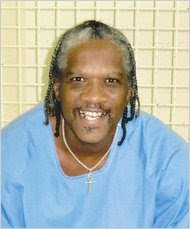
KEVIN COOPER; SACRAMENTO BEE ASKS GOVERNOR SCWARZENEGGER TO GIVE WEIGHT TO DISSENTING JUDGES WHO SAY AN INNOCENT MAN MAY BE EXECUTED.


"Ninth U.S. Circuit Court of Appeals Judge William A. Fletcher wrote an unusually long and blunt dissent signed by four other judges in which he raised disturbing questions about misconduct by sheriff's deputies and questionable decisions by the trial judge.

"In my opinion," Fletcher wrote, "he is probably innocent of the crimes for which the State of California is about to execute him. If he is innocent, the real killers have escaped. They may kill again. They may already have done so. We owe it to the victims of this horrible crime, to Kevin Cooper, and to ourselves to get this one right."

We do not offer an opinion about Cooper's guilt or innocence. Circuit Judge Pamela Rymer, a veteran jurist, challenged Fletcher's conclusions and reasoning. Still, Fletcher is no newcomer. Nor are the judges who joined his dissent. Their opinions ought to carry weight."

EDITORIAL: THE SACRAMENTO BEE;

---------------------------------------------------------------------------------

BACKGROUND: As New York Times columnist Nicholas Kristof wrote in a column headed "Framed For Murder?": "California may be about to execute an innocent man. That’s the view of five federal judges in a case involving Kevin Cooper, a black man in California who faces lethal injection next year for supposedly murdering a white family. The judges argue compellingly that he was framed by police. Mr. Cooper’s impending execution is so outrageous that it has produced a mutiny among these federal circuit court judges, distinguished jurists just one notch below the United States Supreme Court. But the judicial process has run out for Mr. Cooper. Now it’s up to Gov. Arnold Schwarzenegger to decide whether to commute Mr. Cooper’s sentence before leaving office.

WIKIPEDIA presents a thorough account of the Cooper case at:

http://en.wikipedia.org/wiki/Kevin_Cooper_%28inmate%29

---------------------------------------------------------------------------------

The editorial can be found at:

http://www.sacbee.com/2010/12/24/3279053/governor-should-weigh-petitions.html

---------------------------------------------------------------------------------

"Gov. Arnold Schwarzenegger has some difficult duties left in his final days. Numerous convicted prisoners and their supporters have petitioned the governor seeking mercy," the Sacramento Bee editorial published on December 24, 2010 under the heading, "Governor should weigh petitions of two prisoners," begins.

"Two in particular deserve the governor's attention. We urge him to consider the merits of their petitions," the editorial continues.

"Sara Kruzan

There is no doubt Sara Kruzan committed the murder that has put her behind bars for the past 16 years. The question is whether, at age 32, she deserves to spend the rest of her life in prison. Clearly she does not.

Kruzan grew up in Riverside with a drug-addicted mother. She was sexually molested as a child and, from the age of 9, hospitalized several times for depression. She was 11 when she met a 31-year-old man named "G.G." She says he had sex with her the day they met and eventually became her pimp. By 13 she was a child prostitute.

Three years later, Kruzan was arrested for killing G.G. Even though California Youth Authority evaluators concluded she was amenable to treatment in the juvenile justice system, Kruzan was tried in adult court, convicted of murder with special circumstances and sentenced to life without chance of parole.

Kruzan has been in prison half her life. Riverside prosecutors who oppose clemency point to troubles behind bars, including fights and failure to show up for work assignments. But in the last few years, she has finished high school and earned a degree from a community college. She makes no excuses for her crime. "I seek to be forgiven," she writes in her petition. "I have forgiven all who have hurt me. I sincerely request to be forgiven for the harm and pain I have caused."

This editorial board has previously spoken out against imprisoning juveniles on life sentences without the possibility of parole. Kruzan's tragic history and the crimes committed against her make her life sentence doubly unjust.

Kevin Cooper

Kevin Cooper is sitting on death row, having been convicted of slaying three members of the same family and a houseguest in a 1983 rampage in San Bernardino County.

According to some of the most powerful judges in the land, he may not have committed the murders for which he was convicted.

Ninth U.S. Circuit Court of Appeals Judge William A. Fletcher wrote an unusually long and blunt dissent signed by four other judges in which he raised disturbing questions about misconduct by sheriff's deputies and questionable decisions by the trial judge.

"In my opinion," Fletcher wrote, "he is probably innocent of the crimes for which the State of California is about to execute him. If he is innocent, the real killers have escaped. They may kill again. They may already have done so. We owe it to the victims of this horrible crime, to Kevin Cooper, and to ourselves to get this one right."

We do not offer an opinion about Cooper's guilt or innocence. Circuit Judge Pamela Rymer, a veteran jurist, challenged Fletcher's conclusions and reasoning. Still, Fletcher is no newcomer. Nor are the judges who joined his dissent. Their opinions ought to carry weight.

Cooper's lawyers have not asked that Schwarzenegger overturn Cooper's conviction. Rather, they ask that Cooper's sentence be reduced to life in prison without parole. Cooper deserves an answer.

Schwarzenegger has made plenty of tough decisions during his seven years in office. He faces at least two more before turning out the lights."

---------------------------------------------------------------------------------

PUBLISHER'S NOTE: The Toronto Star, my previous employer for more than twenty incredible years, has put considerable effort into exposing the harm caused by Dr. Charles Smith and his protectors - and into pushing for reform of Ontario's forensic pediatric pathology system. The Star has a "topic" section which focuses on recent stories related to Dr. Charles Smith. It can be accessed at:

http://www.thestar.com/topic/charlessmith

For a breakdown of some of the cases, issues and controversies this Blog is currently following, please turn to:

http://www.blogger.com/post-edit.g?blogID=120008354894645705&postID=8369513443994476774

Harold Levy: Publisher; The Charles Smith Blog; hlevy15@gmail.com;