Thursday, November 5, 2015

Douglas Prade: Ohio. Dr. Michael Bowers (Forensics in focus: CSI DDS): Superb, gritty analysis of prosecution tactics relating to the physical evidence (a bitemark): "Forensics: DA's mess up their own DNA evidence and judge lets them use it against the defence."..."The DA will argue before Judge Croce that this DNA profile “could have been transferred by someone anytime” either before the crime or since the coat has been in police and it’s crime lab’s custody. That means he eliminates this as relevant evidence of the someone other than Prade being the killer because of no proper “chain of custody.” That’s the mantra DAs use when newly found DNA evidence does not support their theory of a defendant’s guilt. It just “showed up.” The DA (and an agreeing appellate judge) brush off the fact that their narrow minded analysis is due to the government’s own lack of due diligence in properly maintaining custody of the coat in the first place. The DA in this case would have been all over accepting this DNA from post conviction testing if it had been Prade’s." (Must Read. HL);


"Douglas Prade has spent over 29 years in prison, then was released by another judge for 16 months and then re-imprisoned since July 2014 by another judge. The physical evidence (a bitemark)  of his identification presented at the original trial that put him in prison now is considered unreliable by other dental experts in recent submitted court documents. Now Prade wants a new hearing about the defense obtained DNA evidence and will try to convince the judge that no viable evidence exists (based on  the bitemark opinion being junk) of Prade’s guilt. The DNA recovered was from the victim’s lab coat and profiled as being from an unknown male. The area the DNA was discovered was directly over the area of the skin mark. The DA will argue before Judge Croce that this DNA profile “could have been transferred by someone anytime” either before the crime or since the coat has been in police and it’s crime lab’s custody. That means he eliminates this as relevant evidence of the someone other than Prade being the killer because of no proper “chain of custody.” That’s the mantra DAs use when newly found DNA evidence does not support their theory of a defendant’s guilt. It just “showed up.” The DA (and an agreeing appellate judge) brush off the fact that their narrow minded analysis is due to the government’s own lack of due diligence in properly maintaining custody of the coat in the first place. The DA in this case would have been all over accepting this DNA from post conviction testing if it had been Prade’s. You can be sure the DA will argue that the bitemark opinions are still worthwhile as well, claiming it to be allowable due to past cases in Ohio.......... Readers unfamiliar with this dark subject of “source attribution” of a perpetrator should understand that in 1997, the bitemark identifiers were at their zenith of judicial acceptance. Descriptions of “a dental blueprint,” “a trademark,”  “novel science,” “crime fighter dentists,” “all people’s teeth are unique,” and “with reasonable medical certainty” abounded in court room testimony by these members of the ABFO and AAFS. It even got to the point that “bitemarks” are as good as fingerprints” and all 50 US states accepted it as gospel. So, if Prade’s teeth were were either consistent or matched with the bruise (the two prosecution opinions), and all human teeth are unique (the first commandment of bite-mark matchers), then the jury in 1997 had conclusive evidence of Prade’s guilt. Some of these cases used to permit bitemark-readers into every state are now on the Innocence Project’s list of exonerationsDon’t expect the Akron DA to bring any of this up before this current judge. He just ridicules the thought that bitemark evidence can be disavowed or criticized as unreliable on the weight of its past mis-use and scientific ineptitude."
http://csidds.com/2015/11/05/disavowed-and-discredited-bitemark-evidence-in-prade-case-now-returns-with-new-dna-hearing-in-oh/

Bulletin: Douglas Prade; Akron: Bite-mark evidence; New round of hearings in Douglas Prade murder case: Expert says DNA tests exclude former police captain from bite-mark evidence; Ed Meyer reports from the Beacon Journal. "Advanced DNA testing of the central piece of crime-scene evidence, a bite-mark impression on a small section of fabric from Dr. Margo Prade’s lab coat, excluded Douglas Prade as the contributor, Staub told the judge. Those tests, involving a science not in use by authorities at the time of either the 1997 slaying or Prade’s aggravated murder trial the following year, were done by Ohio’s DNA Diagnostics Center in Fairfield and released in 2012 — the same tests that now-retired Judge Judy Hunter relied on to exonerate Prade in a 26-page ruling in January 2013. Hunter’s order stated that the center’s findings were so convincing that Prade had proven his “actual innocence.” Hearing continues. Reporter Ed Meyer; Beacon Journal;

"The first defense witness in a new round of Summit County court hearings that could lead to a new trial for Douglas Prade has had his DNA findings used in 20 criminal cases that resulted in the defendants’ exoneration. Common Pleas Judge Christine Croce, who will decide whether the former Akron police captain gets a new trial, heard that fact only minutes into Wednesday’s evidentiary hearing at the county courthouse. Dr. Rick W. Staub, a DNA lab director for 25 years who now manages the police crime scene and evidence department in Plano, Texas, once again stressed what the forensic evidence shows in the Prade murder case. Advanced DNA testing of the central piece of crime-scene evidence, a bite-mark impression on a small section of fabric from Dr. Margo Prade’s lab coat, excluded Douglas Prade as the contributor, Staub told the judge. Those tests, involving a science not in use by authorities at the time of either the 1997 slaying or Prade’s aggravated murder trial the following year, were done by Ohio’s DNA Diagnostics Center in Fairfield and released in 2012 — the same tests that now-retired Judge Judy Hunter relied on to exonerate Prade in a 26-page ruling in January 2013. Hunter’s order stated that the center’s findings were so convincing that Prade had proven his “actual innocence.” Both sides have agreed from the outset of court proceedings for one of the city’s most notorious crimes that the killer bit Dr. Prade inside her minivan during a struggle over the gun moments before the fatal shooting. The case has reached this point because Hunter’s order, freeing the former Akron police captain from prison nearly 15 years after he was convicted, was reversed on appeal in March 2014. Hunter’s ruling, however, also included a conditional order for a new trial if her findings were overturned. In what appeared to be a significant difference from the four days of DNA testimony in Hunter’s court in November 2012, Prade’s lawyers this time relied heavily on visuals that they argued would enable Croce to “walk through” the evidence..........The DNA analyses of Staub, who has a bachelor’s degree in mathematics and a doctorate in genetics from the University of Arizona (1984), also led to an exoneration in Summit County’s infamous Clarence Elkins murder case. Staub was the only witness Wednesday, and took the stand first, because the defense has the burden of proof to show that Prade, now 69, should get a new trial. Testimony resumes Thursday morning."
http://www.ohio.com/news/break-news/new-round-of-hearings-in-douglas-prade-murder-case-expert-says-dna-tests-exclude-former-police-captain-from-bite-mark-evidence-1.637977

Oklahoma: (Flawed hair match testimony): Radley Balko: "Crime lab analysts fail, innocents go to prison, public officials shrug."...The Washington Post columnist writes: "In Oklahoma, two men who were convicted due in part to testimony from the same crime lab analyst have now been exonerated. Yet state officials continue to defend the analyst, and they’re refusing to go back and review her work."


COMMENTARY:  "Crime lab analysts fail, innocents go to prison, public officials shrug." by Radley Balko, published by the Washington Post on November 3, 2105. (Radley Balko blogs about criminal justice, the drug war and civil liberties for The Washington Post. He is the author of the book "Rise of the Warrior Cop: The Militarization of America's Police Forces.")

GIST: "In Oklahoma, two men who were convicted due in part to testimony from the same crime lab analyst have now been exonerated. Yet state officials continue to defend the analyst, and they’re refusing to go back and review her work. "Last week, the city of Tulsa agreed to pay Sedrick Courtney $8 million for a wrongful conviction that led to him spending 16 years in prison. He was convicted in 1996 in the 1995 robbery of a woman in her Tulsa apartment and was paroled in 2011. He later was exonerated. Emma Freudenberger of the New York law firm Neufeld Scheck & Brustin said Tulsa police crime lab analyst Carol Cox testified at Courtney’s trial that a bleached red hair was found on a mask recovered at the crime scene and on Courtney. Defense attorneys say the hair from Courtney was neither red nor bleached and that it should have been obvious that it didn’t belong to him. “It’s not that the testimony was made up or misleading. What she did was more devious than that,” Freudenberger said. “We’re not talking about evolving standards in science. We’re talking about a very basic standard: Don’t lie. She lied about finding the red hair on Sedrick’s head. The prosecutor said in closing it was key evidence.” . . . Freudenberger said Cox also provided similar testimony in the conviction of Timothy Durham Jr. He was convicted in 1993 of the rape of an 11-year-old two years before, despite having several alibi witnesses who placed him in Texas at the time of the crime.
Victim identification played a key role in his conviction and led to a prison sentence of 3,220 years. DNA testing exonerated him in 1996 after the Innocence Project intervened. Oklahoma law enforcement officials are standing by Cox. Here’s Gerry Bender, manager of the Litigation Division for the city of Tulsa. “She testified straight-forward. She testified to the truth, and she testified to the evidence within the scientific standards of the day,” Bender said. “What these attorneys from New York do is take the standards of 1995 in hair analysis and look at it in the microscope of 2015. That is totally unfair to all the individuals involved.” There are a lot of things wrong with that statement. First, the “these attorneys from New York” line is almost a parody of something a corrupt local local law enforcement official might have said in the 1960s. Bender might as well have said, “We’re tired of these outsiders coming around, stirring up trouble with their new ideas.” Second, Cox wasn’t testifying “within the scientific standards of the day,” because at the time, there were no scientific standards for hair fiber analysis. There were guidelines adopted by various law enforcement agencies, forensics groups and crime labs. But until only recently, there hasn’t been any scientific research to develop standards for hair fiber analysis. That’s the problem. And the research that has been done recently has shown that the testimony these analysts have given for decades has been flawed in nearly every single case — for decades. Third, even if Cox had been testifying “within the scientific standards of the day,” if those standards have now changed, and we know that the old standards caused innocent people to be convicted, whether or not Cox intended to deceive on the witness stand is completely irrelevant to the question of whether there ought to be a thorough review of her old cases. She may have been doing her absolute best, and with every intention giving the most accurate testimony she could, but if she was relying on a method of analysis that we now know to be scientifically unfounded, a review of all of her cases is imperative. You don’t let potentially innocent people rot in prison because you don’t want to besmirch the reputation of a loyal public servant. Fourth, Bender notes that Courtney was also identified by an eyewitness. This, he claims, shows that Cox’s testimony isn’t the reason Courtney was wrongly convicted, and therefore she shouldn’t be subject to all of this criticism. Actually, it calls for precisely the opposite. We now know that Courtney was innocent. How is it that Cox’s analysis was able to implicate an innocent man? Was she told ahead of time about the eyewitness identification? Could that have introduced some bias to her analysis? Or did Cox do the analysis first, after which police or prosecutors then guided the witness into making a mistaken identification? Under either scenario, the fact that both a crime lab analyst and an eyewitness separately implicated an innocent man suggests that there are some serious problems with how Tulsa police and prosecutors handle and analyze evidence. If it happened in these two cases, it almost certainly happened in others. Instead of rushing to Cox’s defense, perhaps Bender and other public officials in Tulsa ought to be looking into that.........Back in the Oklahoma story, Bender lamented that those defense attorneys from New York were implicating not just Cox, but also hard-working cops and prosecutors — that they were “trying to trash the names and careers of professionals who have given to our community for years.” But really. What sort of public servant sees no ethical obligation to even notify potentially innocent people that the conviction that sent them to prison and ruined their lives was won with falsified evidence, and that they could now try to clear their names? Scratch that. I guess we know what sort of public official — a prosecutor. But even if there is no professional obligation, there’s certainly a moral one."

The entire commentary can be found at:
https://www.washingtonpost.com/news/the-watch/wp/2015/11/03/crime-lab-analysts-fail-innocents-go-to-prison-public-officials-shrug/

Wednesday, November 4, 2015

Bulletin: Election results Mississippi; Radley Balko presents good news and bad news: "One of America’s worst prosecutors lost last night, but one of its worst attorneys general won." ...The bad news is the reelection of Attorney General Jim Hood - a staunch supporter of notorious medical examiner Dr. Steven Hayne - as Attorney General. Washington Post;


"Mississippi was one of a handful of states to hold statewide elections last night. Regular readers of The Watch will recognize a couple of the names on the ballot. First, the good news: Longtime district attorney Forrest Allgood was defeated by challenger Scott Colom. Allgood had been DA for the state’s 16th judicial district since 1989. During that time, he became one of the most aggressive prosecutors in the country and a vocal defender of notorious medical examiner Steven Hayne and the disgraced bite mark “expert” Michael West. Allgood continued to both use and defend West long after he’d been widely considered a fraud, even within the already-suspect community of bite mark analysts. He, in fact, once compared West to Copernicus, calling him a man of science widely misunderstood by his contemporaries..........Like Allgood, Hood has been a staunch defender of Hayne over the years. (Hood often utilized Hayne himself when he was a district attorney.) In fact, when Hayne was effectively fired from conducting state autopsies a few years ago, Hood led a failed effort to bring him back. Hood did recently acknowledge West’s credibility problems, but he has done very little to address them, and, in fact, his office is still defending convictions won with West’s testimony, including at least one death penalty conviction." Radley Balko blogs about criminal justice, the drug war and civil liberties for The Washington Post. He is the author of the book "Rise of the Warrior Cop: The Militarization of America's Police Forces."
 https://www.washingtonpost.com/news/the-watch/wp/2015/11/04/election-results-one-of-americas-worst-prosecutors-lost-last-night-but-one-of-its-worst-attorneys-general-won/

Romeo Phillion: May he rest in peace. Wrongfully imprisoned for 32 years, he has died at 76. Toronto Star reporter Jacques Gallant does justice for the wrongfully convicted man with a memorable 'lead.'..."The justice system is not infallible. Romeo Phillion knew that better than most. Wrongfully convicted of murder in 1972, he would spend almost 32 years in prison — a life robbed by the failure to acknowledge what is not so surprising today: that confessions can be false; that evidence is sometimes withheld; that the courts can get it wrong."


Embedded image permalink


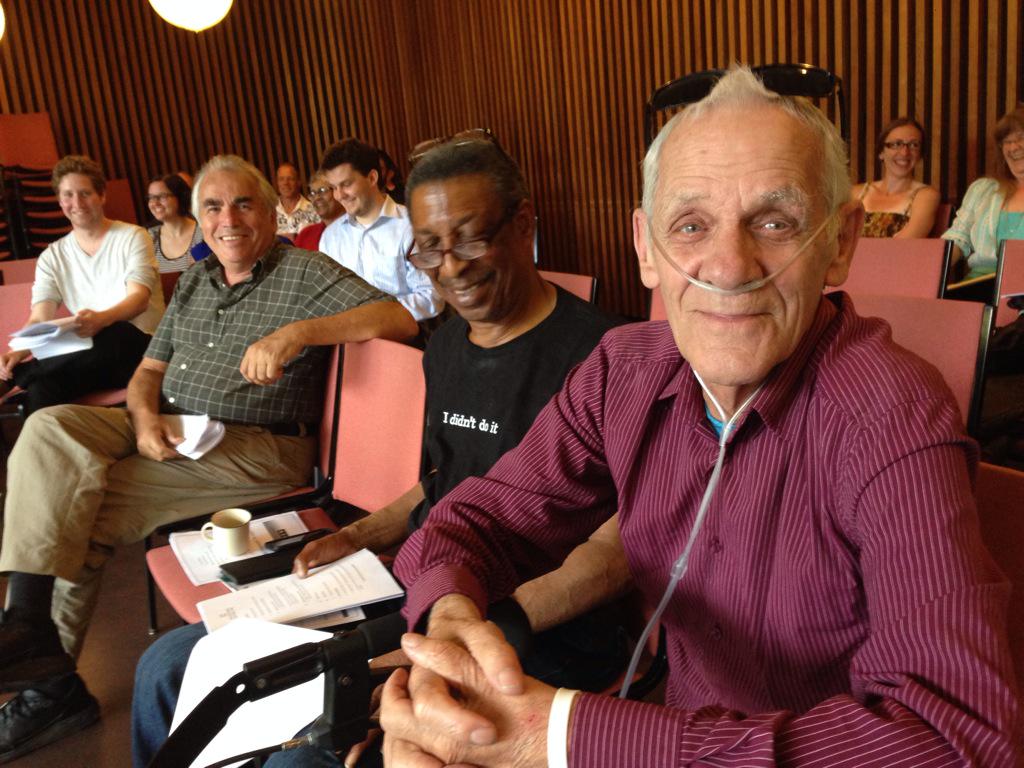
Above: Harold Levy,  Association in Defence of the Wrongly Convicted 'Ambassador' John Artis,  and the late Romeo Phillion, at a recent  AIDWYC annual meeting.

PUBLISHER'S NOTE: Romeo Phillion's death represents one of the darkest blots  on Canada's criminal justice system  As former Globe and Mail reporter Kirk Makin wrote on November 28,  2008:  "Romeo Phillion is likely the only accused killer ever to have his alibi both confirmed and then discredited by the same police investigators, an Ontario Court of Appeal judge noted yesterday. Mr. Justice Michael Moldaver said that the bizarre anomaly - coupled with the fact that Mr. Phillion's defence may have been kept in the dark about the alibi reports prior to his 1972 trial - may entitle the 59-year-old man to have his conviction quashed. "I can't say that I've ever heard of a case where police went out and verified an alibi and later discounted it," Judge Moldaver said to Crown counsel Lucy Cecchetto, during a special review of Mr. Phillion's case. "If you have got another case, please tell me." Judge Moldaver said that the troubling alibi scenario was worsened by the disappearance of physical evidence, police notebooks and investigative reports in the case. "You have to factor all these things into the mix and say: 'Under these particular circumstances - perhaps never to recur again - was there an obligation on the Crown to disclose?' " he said." Yes, the conviction was quashed - but  only after Romeo had spent 32 years behind bars. Yes, the conviction was quashed - but Romeo was forced to go to the courts if he wanted compensation and sadly died before the courts had processed his claim. Yes, the conviction was quashed, but Romeo had not yet received the official exoneration  and apology from the government which he deserved. To make matters worse, there's the disturbing  suggestion that that the police hid from Phillion's lawyers the alibi which would have trumped a false confession  (which Phillion promptly retracted)  - and, as Kirk Makin reported, "Judge Moldaver said that the troubling alibi scenario was worsened by the disappearance of physical evidence, police notebooks and investigative reports in the case." To my mind, and so many others,  there is no way in which Romeo would have been convicted and put through  his 32-year ordeal, if existence of the alibi evidence (originally confirmed by the police)  had been disclosed.  I met Romeo quite a few times over the past decade  and I was always inspired by his positive nature, his ability to laugh - in spite of it all - and the support he gave to other wrongfully convicted people.  He shall be missed.

Harold Levy; Publisher; The Charles Smith Blog.

STORY: Romeo Phillion, wrongfully imprisoned for 32 years, dies at 76," by reporter  Jacques Gallant, published by the Toronto Star on November 4, 2015.

SUB-HEADING:   "Phillion spent 32 years in prison for a wrongful conviction for murder and was in the process of suing the Crown and police for $14 million."

GIST: The justice system is not infallible. Romeo Phillion knew that better than most. Wrongfully convicted of murder in 1972, he would spend almost 32 years in prison — a life robbed by the failure to acknowledge what is not so surprising today: that confessions can be false; that evidence is sometimes withheld; that the courts can get it wrong. Phillion died Monday morning at the age of 76 in a Mississauga hospital, following a long illness. He was the longest-serving inmate in Canada to have a murder conviction thrown out. What he wanted most in his years of freedom, he never received: a finding by the court that he was innocent of the 1967 stabbing death of Ottawa firefighter Leopold Roy, an apology for the decades spent cut off from society and compensation from the government. .......
The government referred Phillion’s case to the Ontario Court of Appeal, which ordered a new trial — but not an acquittal — in 2009. The court found that it was never disclosed to the defence at the first trial that police had verified Phillion’s alibi, showing his innocence. The police report confirming the alibi might never have surfaced, had a parole officer not shown it to Phillion in 1998, according to his biography on the AIDWYC  (Association in Defence of the Wrongly Convicted)  website..........(AIDWYC founder James) Lockyer said he believed Phillion’s 12 years of freedom were happy ones. He was a staunch supporter of AIDWYC, appearing in his scooter at many of their events, as well as in court when a wrongfully convicted individual was being released. “He had friends he never had before and he had a sense of being someone, because people were really interested in meeting him and hearing him speak publicly,” said Lockyer.
“It was remarkable how much everyone always liked him.”

The entire story can be found at:

 http://www.thestar.com/news/gta/2015/11/03/romeo-phillion-wrongfully-convicted-of-murder-has-died.html

See the interesting account of Romeo Phillion's ordeal in Canada's criminal justice system by Sarah Harland-Logan, headed:  Introduction: The Unsolved Murder of Leopold Roy, which was  published on the AIDWYC web page.  "More than 20 years later, in 1998, Romeo’s case took a surprising turn. His parole officer gave him an envelope containing police reports from his Corrections Canada file. One of these documents was a police investigation report that had been prepared on April 12, 1968 by prepared by the investigating officer, Detective McCombie. This report appeared to provide Romeo with an alibi: it indicated that Detective McCombie had spoken to a Trenton service station operator who confirmed that Romeo had been in Trenton between 12 and 1 p.m. on August 9 – the day of Leopold’s murder – “therefore making it impossible for him to return to Ottawa by 2:45 p.m. at the time the murder was committed.”[20] This possible alibi had never been raised in Romeo’s trial. In fact, his lawyer specifically stated at trial that there was “no issue” with the fact that Romeo had been in Ottawa at the time of Leopold’s death.[21] Finally, Romeo had compelling evidence with which he could get his case reopened. He sent Detective McCombie’s report to the Innocence Project at Osgoode Hall Law School. On May 15, 2003, the Innocence Project and AIDWYC submitted a s. 696.1 application for ministerial review to determine whether Romeo’s conviction was a miscarriage of justice.[22] Romeo was awarded bail while the Minister of Justice considered the application, bringing an end to his 31 years spent in prison. Although Romeo could have applied for parole much earlier, he had refused to do so because he felt that that applying for parole would be tantamount to admitting that he had killed Leopold. Romeo continued to insist that he was innocent.[23] On August 2, 2006, the Minister of Justice ordered that the Ontario Court of Appeal reopen Romeo’s case.[24] The judges heard evidence to determine why Detective McCombie’s 1968 report giving Romeo a verified alibi for the time of the murder had never been disclosed to his lawyer.[25] In its decision, the majority of the Court concluded that the Crown had not intentionally pursued their case against him knowing that he was innocent.  The majority found that there was a great deal of confusion surrounding whether and when the police learned further information that discredited this alibi. Detective McCombie testified that after submitting the April 12, 1968 report, he had retrieved tow records of Romeo’s car showing that he could actually have made it back to Ottawa in time to have killed Leopold.[26] However, there was no evidence to confirm that Detective McCombie had in fact made this trip and found evidence that discredited the alibi. Justice Moldaver stated in his decision that “the tow records … and the occurrence report that Detective McCombie claims to have prepared upon his return from Trenton – if these items in fact existed and were deposited there – had gone missing from the [police] property room by January 1972 when … [Romeo] was charged” with Leopold’s murder.[27] Justice Moldaver did not conclude that Detective McCombie was lying, given his distinguished career and sterling professional reputation.[28] However, he found the complete lack of documentation confirming Detective McCombie’s supposed trip to Trenton to be “disturbing,” though perhaps not particularly surprising, given the numerous other exhibits that the police had lost and could not locate for Romeo’s trial.[29]
Regardless of what exactly happened in the sloppy police investigation, it was perfectly clear that the Crown prosecutor had a copy of the April 1968 report, which was never disclosed to Mr. Cogan, Romeo’s lawyer.[30] As a result, Mr. Cogan was unable to use the report – which, as noted by Justice Moldaver, “would have been gold in his hands” – to cross-examine the officers about Romeo’s alibi.[31] Therefore if Mr. Cogan had known about the report, Romeo’s trial would likely have gone very differently, and Romeo probably would not have spent the following three decades in prison.[32] The Court of Appeal overturned Romeo’s conviction and ordered a new trial.[33] However, the Crown withdrew the murder charge against Romeo on April 29, 2010, since there was no reasonable chance that the new trial would result in his conviction.[34] Coincidentally, April 29 is Romeo’s birthday: his name was finally cleared on the day he turned 71. After the charges were withdrawn, he told reporters that he “got an apology from the judge, which was a gift” that he was “not expecting.”[35] “I’m 71 years old today,” he explained, “but I feel like I’m 21.”[36]"

 http://www.aidwyc.org/cases/historical/romeo-phillion/

PUBLISHER'S NOTE: Dear Reader. Keep your eye on the Charles Smith Blog. We are following this case.
 
I have added a search box for content in this blog which now encompasses several thousand posts. The search box is located  near the bottom of the screen just above the list of links. I am confident that this powerful search tool provided by "Blogger" will help our readers and myself get more out of the site.
 
The Toronto Star, my previous employer for more than twenty incredible years, has put considerable effort into exposing the harm caused by Dr. Charles Smith and his protectors - and into pushing for reform of Ontario's forensic pediatric pathology system. The Star has a "topic" section which focuses on recent stories related to Dr. Charles Smith. It can be found at:
 
 http://www.thestar.com/topic/charlessmith
 
Information on "The Charles Smith Blog Award"- and its nomination process - can be found at:
 
http://smithforensic.blogspot.ca/2013/12/the-charles-smith-award-presented-to_28.html  
I look forward to hearing from readers at:

hlevy15@gmail.com;  Harold Levy: Publisher; The Charles Smith Blog;

Bulletin: Douglas Prade: Hearings begin today in which attornies for the former Akron police captain serving 26 years to life in prison after a jury convicted him in 1998 of killing his ex-wife will argue that their client deserves a new trial because there’s no physical evidence that ties him to the slaying. ........." Croce has said she would only allow testimony and arguments about DNA evidence at this week’s hearings. But defense attorneys hope to convince Croce to consider an expert’s report that said bite mark testimony from prosecution experts during the 1998 trial would be inadmissible today." Associated Press.


"Attorneys for a former Akron police captain serving 26 years to life in prison after a jury convicted him in 1998 of killing his ex-wife will argue at hearings in Akron that their client deserves a new trial because there’s no physical evidence that ties him to the slaying. The case of Douglas Prade, 69, has been bouncing around various courts after experts testified in 2012 that male DNA found on Margo Prade’s lab coat didn’t match her ex-husband’s. Summit County Common Pleas Judge Sara Hunter, who has since retired, exonerated and freed Prade in January 2013 and wrote in a ruling that Prade should get a new trial if the exoneration was overturned.........Hearings in the case begin Wednesday afternoon. Croce has said she would only allow testimony and arguments about DNA evidence at this week’s hearings. But defense attorneys hope to convince Croce to consider an expert’s report that said bite mark testimony from prosecution experts during the 1998 trial would be inadmissible today. Cleveland attorney David Alden said Prade was convicted in large part on testimony from forensic dental experts, one of whom said the bite mark on Margo Prade’s arm was made by her ex-husband and another who said it was consistent with his dentition. Standards in forensic dentistry have evolved since 1998 and in the last few years, Alden said. Today, those experts wouldn’t have been allowed to testify that it was Prade who bit his ex-wife unless they were certain who might have been in Margo Prade’s van when she was shot and killed Nov. 26, 1997, Alden said. “A lot of people have looked carefully at the forensic science of odontology and have said it doesn’t have a scientific basis,” Alden said."
http://www.washingtontimes.com/news/2015/nov/4/ohio-judge-to-decide-if-ex-officer-gets-new-trial-/

Dr. Alice Newton: Massachusetts: The Globe profiles a pediatrician at the centre of storms on child abuse. “I’m not into this to accuse people,” said Massachusetts General Hospital’s Dr. Alice Newton."Her critics don’t mince words. Melinda Thompson, attorney for an Irish nanny who was recently released after the shaken-baby charges against her were dropped, referred to Newton as a “maniac” who recklessly misuses her medical power. “She has become more of a prosecutor than a doctor,” said Thompson, who represented Aisling Brady McCarthy. “I think it’s shocking that she’s heading a child abuse team at a major hospital.”


STORY: "Pediatrician is at the center of storms on child abuse,"  by reporter Patricia Wen, published on November 4, 2015, by the Globe.  
 
PHOTO CAPTION:  “I’m not into this to accuse people,” said Massachusetts General Hospital’s Dr. Alice Newton."

The entire story can be found at:

http://latestworldwidenews.org/metro/2015/11/03/alice-newton-pediatrician-both-admired-and-reviled/f9n28Ni0EvoouJgesk5Z5I/story.html
 
PUBLISHER'S NOTE: Dear Reader. Keep your eye on the Charles Smith Blog. We are following this case.
 
I have added a search box for content in this blog which now encompasses several thousand posts. The search box is located  near the bottom of the screen just above the list of links. I am confident that this powerful search tool provided by "Blogger" will help our readers and myself get more out of the site.
 
The Toronto Star, my previous employer for more than twenty incredible years, has put considerable effort into exposing the harm caused by Dr. Charles Smith and his protectors - and into pushing for reform of Ontario's forensic pediatric pathology system. The Star has a "topic" section which focuses on recent stories related to Dr. Charles Smith. It can be found at:
 
 http://www.thestar.com/topic/charlessmith
 
Information on "The Charles Smith Blog Award"- and its nomination process - can be found at:
 
http://smithforensic.blogspot.ca/2013/12/the-charles-smith-award-presented-to_28.html  
I look forward to hearing from readers at:

hlevy15@gmail.com;  Harold Levy: Publisher; The Charles Smith Blog;