Showing posts with label young. Show all posts

Friday, November 13, 2009

UP-DATE; ONE YEAR AFTER RELEASE OF GOUDGE REPORT; MAURICE GAGNON'S REQUEST FOR INFORMATION ON COMPENSATION MET BY WALL OF SILENCE FROM GOVERNMENT;


"WHILE THE PARTICULAR RECOMMENDATION ABOUT COMPENSATION MAY HAVE COME OUT OF THE GOUDGE INQUIRY, ADDRESSING THAT RECOMMENDATION IS AN UNDERTAKING OF THE MINISTRY OF THE ATTORNEY GENERAL. AS SUCH, I AM NOT IN A POSITION TO ADDRESS YOUR REQUEST. NEVERTHELESS, I HAVE TAKEN THE LIBERTY OF FORWARDING YOUR CORRESPONDENCE TO THE HONOURABLE CHRIS BRADLEY, ATTORNEY GENERAL, SO THAT HE MAY BE AWARE OF YOUR COMMENTS. I TRUST THE ATTORNEY GENERAL WILL GIVE CONSIDERATION TO THE CONCERNS YOU ADDRESS."

THE HONOURABLE RICK BARTOLUCCI; MINISTER OF COMMUNITY SAFETY AND CORRECTIONAL SERVICES (FORMERLY CALLED MINISTRY OF THE SOLICITOR GENERAL) IN LETTER TO MAURICE GAGNON;

----------------------------------------------------------------------------------

As noted in a recent post, Maurice Gagnon's requests to the Ontario government for information about the compensation process it has pledged to set up for Dr. Charles Smith's victims have been met by a wall of silence.

This must be particularly disturbing to Maurice Gagnon who fought for years to expose Dr. Smith's nefarious involvement in his daughter's case - and who was brushed off time after time by the Chief Coroner - and even the Solicitor General of the time.

As Commissioner Stephen Goudge noted in his report, after Maurice Gagnon filed a 20-page complaint against Smith with the Coroner's Council, "Indeed, there is no evidence that Dr. (James) Young (then Chief Coroner of Ontario) took any measures to investigate the details of Mr. Gagnon's concerns about Dr. Smith's practices in Nicholas' case."

(There was evidence that Dr. Young actively tried to thwart complaints that Mr. Gagnon and two other complainants had attempted to launch against Smith with the Ontario College of Physicians and Surgeons.)

Goudge also noted in his report that Maurice Gagnon's complaint about Smith to the Solicitor General - the same Ministry that has sluffed off his inquiries about compensation - was dismissed in a reply drafted by Young, who also held the position of assistant deputy minister of public safety.

Justice Goudge unequivocally ruled that: "The Solicitor General's response to Mr. Gagnon's complaint, drafted by Dr. Young, was substantively inaccurate."

And now the current "Solicitor General" has passed the buck on Maurice Gagnon's incredibly polite, measured and sincere inquiry about compensation to Attorney General Chris Bradley who has thus far remained silent - and Maurice Gagnon must indeed wonder if anything has changed in the year since Justice Goudge released his report.

Here is the correspondence between Maurice Gagnon and Rick Bartolucci, MPP Sudbury, who is head of the the renamed Ministry of the Solicitor General - Ministry of Community Safety and Correctional Services, commencing with Gagnon's letter dated 23 April, 2009,

"Dear Rick; RE: Goudge Inquiry Report/Compensation;

Ours is one the many families victimized by the reckless and malicious actions of pathologist Charles Smith and your Office of the Chief Coroner, in their investigation of pediatric deaths, including our Nicholas.

Judge Goudge presented his findings some seven (7) months ago. In keeping with an Inquiry recommendation, the Attorney General appointed a three person committee (December 2008), headed by retired Judge Coulter Osborne, to explore compensation for the acknowledged victims.

This initiative by the Government gave everyone a guarded sense of optimism that justice would finally be served. However, it has been over four months since this appointment, without a single word from the compensation committee or the AG. Optimism has been tempered with justifiable apprehension.

Could you provide an update on the status of the compensation committee’s work, when it may be reporting recommendations to the AG, and, finally, when can we (the victims) expect to be contacted, or at least apprised of a time frame for resolution.

Sincerely: Maurice Gagnon;


Here is Bartolucci's response to Maurice Gagnon, dated June 1, 2009:

"Response from Rick Bartolluci; MPP Sudbury Ministry of Correctional Safety and Community Services.

Dear Mr. Gagnon.

Thank you for your letter of April 23, 2009, requesting an update on the status of proposed compensation for families who were victimized as a result of the actions of Dr. Charles Smith. I am pleased to respond.

I appreciate your bringing this to my attention, however, as you state in your letter. the compensation package is being formulated by the committee appointed by the Attorney General. While the particular recommendation about compensation may have come out of the Goudge Inquiry, addressing that recommendation is an undertaking of the Ministry of the Attorney General. As such, I am not in a position to address your request. Nevertheless, I have taken the liberty of forwarding your correspondence to the Honourable Chris Bradley, Attorney General, so that he may be aware of your comments. I trust the Attorney General will give consideration to the concerns you address.

Again, thank you for writing; Sincerely. Rick Bartolucci;


Maurice Gagnon informed the writer earlier today that he has neither heard from Attorney General Bradley, or from Premier Dalton McGuinty, to whom he sent a similar letter.

Premier McGuinty has already played an important public role in coming to grips with the enormous mess left by Dr. Charles Smith and his superiors in the Coroner's Office by calling for the public inquiry and appointing Justice Goudge as Commissioner.

He can now perform another important role by intervening on behalf of Dr. Smith's many victims and ordering his ministers to commence the compensation process without delay - in a clear and public manner.

Harold Levy...hlevy15@gmail.com;

Sunday, June 7, 2009

TORONTO STAR PERSPECTIVE ON FORMER CHIEF CORONER DR. JAMES YOUNG; ROLE HE PLAYED IN CHARLES SMITH TRAVESTY; YOUNG RESIGNS FROM COLLEGE; CAIRNS TOO;


"YESTERDAY, AN OVERHAULED CORONERS ACT WAS GIVEN ROYAL ASSENT TO ENSURE SUCH TRAGEDIES NEVER HAPPEN AGAIN. THE LEGISLATION REQUIRES, FOR THE FIRST TIME, THAT THE PROVINCE’S CHIEF CORONER BE HELD ACCOUNTABLE TO AN OVERSIGHT COUNCIL. AND IT PAVES THE WAY FOR THE CREATION OF A COMPLAINTS COMMITTEE THAT WILL TRACK COMPLAINTS ABOUT CORONERS AND PATHOLOGISTS.

THE NEW LEGISLATION COINCIDES WITH YOUNG’S RESIGNATION AS A MEMBER OF THE COLLEGE OF PHYSICIANS AND SURGEONS OF ONTARIO. EFFECTIVE THIS PAST MONDAY, IT MEANS HE CAN NO LONGER PRACTISE MEDICINE IN THE PROVINCE...

THE BAD NEWS FOR YOUNG DIDN’T END WITH THE INQUIRY. GOUDGE’S REPORT WAS FOLLOWED BY THE REVELATION THAT YOUNG IS BEING INVESTIGATED BY THE COLLEGE, THE REGULATORY BODY FOR DOCTORS. THE COLLEGE ONLY INVESTIGATES DOCTORS FOR ALLEGATIONS OF PROFESSIONAL MISCONDUCT AND INCOMPETENCE. SHOULD CASES GO BEFORE A DISCIPLINARY COMMITTEE, PENALTIES CAN RANGE FROM A REPRIMAND TO A LICENCE REVOCATION. THE INVESTIGATION IS ONGOING DESPITE YOUNG’S RESIGNATION FROM THE COLLEGE. INCREDIBLY, JUST SIX YEARS AGO, THE COLLEGE HAD HONOURED YOUNG WITH ITS PRESTIGIOUS PRESIDENT’S AWARD FOR HIS HANDLING OF THE SARS CRISIS. (THE COLLEGE IS ALSO INVESTIGATING SMITH AND CAIRNS, THE LATTER OF WHOM, LIKE YOUNG, RESIGNED THIS WEEK FROM PRACTICING MEDICINE.)"


STAFF REPORTER THERESA BOYLE: THE TORONTO STAR;" PHOTO: STEVE RUSSELL;
-------------------------------------------------------------------------------
The Toronto Star has become the first Canadian newspaper to examine the role played by former Chief Coroner Dr. James Young in the problems which plagued Ontario's forensic pediatric pathology system during the Charles Smith years and led to so many devastating miscarriages of justice.

The superb article, by Staff reporter Theresa Boyle, who reported the Goudge Inquiry for the Star, bears the following preface: "The Swissair Flight 111 crash. The Walkerton E. coli crisis. The SARS outbreak. Over the course of his illustrious career, Dr. James Young presided over all of them with deftness and aplomb. But then, just when his star was at its brightest, a cloud appeared – on his watch."

Toronto Star photographer Steve Russell's photograph of Dr. Young is accompanied by a cut-line which says: "James Young, former chief coroner of Ontario, is seen outside his home near Barrie. Young left the public service in 2007 after a stint in Ottawa, though he still does consulting work on pandemic preparedness."

The article, published on June 6. 2009, under the heading "In the face of disaster", can be found, with Links to other Smith-related videos and stories, at http://www.thestar.com/news/gta/article/646616.

It is accompanied by Dr. Young's resume, as follows;

"James Young is best known for being Ontario's chief coroner for 14 years. Other career highlights:

Leadership

• President of the American Academy of Forensic Sciences

• President of the International Association of Coroners and Medical Examiners, and associate professor of forensic science at the University of Toronto

• Led international teams investigating politically sensitive deaths in Nigeria, Colombia, Kazakhstan; gave expert advice on cases in Canada, the U.S., New Zealand, Bermuda, England, Israel, Japan and Thailand

Teaching

• Gave lectures to the Law Society of Upper Canada, the Ontario Crown Attorneys' School, the Ontario Provincial Police, the New York State Police Academy, the FBI National Executive Institute and Israeli police

Awards

• Received the President's Award from the College of Physicians and Surgeons for his role in the SARS outbreak response

• Was given the John R. Hunt Award from the American Academy of Forensic Sciences for outstanding contributions to the field;

"Wearing a bow tie and black tuxedo, Dr. James Young stood beaming at the foot of the grand staircase at Queen’s Park. It was the evening of Sept. 20, 2005, and Young was receiving the province’s highest honour - the Order of Ontario," Boyle's article begins;

"The night marked the pinnacle of an illustrious public service career that spanned 23 years and included a long list of impressive appointments," the article continues;

“Dr. James Young has had to do tasks over the years that others may find gruesome. But as Ontario’s former chief coroner and commissioner of emergency management, it goes with the job,” exclaimed Joan Andrew, secretary general of the Order.

She spoke of how Young had ably co-managed the SARS crisis, and how he had helped identify victims of the 9/11 terrorist attacks in New York, the Swissair plane crash in Nova Scotia, the Asian tsunami and the Bali terrorist bombings.

On this night, Young’s star was at its brightest. He was being lauded as Canada’s man at some of the worst disasters in modern history. And as incoming president of the American Academy of Forensic Sciences, he was a respected figure in the international forensic scene. He was also a leading authority in pandemic preparedness.

But life was about to change for this accomplished man. While Young had been busy travelling from crisis to crisis, one brewed in his own backyard - one partly of his own making. Young would be found to have contributed to major miscarriages of justice that shattered public confidence in pediatric forensic pathology and seriously compromised Ontario’s criminal justice system.

The scandal, which rocked the Office of the Chief Coroner of Ontario, saw family members and caregivers wrongly implicated in the deaths of children because of flawed pathology. The casualties included William Mullins Johnson, 38, who spent 12 years in jail after being wrongly convicted of first-degree murder of his 4-year-old niece. Other cases where mistakes had been made are now in various states of appeal.

The province is looking at compensation for the victims, which could leave taxpayers on the hook for millions.

Yesterday, an overhauled Coroners Act was given royal assent to ensure such tragedies never happen again. The legislation requires, for the first time, that the province’s chief coroner be held accountable to an oversight council. And it paves the way for the creation of a complaints committee that will track complaints about coroners and pathologists.

The new legislation coincides with Young’s resignation as a member of the College of Physicians and Surgeons of Ontario. Effective this past Monday, it means he can no longer practise medicine in the province.

Young’s downfall serves as a cautionary tale in failed accountability and the dangers of putting too much stock in a single individual.

In November 2005, a major review began into the work of a rogue pathologist, who, for years, had been under Young’s watch. Dr. Charles Smith, the probe would eventually reveal, had erred in investigations into the deaths of 20 children. In some cases, parents and caregivers were wrongfully prosecuted and siblings of dead children were put up for adoption.

The public inquiry that followed in 2007-08 would find that Smith lacked expertise in forensic pathology and that Young and his deputy, Dr. Jim Cairns, failed in their obligation to oversee him. The two de facto supervisors were blind to Smith’s inadequacies partly because they also lacked any specialized training in forensic pathology.

What’s worse, the pair played a major role in building Smith’s reputation as the most eminent pediatric forensic pathologist in Ontario. Young and Cairns had a “symbiotic” relationship with Smith whose stature reflected well on the coroner’s office, states the final report of the inquiry, released last October. They actively protected Smith from critics who had identified his shortcomings as many as 17 years earlier.

As Young accepted extra responsibilities in government, the office of the chief coroner suffered and an environment that fostered miscarriages of justice flourished. But instead of considering if the coroner’s office had played a role in wrongful convictions, Young was more concerned about the adverse publicity that Smith might attract, the inquiry found.

“Dr. Young was the last to see the writing on the wall,” wrote inquiry commissioner Justice Stephen Goudge. “With the additional burdens imposed by his new responsibilities, Dr. Young’s inattention to day-to-day administration was a recipe for a failure of oversight.”

Problems with oversight and accountability were compounded by misconceptions over Young’s expertise with even his political bosses assuming he had more credentials than he did.

Young, 60, declined to be interviewed, but in an email he wrote that he didn’t realize he had done anything wrong: “With the benefit of hindsight, I would have made some decisions differently, but at the time I believed I was doing what was right.”

He added: “The inquiry has provided valuable lessons for individuals and institutions. While I may not agree with some aspects of the Commission’s report, debating these differences will not in my view advance the cause of building a better system for the future.”

The bad news for Young didn’t end with the inquiry. Goudge’s report was followed by the revelation that Young is being investigated by the college, the regulatory body for doctors. The college only investigates doctors for allegations of professional misconduct and incompetence. Should cases go before a disciplinary committee, penalties can range from a reprimand to a licence revocation. The investigation is ongoing despite Young’s resignation from the college. Incredibly, just six years ago, the college had honoured Young with its prestigious President’s Award for his handling of the SARS crisis. (The college is also investigating Smith and Cairns, the latter of whom, like Young, resigned this week from practicing medicine.)

Young grew up in east-end Toronto and had ambitions in medicine as far back as high school. The notation beside his Grade 13 photo in the 1968 yearbook from Monarch Park Secondary School says he desired to become a “successful physician.” (It also states his nickname was “Cuddles,” that he liked girls and that an alternative to becoming a doctor was to become a “back-seat contortionist.”)

Young attended the University of Toronto for pre-med and medical school. While there, he wrote part-time on sports for the Globe and Mail.

After earning his medical degree in 1975, Young became chief intern at Scarborough General Hospital, responsible for a team of 12, the first of many leadership positions.

The following year, he moved to Elmvale - outside Barrie - to become a small-town doctor with a general practice. He married a nurse, Eileen, with whom he had four sons.

In 1977, Young became an investigative coroner for Simcoe County. He was appointed regional coroner in 1982 and returned to Toronto. This marked the start of a full-time career in public service.

Young eventually became deputy chief coroner and in 1990 he got the top job in the coroner’s office.

The Ontario coroner’s office on Grenville St. is just a couple of blocks from Queen’s Park. It’s a grey bunker of a building that receives as many as 2,000 bodies a year. While many have died of natural, but not readily apparent, causes, others are victims of accidents, suicides and homicides.

Young’s office was on the second floor; it was known to be cluttered with stacks of paper scattered about. Smith’s office, over at the Hospital for Sick Children, was also known to be chronically messy.

Young admitted that attending to details and paperwork wasn’t his strong point. He told the Hamilton Spectator in 2003 that he didn’t have a computer in his office and didn’t keep files.

“I like big challenges. I’m not big on routine. I actually get quite bored with routine. So I’m much better with a little bit of chaos and a little bit of tension.”

The falls of both Young and Smith are rooted in the confusion over roles and qualifications of players in Ontario’s nascent death investigation system.

Coroners, like Young, are medical doctors who lead death investigations, making the ultimate determination of how someone died, using information provided by police, families, medical records and forensic pathologists.

Pathologists, like Smith, are doctors with specialized training who work in labs and, for example, diagnose cancerous tumours. “Forensic” pathologists have further training, learning to conduct autopsies and testify in court.

Young was sometimes mistaken for a forensic pathologist. And Smith was hailed as Ontario’s top pediatric forensic pathologist, even though he had no formal forensic training.

Canada is decades behind Britain and the United States in formally training forensic pathologists. Pathologists doing forensic work here have traditionally been self-taught and informally trained, like Smith. In recent years, more of them have been educated abroad and the first homegrown forensic pathologists are expected to graduate later this year.

Smith began working as a pathologist at the Hospital for Sick Children in 1981 and by the end of the decade, he began doing work for the coroner’s office, conducting autopsies on children who had died under criminally suspicious circumstances.

In 1991, the Ontario pediatric forensic pathology unit was opened at Sick Kids, a creation of the coroner’s office and the hospital. The following year, Smith was appointed director.

“It does not appear that Dr. Young conducted a serious search for other, more qualified or experienced candidates, or that he attempted to improve Dr. Smith’s skills in forensic pathology after recommending his appointment. The need for forensic pathology expertise was simply not appreciated, and Dr. Smith’s appointment was convenient,” Goudge wrote.

Young was named assistant deputy minister of the public safety division of the Ministry of the Solicitor General in 1994. In this capacity, he oversaw the Centre of Forensic Sciences, the Ontario Fire Marshal’s office and Emergency Measures Ontario.

Young’s career began veering toward emergency and disaster response in 1998. That year, he assisted in recovery efforts after Swissair Flight 111 plunged into the sea off the coast of Peggy’s Cove, Nova Scotia. And he helped coordinate relief efforts after a brutal ice storm crippled eastern Ontario.

After 9/11, he was dispatched to New York to lead an Ontario forensic team assisting in the recovery.

Young’s reputation grew with each disaster.

In 2002, he became commissioner of public safety. In the post 9/11 world, the government wanted to ensure Ontario was prepared to respond to terrorist attacks and other emergencies. Young was the province’s front man in the war against terrorism.

During the 2003 SARS outbreak, Young participated in daily news conferences to update the public on measures to contain the virus. He liked the media and the media liked him; he was friendly, accessible and delivered good sound bites. “We got better ratings than the Edge of Night,” he said in a speech years later. “We became folk stars in our own area.”

On a sunny afternoon in August 2003, Young was snoozing on a chaise lounge in the backyard of his cottage, near Barrie, taking full advantage of his first full days off in months thanks to the SARS crisis.

Understandably, he was none too pleased when the office called about a power outage.

“It’s sunny up here and I really don’t care,” he told the caller.

“You do care.”

“No, I don’t.”

When told the whole province was out of power, he quickly changed his tune. He arranged for an OPP helicopter to pick him up near his cottage, stop in Caledon to fetch then-Premier Ernie Eves, and then head to Toronto.

A state of emergency was declared and stayed in effect for eight days. In playing a lead role in turning the lights back on in the province, Young was at his best: in the eye of the storm, and front and centre in the media.

Young was always ready and willing to take charge and the politicians loved him for it. The provincial Conservatives, who held government from 1995 to 2003, were among his biggest fans. Bob Runciman, currently the party’s interim leader, once referred to him as “the poster boy for public service in the province of Ontario.”

But that stellar reputation was partly built on misconceptions about his expertise.

For example, Liberal MPP Monte Kwinter, who served as community safety minister from 2003 to 2007, thought Young performed autopsies. He revealed this during an interview when explaining how, as a minister, he wasn’t in a position to technically evaluate Young’s work. “How am I supposed to know if he’s doing a good job or not. Am I supposed to go in and say, `Are you sure you dissected that guy properly?’ What do I know?”

Kwinter wasn’t the only political boss to think this. Former federal health minister Pierre Pettigrew said he chose to dispatch Young to the tsunami because, “He’s one of the top pathologists in Canada.” (Pettigrew later explained he didn’t have any records before him when he made the comment and his memory was a little hazy.)

Sometimes the media got it wrong, referring to Young as a pathologist and an expert in DNA analysis. So did government news releases. The one announcing his Order of Ontario award referred to him as “one of Canada’s foremost forensic scientists.”

Despite these misconceptions, Young’s reputation grew, as did his curriculum vitae.

At the inquiry, a section of his CV, titled Papers Presented, came under scrutiny. It lists research studies presented at U.S. conferences on which he is named as an author along with Smith and others. But under questioning, Young revealed he hadn’t, in fact, authored nor presented a number of these papers.

“My name is last because that’s where it deserves to be,” Young said. “I wasn’t writing the paper or generating the research or presenting the paper ..... It’s a way of sort of being able to say ..... this is the body of research that the office is doing right now.”

Dr. John Butt, a highly regarded forensic pathologist who testified about Smith’s errors at the inquiry, has since raised further questions about Young’s bio, in particular a portion that details his involvement in the Swissair recovery. Butt was Nova Scotia’s medical examiner at the time and his office had called Young for assistance.

Butt says he was surprised when he stumbled across Young’s bio on the Internet years later and saw how Ontario’s chief coroner had described his role. What caught Butt’s attention was this excerpt, also contained in Young’s CV: “Provided expert support and guidance to the Chief Medical Examiner of Nova Scotia in managing the entire process required to identify the victims of Swissair flight number 111 ..... Co-ordinated the collection of ante-mortem files, the forensic examination of the remains, and the cross referencing of the information collected so that positive identifications could be made and communicated to next of kin. September through October, 1998.”

Young “exaggerated” his role, particularly the claim that he “coordinated” these different tasks, Butt charges. “He had no unique sectors that he was in charge of,” argues Butt, now a Vancouver-based forensic consultant. He agrees that Young provided him with “expert support and guidance,” but says the “entire process” of identifying victims took more than a year and Young had been there for less than a month.

Butt says that “without question” Young was a big help. He was by Butt’s side much of the time and was a valuable sounding board and an able troubleshooter. “He wasn’t unproductive. I mean, I want to give the guy credit,” Butt says. “I’ll tell you what his forte is. He’s a good leader and he’s got a quick mind.”

Young was stripped of his coroner’s title in 2004 by the Liberal government. “The one issue that we had is that he was both the chief coroner and the commissioner of emergency management. That was sort of a conflict,” Kwinter told the Star in an interview.

It was later that year, after Dr. Barry McLellan moved from deputy to chief coroner, that the whistle was finally blown on Smith. McLellan forced Smith to resign as director of the Ontario pediatric forensic pathology unit, a step he had wanted to take earlier but was vetoed by Young.

McLellan subsequently initiated an internal review of Smith’s work, a move that led to the inquiry.

It struck a discordant note to see Young on the stand. The man, who for 14 years served at the helm of a tribunal that pointed out systemic shortcomings, was now being grilled about widespread deficiencies in his own.

Sitting in the witness box, Young fumbled as he apologized for his role in the debacle: “I ..... it ..... it distresses me tremendously to think that during my watch and during my time that these things happened ..... and it ..... it ..... I really do apologize for the miscarriages of justice.”

Young admitted he should have done more: “I don’t know why we didn’t stop (Smith) doing everything at that time ..... I just don’t know.”

Lawyer Julian Falconer struck a nerve, arguing that Young was not guided by the public’s interest when he took on more senior jobs in government: “I am going to suggest to you that the decision to occupy the position of assistant deputy minister while remaining chief coroner for the province of Ontario was borne out of a professional ambition and resulted in the erosion of the accountability of the office of the chief coroner and had nothing to do with enhancing the credibility or function of the office of the chief coroner.”

Young angrily denied the allegation. “I didn’t make that decision. The government chose ..... asked me to assume that role. I went along with it,” he said. “The government was well aware that I was reporting to myself, but also I was reporting in essence to the deputy minister at a higher level with more detail.”

Young indicated to the inquiry that historical worldly events call for strong leaders: “There are times for certain kinds of leaders in certain places in history. At the time that I was chief coroner and doing the other work, I made a conscious decision to agree with the government to do the other work.”

Perhaps the most damning evidence heard at the inquiry was that Young had ignored warning signals about Smith as early as 1991. At that time Justice Patrick Dunn had acquitted a Timmins girl who at the age of 12 had been charged with manslaughter in the death of a toddler she had been babysitting. Smith had been the Crown’s key witness and Dunn determined Smith lacked objectivity, failed to thoroughly investigate the case, neglected to keep proper records and lacked familiarity with relevant scientific literature.

Young testified he had only learned of the Dunn decision in 2007, shortly before the inquiry started, and was “dumbfounded” by it. But he acknowledged that he had numerous opportunities to learn of it earlier:

An investigator from the College of Physicians and Surgeons of Ontario told Young about it in 1997 while probing a complaint about Smith. But Goudge said Young had not fully appreciated the significance of the complaint because his objectivity was coloured by his belief that Smith was the leading pediatric forensic pathologist in Ontario, by Smith misleading him about the case and by his own misunderstandings about it.

The Dunn decision was cited in a 1999 complaint to the Coroner’s Council, a body that investigated complaints about coroners. But the council had been disbanded only months earlier and the complaint found its way to Young’s desk. Young personally responded to the complaint, saying he had read it “in detail and considered ..... very carefully.” But he told the inquiry he had no recollection of reading the part in question.

In 1999, the CBC’s Fifth Estate also mentioned the Dunn decision. Young said he was away when it aired and didn’t watch it on his return. Nevertheless, he urged the province to pay for part of the lawsuit launched against the CBC by Smith. (Smith eventually dropped the suit.)

In 2001, the Dunn decision was mentioned in a Maclean’s magazine feature about Smith, titled “Dead Wrong.” In a letter to a member of the public who had inquired about it, Young replied that the article itself was “dead wrong” and full of inaccuracies. But when asked about the article and letter at the inquiry, Young said: “I remember reading the article, but ..... it didn’t sink in, that’s all I know.”

Throughout the 1990s, complaints about Smith mounted as coroners, police, Crown counsel and individuals weighed in. Much of the criticism was similar to that raised by Dunn.

Young and his deputy, Cairns, not only failed to rein in Smith, they protected the pathologist from those who could. When the college wanted to investigate a complaint about Smith in 1997, they argued the regulatory body had no jurisdiction over the coroner’s office. In 2000, Young told the media and the attorney general’s ministry that his office would review Smith’s cases to assess his competence, but the idea was later quietly dropped. In 2001, Young asked Smith to stop doing coroner’s cases, not because of concerns about the pathologist’s competence, but because of the negative attention he might attract.

In April 2002, after it was determined the college did have jurisdiction to investigate Smith, Young sent a letter to the regulatory body, defending Smith in response to complaints filed against him. Young sent the letter even though he was aware that serious questions had been raised about Smith’s ethics and judgment. What’s more, the letter had been written by Smith’s lawyers and Young sent it, virtually unaltered.

In his report, Goudge slammed Young, saying the letter “misled” the college. “Dr. Young told the inquiry that he sent this letter in an attempt to be fair to Dr. Smith. He did so, however, at a cost to the public interest ..... The letter was not balanced or objective or candid. It was not a letter worthy of a senior public office holder in Ontario.”

Young made many valuable contributions to the province, but at the end of the day his biggest mistake was failing to mind the store.

“I think the moral coming out of this is that no matter what systems you have in place, personality and individual judgment are ultimately going to be what oversight rises or falls on,” says Lorne Sossin, a law professor at the University of Toronto, who conducted research for the inquiry, authoring a paper on oversight.

But he adds: “I’d hate to see there be a sense that all the ills that led to miscarriages of justice resting on his (Young’s) shoulders because I think that would be unfair.”

Many other factors contributed to the miscarriages, including: an outdated Coroners Act, a shortage of forensic pathologists, inadequate quality control measures, organizational weaknesses, insufficient action by Cairns (who also declined to be interviewed) and a “think dirty” culture that encouraged the consideration of abuse in cases where children had died.

In 2005, Young was squeezed out of the Ontario bureaucracy, according to government sources. Julian Fantino’s contract was not renewed as Toronto police chief and there was talk he was going to run in the next election for the provincial Tories. To thwart that, the Liberal government gave Young’s job as commissioner to Fantino. In turn, the government helped Young land a job in Ottawa as special adviser to the deputy minister of public safety and emergency preparedness. The province even paid Young’s salary - $299,000 in 2007 - while he worked for the federal government. Young wasn’t happy about the move, sources say.

He left Ottawa - and the public service - at the end of 2007.

Young, in his email, said he devoted much of his life to public service with the best of intentions:

“I entered public service more than 25 years ago because I believed that coroners’ work could improve the country and the province I love. My assignments were varied, often challenging and in some cases unprecedented. I am grateful to have been given these opportunities. I recognize all those that supported me and especially the sacrifices made by my family. Throughout my career I always acted in good faith and did what I thought was best for the people of Ontario and Canada.”

Young has moved from his Toronto condo to his cottage and is doing consulting work in the area of pandemic preparedness. Although he was once a leading Canadian authority in this area, he has been notably absent from the public arena during the swine flu outbreak, over which there is ongoing global concern about a pandemic.

Until his retirement about a month ago, he had been working occasional shifts at a Barrie after-hours clinic.

For the time being, Young says, he’s taking a break from public service.

“Whether this is temporary or permanent remains to be seen.”"


Harold Levy; hlevy15@gmail.com;

Friday, May 16, 2008

Part Five; Think Dirty; The Bernardo Connect Ontario's Unique "Think Dirty" Policy Reaches British Soil;


"A RECENT INVESTIGATIVE GUIDELINE SENT TO CANADIAN PATHOLOGISTS URGED THEM TO "THINK DIRTY" WHEN CONFRONTED WITH A POSSIBLE SIDS CASE, JUST TO BE SURE TO EXCLUDE ALL POSSIBILITY OF FOUL PLAY."

BRITISH BROADCASTING CORPORATION REPORT PUBLISHED FOLLOWING CONVICTION OF SALLY CLARK;

--------------------------------------------------------------------------------

Ontario's unique "think dirty" policy - circulated to coroner's and pathologists by former Chief Coroner Dr. James Young in 1995 - was noticed far beyond Canada's borders.

This is evident from a BBC report published after the conviction of Sally Clark in 1999 for the the murder of her two babies Christopher and Harry - within two months of each other.

By way of brief background, Wikipedia informs us that:

"Sally Clark (15 August 1964 – 15 March 2007) was a British lawyer," the Wikipedia account begins.

"She was the victim of a miscarriage of justice; her convictions in 1999 for the murder of two of her sons were quashed in 2003," it continues;

"Clark's first son died suddenly within a few weeks of his birth in 1996.

After her second son died in a similar manner, she was arrested in 1998 and tried for the murder of both sons.

Her prosecution was controversial due to statistical evidence presented by paediatrician Professor Sir Roy Meadow, who testified that the chance of two children from an affluent family suffering Sudden Infant Death Syndrome (also known as cot death in Europe or crib death in North America) was 1 in 73 million, when in fact it was closer to 1 in 200.

In an unusual intervention, the Royal Statistical Society wrote to the Lord Chancellor saying there was "no statistical basis" for Meadow's figure.

Clark was convicted in November 1999.

The convictions were upheld at appeal in October 2000, but after she had served more than three years of her sentence, they were quashed in a second appeal in January 2003, and she was released from jail.

Journalist Geoffrey Wansell called Clark's experience "one of the great miscarriages of justice in modern British legal history."

She was found dead in her home on 16 March 2007."


The BBC on-line story ran under the heading "Verdict reawakens cot death debate;"

"The Sally Clark case highlights the difficulties faced by doctors trying to judge between genuine cot death cases, and those in which a parent played a part," it began.

"Solicitor Mrs Clark was convicted of murdering her two babies Christopher and Harry - within 14 months of each other," the story continued.

"She said that sudden infant death syndrome (SIDS) was to blame for both.

Much of the available evidence on cot death is contradictory.

The court was told by one expert witness that the chances of the both children suffering cot deaths were one in 73 million.

However, cot death support and research groups point to strong evidence that families which suffer the trauma of a genuine cot death are at higher risk of suffering a second such tragedy.

The verdict will reawaken the controversy over whether doctors, and the statistical analysis they produce, are able to distinguish between genuine tragedy and foul play.

And parents who have suffered the trauma of cot death will be distressed that suspicions could be aroused, regardless of the presence or absence of clear physical evidence.

Medical catch-all;

The term "sudden infant death syndrome", as with many other medical syndromes, is a catch-all term, used in this case to describe any death of an baby which remains unexplained - even after a full post mortem has been carried out.

However, research suggests that some form of maltreatment, either deliberate harm, or simply cases of poor care or neglect is probably to blame in a small percentage of cot death cases.

A government study, known as the confidential enquiry into sudden deaths of infants, looked at deaths in the UK between 1993 and 1996, and put the figure at six percent.

Another University of Sheffield-based study suggested that only a total of 2.5 per cent of deaths were either infanticide, or suspicious.

The fall in cot death rates over recent years means that cases are subject to more scrutiny than before.

There are few telltale signs for the pathologist to spot.

The presence of bleeding in the lungs has been taken by some as a clear result of smothering of the child, but many commentators say that this is an unreliable method of diagnosis.

So, are some parents still getting away with murder?

Sir Roy Meadow, head of the Department of Paediatric and Child Health at St James' Hospital, Leeds, looked at 81 cases of children in which the courts had found the parents guilty of killing them.

He found 49 of these had originally been certified as cot deaths following post mortem.

He wrote in the journal Archives of Childhood: "SIDS has been used, at times, as a pathological diagnosis to evade awkward truths."

'Think dirty';

A recent investigative guideline sent to Canadian pathologists urged them to "think dirty" when confronted with a possible SIDS case, just to be sure to exclude all possibility of foul play.

The Foundation for the Study of Infant Deaths is at pains to stress that the vast majority of cot deaths are natural - in fact, it says it has evidence that one family every year in the UK loses a second child to the syndrome.

A spokesman said: "If a couple have a child who dies suddenly and unexpectedly the risk of it happening again does increase.

"The reasons for this are varied and range from metabolic disorders, to maltreatment and environmental and social factors.

"Certainly second cot deaths can be true cot deaths, where all other causes have been excluded."

The problem facing doctors confronted with an apparent case of cot death is that medical science simply does not conclusively know what causes it.

It is virtually impossible for them, in the absence of unequivocal signs of physical abuse, to rule it out entirely."


Harold Levy...hlevy15@gmail.com;

Wednesday, May 14, 2008

Part Three: Think Dirty: The Paul Bernardo Connection; A perspective;

DEXTER, WHO SERVES AS DIRECTOR OF THE REGIONAL FORENSIC UNIT IN KINGSTON, SAID THE WORDING OF THE PROTOCOL IS "ABSOLUTELY" PROBLEMATIC.

HE TOLD THE INQUIRY INTO PEDIATRIC FORENSIC PATHOLOGY THIS MORNING THAT HE THOUGHT THE PROTOCOL WAS INAPPROPRIATE BECAUSE IT COULD LEAD HIM DOWN THE WRONG PATH WHEN TRYING TO DETERMINE HOW A CHILD DIED.

"IT INFERS A BIAS, A BIAS THAT SOMETHING BAD HAS HAPPENED. YOU'VE GOT TO BE OPEN TO A VARIETY OF POSSIBILITIES. SO OBJECTIVE THINKING IS THE APPROACH," HE SAID.

DR. DAVID DEXTER: THERESA BOYLE, TORONTO STAR;

-------------------------------------------------------------------------------

"I THINK -- MY UNDERSTANDING OF "THINK DIRTY" IS THAT IT WAS INTENDED TO TELL THE MEMBERS OF THE DEATH INVESTIGATION TEAM AND THE PATHOLOGIST TO CONSIDER CHILD ABUSE, AND IN OTHER CIRCUMSTANCES, HOMICIDE. I THINK IT HAS GROWN TO MEAN SOMETHING MORE THAN IT WAS EVER INTENDED TO MEAN."

DR. MICHAEL POLLANEN; IN RESPONSE TO QUESTION POSED BY COMMISSIONER STEPHEN GOUDGE;

-------------------------------------------------------------------------------

In recent postings I have focused on the "think dirty" policy introduced by Dr. James Young, former Chief Coroner of Ontario, which has come under considerable scrutiny at the Goudge Inquiry.

I have three principle problems with this misguided policy - which fortunately was discarded by Dr. Barry McLellan when he headed the Chief Coroner's Office;

First - It was utterly unnecessary;

Second: It should never have been foisted on coroners throughout Ontario - with their minimum training in forensic science, and:

Third, it was developed for use in the context of so-called "femicides" - and then applied to infant deaths without any consideration given to the complexity of infant deaths and the consequences to innocent parents and caregivers.

Dr. Young's policy was not supported by all coroners and pathologists.

As my former Toronto Star colleague Theresa Boyle reported on Jan 17, 2008, under the heading, "pathologists directed to "think dirty," Dr. David Dexter chose to ignore it;

"A Kingston pathologist said he ignored a provincial directive to "think dirty" when conducting autopsies on children because doing so could have led him to conclude they'd died of abuse when they hadn't," Boyles's story began.

"When you're starting from that point of view, the sort of inference is that you've got to create a trail of evidence or logic ... that reflects back on something bad having happened," Dr David Dexter explained to a public inquiry this morning," it continued;

"So it's an issue of bias, it's an issue of tunnel vision.... It's the wrong approach," he added.

In 1995, former chief coroner Jim Young issued a new protocol for pathologists, coroners and chiefs of police to use in death investigations involving children. It stated:

"Unfortunately in this day and age child abuse is a real issue and it is extremely important that all members of the investigative team 'think dirty';

"They must actively investigate each case as potential child abuse and not come to a premature conclusion regarding the cause and manner of death until the complete investigation is finished and all members of the team are satisfied with the conclusion."

Dexter, who serves as director of the regional forensic unit in Kingston, said the wording of the protocol is "absolutely" problematic.

He told the Inquiry into Pediatric Forensic Pathology this morning that he thought the protocol was inappropriate because it could lead him down the wrong path when trying to determine how a child died.

"It infers a bias, a bias that something bad has happened. You've got to be open to a variety of possibilities. So objective thinking is the approach," he said.


The inquiry is looking at errors Dr. Charles Smith made in 20 cases in which people were charged, convicted or otherwise implicated in the deaths of children.

The difference between coroners and pathologists is that coroners oversee entire death investigations while pathologists conduct autopsies."


Dr. Michael Pollanen, Ontario's Chief Forensic Pathologist, clearly understood the danger posed by the "think dirty" policy.

Here is his testimony at the Goudge Inquiry in response to questions posed by Justice Stephen Goudge;

COMMISSIONER STEPHEN GOUDGE: Thanks. Before we leave this, there is a question that I have been meaning to ask you. It is a general question, Dr. Pollanen.
The evidence-based approach that you have eloquently put forward really has, as its goal, think truth, if I can put it that way, as opposed to "think dirty". Is that a fair juxtaposition?

DR. MICHAEL POLLANEN: Yes.

COMMISSIONER STEPHEN GOUDGE: Where does a heightened index of suspicion fit into that, if at all? Do you equate that with "think dirty", or is it somewhere in between, or --

(BRIEF PAUSE)

DR. MICHAEL POLLANEN: "Think dirty" is an unfortunate turn of phrase.

COMMISSIONER STEPHEN GOUDGE: Yeah. Yeah.

DR. MICHAEL POLLANEN: I think -- my understanding of "think dirty" is that it was intended to tell the members of the Death Investigation Team and the pathologist to consider child abuse, and in other circumstances, homicide.

I think it has grown to mean something more than it was ever intended to mean.

And I think the best way to say this in -- now -- where we -- where we sit now relative to "think dirty", is that if we think truth, if we think objectively, then there is no need to give specific advice about "thinking dirty", for example, or having high -- a high index of suspicion.

Because if -- if you're -- if you're allowing the facts to guide your thinking, they will guide you in the correct direction.

There needs to be no a priori set up for it.

Because if you are engaging the issues in a evidenced-based manner, you will get there.

But if it were so simple.

The -- the other competing variable is that we have, purely on an operation basis, and out of necessity, have identified a group of cases which are criminally suspicious and homicidal.

For the -- for the nature -- because we need to do -- to develop protocols and procedures to deal with those cases.

Because it's a -- it's an epidemiological situation that when you have undifferentiated cases -- this large number of undifferentiated cases, at some point in time before the pathologist gets involved, there has to be some type of streaming.

So the streaming happens essentially by the police, with some input by the coroner into this criminal -- this sort of amorphous category of criminally suspicious.

And that to some extent is "think dirty", unless you are making that decision, or those decisions are purely being made on the basis of evidence and fact.

So there's a lot of -- there's a lot of corollaries that come out of this discussion, but I think the best -- the best framework, or the best model to use to understand the methodology or the desirable process is the framework of an evidence based approach using as an a priori principle: think truth, think objectively, search for the truth.

I think that's the best platform because if you do that you don't need to think benign or malignant, the evidence will guide you.

COMMISSIONER STEPHEN GOUDGE: Okay. A couple of implications, I am sure more than a couple, have been read into the heightened index of suspicion notion.

One is the implication of presumption which you've spoken about; the other is an implication of more thorough investigation than one would have in a simple case.

Is that a fair kind of assertion of two (2) implications that might flow out of the notion of heightened index of suspicion?

DR. MICHAEL POLLANEN: You could think of it that way and I'll -- I'll give a concrete example. In the -- if you look at the protocol that -- the analysis that led to the '95 memo, six thirty-one (631) I think it was --

COMMISSIONER STEPHEN GOUDGE: Yes.

DR. MICHAEL POLLANEN: -- you'll notice that there was an analysis of how frequently x-rays were being done --

COMMISSIONER STEPHEN GOUDGE: Right.

DR. MICHAEL POLLANEN: -- on infants. And what this -- what they found when they did that analysis, which was a very good analysis, was that x-rays were not
being done frequently, or as frequently as would be desirable.

COMMISSIONER STEPHEN GOUDGE: Right.

DR. MICHAEL POLLANEN: And the reason that's significant is that we -- we know that one of the patterns of child abuse are, for example, multiple fractures.

COMMISSIONER STEPHEN GOUDGE: Fractures, yes.

DR. MICHAEL POLLANEN: So the -- the evidence base, to use that term, the -- the conclusion that came from the analysis in the document was "do x- rays".

It did not support the conclusion "think dirty".

COMMISSIONER STEPHEN GOUDGE: So if heightened index of suspicion means gather all the evidence you possibly can and follow it wherever it leads, you would say that's fine?

DR. MICHAEL POLLANEN: Correct. It -- it can include -- it necessarily includes that.

COMMISSIONER STEPHEN GOUDGE: Okay. If it was to mean start with an a priori presumption, you would say that's not fine?

DR. MICHAEL POLLANEN: Correct. And let me enlarge that one (1) other way and say, we've talked about petechia; well, if we see petechia in someone's eyes at autopsy then that is an indication that the neck will need to be dissected in a special way to determine if they have been strangled.

Well, are the petechia telling us to "think dirty"?

No.

The petechia have within their differential diagnosis, manual strangulation, and because of that we need to apply a technique to detect it if it's there.

So in a way both are achieving the same outcome, except one (1) has as its value a search for the truth platform.

COMMISSIONER STEPHEN GOUDGE: Right. Okay, that is a helpful exchange. Thank you.


Harold Levy...hlevy@15gmail.com;

Part Two: Think Dirty: The Paul Bernardo Connection;

MR. MARK SANDLER: FIRST OF ALL, WHO WAS RESPONSIBLE FOR THE USE OF THE PHRASE AND WHAT, IN YOUR VIEW, DID IT REFER TO?

DR. JAMES YOUNG: I DOUBT ANYONE WOULD WANT TO TAKE OWNERSHIP FOR IT NOW, BUT I CAN TELL YOU I WON'T TAKE OWNERSHIP. I DON'T KNOW WITH CERTAINTY. I MEAN, I SUPPOSE THE PERSON WHO USED IT THE MOST OFTEN WAS DR. CAIRNS, BUT I REALLY DON'T KNOW -- I DON'T KNOW WHERE IT CAME FROM WITH ANY CERTAINTY. WHAT WAS HAPPENING AT THAT POINT IN TIME --"

FORMER CHIEF CORONER DR. JAMES YOUNG TO THE GOUDGE INQUIRY;

-------------------------------------------------------------------------------

MS. LINDA ROTHSTEIN: DO YOU NOT ACCEPT, DR. CAIRNS, THAT AT THE VERY LEAST, THE LANGUAGE "THINKING DIRTY" MAY SUGGEST A LACK OF OBJECTIVITY, A MIND-SET THAT MAY CONCLUDE THAT THERE IS FOUL PLAY WHERE, INDEED, THERE ISN'T ANY?

DR. CAIRNS: I THINK THERE IS A VERY DISTINCT DIFFERENCE BETWEEN "THINKING DIRTY" AND "ACTING DIRTY" AND I THINK "THINKING DIRTY" MEANS DO NOT ACCEPT THINGS AT FACE VALUE; CONSIDER THAT THERE -- THAT THERE IS SOMETHING ELSE GOING ON...

FORMER DEPUTY CHIEF CORONER DR. JAMES CAIRNS TO THE GOUDGE INQUIRY;

-------------------------------------------------------------------------------

MS. LINDA ROTHSTEIN: NOW, THE NOTION OF HAVING A VERY HIGH INDEX OF SUSPICION AND, INDEED, THE NOTION OF THINKING DIRTY, WHAT, IF ANY, IMPACT DID THE EXPERIENCE THAT YOUR OFFICE HAVE WITH THIS CASE AND WITH FEMICIDE HAVE ON ITS APPROACH TO THE IN -- INVESTIGATION OF INFANT DEATHS?

DR. CAIRNS: I THINK ONE COULD SAY THAT IT WAS JUST TRANSPOSED FROM ONE TO THE OTHER. I FELT IT HAD A -- EXACTLY THE SAME TYPE OF -- OF IMPLICATION.

FORMER DEPUTY CHIEF CORONER DR. JAMES CAIRNS TO THE GOUDGE INQUIRY;

-------------------------------------------------------------------------------

In a previous post, we saw how former Chief Coroner Dr. James Young declined "to take ownership" when asked by Goudge Commission counsel Linda Rothstein who was responsible for use of the phrase "think dirty" - and referred to Dr.James Cairns as, "the person who used it the most often."

I am therefore presenting Dr. Cairn's interpretation of the phrase "think dirty" and its origins in his evidence to the Goudge Inquiry:

MS. LINDA ROTHSTEIN: All right. And if you would be good enough to turn to page 5 of that document, I want to take you to an excerpt of some interest, I think, to the Commissioner. Page 5, please. I'm reading, Dr. Cairns, the first full sentence on that page.

"The police and the coroner are both at a scene as independent parties. While
working together they should also be prepared to vigorously, but fairly,
question each other's conclusions about the death. Everyone should be [quote]
'thinking dirty' [close quote] and not get lulled into accepting the most
obvious conclusions at the beginning of an investigation."

Now, may I ask you, Dr. Cairns, is that the first time, to you knowledge, that the expression, "thinking dirty" found its way into a Chief Coroner's Office policy?

DR. CAIRNS: Yes.

MS. LINDA ROTHSTEIN: Where did you first hear that expression, Dr. Cairns?

DR. CAIRNS: I think I first heard that expression from Jack Press.

MS. LINDA ROTHSTEIN: Who was he?

DR. CAIRNS: Jack Press had been a Toronto homicide officer who had -- when he retired, had moved over to be the liaison officer for Dr. Hillsdon Smith with -- with police.

MS. LINDA ROTHSTEIN: And in what context did Dr. -- did -- sorry -- did Jack Press use that terminology?

DR. CAIRNS: I think probably as it's explained here, don't -- don't accept things as they are. Think of more sinister applications or there may be
a more sinister explanation.

MS. LINDA ROTHSTEIN: And if we can go over the page to the last page of that memo, 623, the last sentence reads:

"This tragic case serves as an excellent example of the complexities of investigating female deaths and reminds us that we must approach all such investigations with a suspicious mind."

DR. CAIRNS: Correct.

COMMISSIONER STEPHEN GOUDGE: Sorry, where is that?

Ms. LINDA ROTHSTEIN: The last page, at the bottom there, Commissioner. The last --

COMMISSIONER STEPHEN GOUDGE: Yes, I have it, thank you.

C0NTINUED BY MS. LINDA ROTHSTEIN:

MS. LINDA ROTHSTEIN: And again, Dr. Cairns, was that suggestion taken to heart by the coroner's office?

DR. CAIRNS: Yes, it was, and of interest, at that particular time, given budgetary restraints, the government thought they could do away with all reconstructions and that, sort of, the policeman could be a jack of all trades, and this highlighted the need for experts in reconstruction. It helps me when I'm tied up on the 410 or the 401 for twenty-four (24) hours because you're not
allowed to understand why they have to close down the roads. And in fact, that was impetus for ensuring that these specialized services were not disbanded. And following this, I can think of at least three (3) further, shall we say, car accidents where, in fact, because of this a -- a homicide did -- was not missed. And we educated both the police and the coroners to stop using the word, "a car accident;" that there has been a -- a motor fatality. And it may be
natural causes, it may be accident, it may be suicide, but if you're subliminally are saying I've been called to a car accident, you're probably subliminally accepting it -- it is an accident. So admittedly, a major issue in terms of both coroners and police keeping an open eye in terms of is this really consistent with an accident, particularly where there was a husband and wife, or a boyfriend and a girlfriend in the vehicle, at the time.

MS. LINDA ROTHSTEIN: Now, the notion of having a very high index of suspicion and, indeed, the notion of thinking dirty, what, if any, impact did the
experience that your office have with this case and with femicide have on its approach to the in -- investigation of infant deaths?

DR. CAIRNS: I think one could say that it was just transposed from one to the other. I felt it had a -- exactly the same type of -- of implication.

MS. LINDA ROTHSTEIN: And we know, Dr. Cairns, that, indeed, your office was responsible for creating one (1) of the first guidelines that anyone
knows of in coroners context dealing with the investigation of sudden and unexpected infant deaths, Memorandum 631 in 1995. But before we look at that again, give the Commissioner the appropriate context; what was the climate that the Coroner's Office was responding to at that time in terms of the level of community alarm about the potential for child abuse?

DR. CAIRNS: I think the issue of child abuse in the late '80s and early '90s was just starting to become on the horizon. I, certainly, at medical school, had never been taught anything about child abuse, and most of my Canadian colleagues who had graduated in the '70s and the very early '80s had no
education about child abuse. And this was something that was -- was starting to -- to be accepted as a sad but real issue in -- in the late '80s, early '90s.

MS. LINDA ROTHSTEIN: And had there been any inquests that had increased the level of concern that the OCCO had about that issue?

DR. CAIRNS: There had, and I had presided over -- over one (1) of those inquests, so that was also occurring.

MS. LINDA ROTHSTEIN: All right. Now, we've spent some time with the Commissioner going through the -- the various aspects of that memorandum. Accepting that, indeed, it was a leader in developing protocols around the investigation of sudden and unexpected child deaths at its time, do you now agree with Dr. Pollanen that in 2007, it is better for all members of the Death
Investigation Team to approach their work by thinking objectively or thinking about truth, rather than "thinking dirty"?

DR. CAIRNS: I -- I don't because I think we're playing on a semantic of words. In that directive in 1995, and if you could bring me to the tab because there is the word "think dirty", and then after that there is an explanation of what that means.

MS. LINDA ROTHSTEIN: Would you turn up 090594, please? I -- I --

COMMISSIONER STEPHEN GOUDGE: Is that in this binder?

MS. LINDA ROTHSTEIN: It's in the Coroner's Manual, sir.

COMMISSIONER STEPHEN GOUDGE: All right.

CONTINUED BY MS. LINDA ROTHSTEIN:

MS. LINDA ROTHSTEIN: Dr. Cairns, I don't think there's any doubt and I don't for a moment suggest that it doesn't -- it isn't explained by meaning that one
should have a high index of suspicion, so if that was the passage that you wanted to show me to, there's no doubt about that.

DR. CAIRNS: That -- that -- that is correct, yes.

MS. LINDA ROTHSTEIN: All right. So, do I understand you to say, Dr. Cairns, that in your view this is just a difference of language that doesn't have any actual difference in meaning?

DR. CAIRNS: That -- that is exactly my position.

MS. LINDA ROTHSTEIN: Do you not accept, Dr. Cairns, that at the very least, the language "thinking dirty" may suggest a lack of objectivity, a mind-set that may conclude that there is foul play where, indeed, there isn't any?

DR. CAIRNS: I think there is a very distinct difference between "thinking dirty" and "acting dirty" and I think "thinking dirty" means do not accept things at face value; consider that there -- that there is something else going on.
If -- if I could ask you to direct me to the memo put out by Dr. McLellan in 2004, once again dealing with femicide; it -- it's to try and make -- make a point on semantics of words.

COMMISSIONER STEPHEN GOUDGE: Just while you're looking at that, Dr. Cairns, can I just go back and ask a couple of questions about the origination of
the phrase? When the memo that you've been taken to of June 1994 was circulated by Dr. Young, was Ontario the first to put that kind of language out to its coroners, pathologists, and policing services, or was that something that was done elsewhere at that time, or do you know?

DR. CAIRNS: I'm sorry, Commissioner, I -- I couldn't give you a definitive
answer on that.

COMMISSIONER STEPHEN GOUDGE: Okay. And I took from what you said that what was being sought to be captured then was the recommendation of the coroner's counsel that one should assume all deaths are homicide until satisfied they're not, is that --

DR. CAIRNS: Absolutely.

COMMISSIONER STEPHEN GOUDGE: That's what you were trying to capture.

DR. CAIRNS: Yes. That -- that -- that was the intention, yes.

COMMISSIONER STEPHEN GOUDGE: Okay.

DR. CAIRNS: They were to "think dirty" was a catchy phrase which seemed at the time to bring people's attention to it.

COMMISSIONER STEPHEN GOUDGE: Right.

DR. CAIRNS: It was like the Nike swoosh; it was just a way of saying the same thing and that's -- that's where it was coming from, yes.

COMMISSIONER STEPHEN GOUDGE: In lawyers' terms, would that be captured in the notion of a presumption of guilt?

DR. CAIRNS: No. It was not presumption of guilt, it was to ensure that you haven't missed a homicide. So it would ensure that you do all the appropriate things to -- to satisfy yourself that there hasn't been a homicide.

COMMISSIONER STEPHEN GOUDGE: Right.

DR. CAIRNS: Just -- I think, speaking from -- from my own point of view, if you're investigating deaths, I think the one (1) thing we want to make sure we don't do is to let homicides go undetected. And this was: Do not accept at face value things you have to consider that there may be some other explanation.

COMMISSIONER STEPHEN GOUDGE: Right.

DR. CAIRNS: But it certainly wasn't as a way of right to everybody, this is an -- automatically a homicide.

CONTINUED BY MS. LINDA ROTHSTEIN:

MS. LINDA ROTHSTEIN: Dr. Cairns, you had asked me to find you the May 12, 2004, memorandum, 0408, by Dr. McLellan with respect to the issue of females dying of apparent accidental or suicidal manner in the company of a male partner. Commissioner, it's at 032431. I'm going to read to you from that, Dr. Cairns, the language I think you were suggesting was important to us. --

MR. BRIAN GOVER: I wonder --

MS. LINDA ROTHSTEIN: -- .

MR. BRIAN GOVER: Thank you. I was going to ask that it be brought up for the witness to see.

MS. LINDA ROTHSTEIN: I think the language you were going to take me to starts at the bottom of that page, does it not?

"Whenever a female dies as a result of apparent suicide or accident where the
only witness is a male partner, past or present, the autopsy will be conducted
by a regional coroner's pathologist who currently performs homicide autopsies.
These autopsies will be conducted as if the death has taken place under
suspicious circumstances".

DR. CAIRNS: That's correct. This is a follow-up memo to the one (1) that you referred to earlier that was put out by Dr. Young. And what this is saying is at those times we were asking the coroner and the pathologist to pay note to the possibility. And here it's been added up a level in that now these autopsies will not be done locally, they will be done only at a forensic pathology centre of
excellence and will be done by a forensic pathologist. And that autopsy will be done with heightened concern that this may be a homicide and therefore the examination will be much more elaborate, including peeling back skin and doing a dry neck dissection. So this is going to a greater extent to rule out the possibility that -- that this is a homicide.

MS. LINDA ROTHSTEIN: And then turning to the next page, Dr. Cairns. Would you turn to the next page, please, Registrar.

"Although this policy deals with apparent accidental and suicidal deaths, coroners and police are reminded to remain vigilant for the
possibility of foul play in every circumstance where..."

And then it sets out the problematic circumstances. And, again, that's the language that you say, as I understand it, Dr. Cairns, was mean to be captured by the expression "thinking dirty"?

DR. CAIRNS: Correct. Commissioner, if -- if I could explain to you, and this
is not in any way a flippant comment. It's a serious comment, but different people use language in a different way. And I know what Dr. McLellan is saying and
I know what Dr. Young and myself were saying. I think they're the same but they're characterized differently. I don't mean this flippantly, but I think the best way I can describe it to you is I would called a shovel a shovel; Dr. McLellan might be inclined to call it an agriculture instrument.

MS. LINDA ROTHSTEIN: And that's how you explain the difference of language between this language which we've just examined which was authored by Dr.
McLellan and the third -- thinking dirty language which you and Dr. Young were accustomed to using?

DR. CAIRNS: That is correct.

MS. LINDA ROTHSTEIN: All right. Thank you.


Next posting: "Part Three; Think Dirty; The Paul Bernardo Connection; A perspective;"

Harold Levy...hlevy15@gmail.com;

Monday, May 12, 2008

Part One: "Think Dirty": The Paul Bernardo Connection;

"DESPITE THE PAIR'S QUESTIONABLE BEHAVIOUR - VACUUMING AND WASHING LAUNDRY IN THE MIDDLE OF THE NIGHT, DESPITE THE PRESENCE OF A CHEMICAL BURN ON TAMMY'S FACE, NIAGARA REGIONAL POLICE AND THE HOMOLKA FAMILY ACCEPTED THE PAIR'S VERSION OF EVENTS;"

WIKIPEDIA ACCOUNT OF THE DRUG/RAPE RELATED KILLING OF TAMMY HOMOLKA BY HER SISTER KARLA AND PAUL BERNARDO;

-------------------------------------------------------------------------------

MR. MARK SANDLER: AND AS I'M SURE IT HAS NOT BEEN LOST ON YOU, ONE (1) OF THE ISSUES THAT -- THAT HAS BEEN DISCUSSED HERE IS -- IS THE EXPRESSION, THAT'S USED IN THE MANUAL, "THINKING DIRTY".

DR. JAMES YOUNG: MM-HM.

MR. MARK SANDLER: FIRST OF ALL, WHO WAS RESPONSIBLE FOR THE USE OF THE PHRASE AND WHAT, IN YOUR VIEW, DID IT REFER TO?

DR. JAMES YOUNG: I DOUBT ANYONE WOULD WANT TO TAKE OWNERSHIP FOR IT NOW, BUT I CAN TELL YOU I WON'T TAKE OWNERSHIP. I DON'T KNOW WITH CERTAINTY. I MEAN, I SUPPOSE THE PERSON WHO USED IT THE MOST OFTEN WAS DR. CAIRNS, BUT I REALLY DON'T KNOW -- I DON'T KNOW WHERE IT CAME FROM WITH ANY CERTAINTY. WHAT WAS HAPPENING AT THAT POINT IN TIME --"

FORMER CHIEF CORONER DR. JAMES YOUNG TO THE GOUDGE INQUIRY;

-------------------------------------------------------------------------------

During the course of the Goudge Inquiry I have been increasingly fascinated by the "think dirty" doctrine - and curious as to where it originated.

I was surprised to find that there was a "think dirty" link in Ontario with the notorious investigations of serial killers and rapists Paul Bernardo and Karla Homolka;

The "think dirty" connection relates directly to the drug/rape related death of Karla Homolka's sister Tammy, on December 24, 1990 - which was dismissed as "due to natural causes" by the local Coroner and the Niagara Regional Police Service;

Here is the Wikipedia account of the sordid Tammy Homolka story;

"By 1990, Bernardo was spending large amounts of time with the Homolka family, upon whom he had made a favourable impression," the account begins;

"He was engaged to the eldest daughter and flirting constantly with the youngest," it continues;

"He had not told them that he had lost his job at Price Waterhouse and instead was smuggling cigarettes across the nearby U.S.-Canadian border.

In time he had become obsessed with Tammy Homolka, peeping into her window and entering her room to masturbate while she slept.

Homolka had helped him by breaking the blinds in her sister's window to allow Bernardo access for his stalking.

In July Bernardo took Tammy across the border for more beer for a Homolka party; while there, Bernardo later told his fiancee, "they got drunk and began making out".

According to Bernardo's testimony at his trial, on July 25, 1990, Homolka laced spaghetti sauce with crushed valium she had stolen from her employer, Martindale Animal Clinic.

She served dinner to her sister, who soon lost consciousness.

Bernardo began to rape her while Homolka watched but after about a minute Tammy came to.

And over the summer, he plied Tammy and her friends with gifts, food, and sodas that had "a film and a few white flecks on the top".

Six months before their 1991 wedding, Homolka stole the anesthetic agent Halothane from the clinic.

On December 23, 1990, Homolka and Bernardo administered sleeping pills to the 15-year-old in a rum-and-eggnog drink.

After Tammy was unconscious Homolka and Bernardo undressed her and Homolka applied a Halothane-soaked cloth to her sister's nose and mouth.

Homolka wanted to "give Tammy's virginity to Bernardo for Christmas" as, according to Homolka, Bernardo had always been upset that she was not a virgin when they met.

With her parents sleeping upstairs, the pair filmed themselves as they raped her in the basement.

Tammy began to vomit. The pair tried unsuccessfully to revive her, then called 911, but not before they hid evidence, redressed Tammy, and moved her into her basement bedroom.

A few hours later Tammy Homolka was pronounced dead at St. Catharines General Hospital without having regained consciousness.

Despite the pair's questionable behaviour - vacuuming and washing laundry in the middle of the night[25], despite the presence of a chemical burn on Tammy's face, Niagara Regional Police and the Homolka family accepted the pair's version of events[26].

The official cause of Tammy Homolka's death was accidental - choking on her vomit after consumption of alcohol.

The pair subsequently filmed themselves with Karla wearing Tammy's clothing and pretending to be Tammy.

They also moved out of the Homolka house to a rented Port Dalhousie bungalow, to let her parents deal with their grief.


In response to public furor over the fact that police investigators had failed to arrest Bernardo in spite of blatant indications of foul play - and numerous promising leads that were not followed up over the years - the Ontario Government asked the Late Superior Court Justice Archie Campbell to review the investigation.

It is in Justice Campbell's 473-page report - published in June, 1996, I discovered that the then Chief Coroner, Dr. James Young, had initiated a "think dirty" policy -while the Bernardo fiasco was unfolding;

Justice Campbell found that the investigating Coroner, Dr. Joseph Rosloski, "faced with a puzzling and unexplained death, felt it his duty to come up with some kind of tidy answer and fell back on asthma as a cause of death without thinking it through as clearly as he might have and indeed without knowing how she died."

Campbell went on to conclude that:

"It was inappropriate for Dr. Rosloski to submit a final report sowing death by natural causes when there was a dramatic and unexplained second degree burn over much of Tammy's face, inappropriate to report that she died by means of natural causes when he did not know how she died, and inappropriate to list asthma as a cause of death when he had no evidence that asthma caused or contributed in any way to her death."

However, we are now aware that after Bernardo was arrested for "the Scarborough rapes" the Coroner's investigation into Tammy's death was re-opened by by Dr. Young and Deputy Chief Coroner Dr. Jim Cairns.

Tammy's remains were exhumed, a second post-mortem conducted, and the cause of death was re-classified as a homicide on the basis that Tammy died of aspiration of stomach contents while unconscious due to the administration of Halcion and Halothane.

Here is where "think dirty" comes in.

Justice Campbell notes in a section of his report called "The Coroner's system" that, "a number of changes have been made by the Chief Coroner's Office in the system of death investigation as it existed at the time of Tammy Homolka's death."

The first change that he enunciates in a list of eight changes is: "Training and reinforcement in the need for coroners to "think dirty" in the face of suspicious circumstances."

Campbell also zeroed in on the fact that a rape kit had not been administered in the post-mortem examination of Tammy Homolka "although the possibility of sexual activity was briefly considered");

"We know now that Tammy was sexually assaulted by both Bernardo and Homolka and Homolka. It is not certain that a rape kit would have revealed this fact had one been administered at the time of the post-mortem examination," Campbell wrote.

"Had a rape kit been administered and vaginal swabs and washings tested positive however it is clear that the investigation into the death of Tammy Homolka would have taken a different course."

"In encouraging coroners to 'think dirty,' Dr. Young's memorandum of June 6, 1994 concerning the investigation of potential female homicides committed by intimate partners emphasized the complexities of investigating female deaths and reminded coroners to approach all such investigations with a suspicious mind."

Dr. Young's June 6, 1994 memorandum - under the heading "Extracts From Chief Coroner's Report - is included as an Appendix in the Campbell report.

The very first paragraph refers to the importance of coroners "thinking dirty."

"In 1992, the Office of the Chief Coroner instituted a special three day course which is mandatory for all new coroners when they first embark on their Coroner work. This course stresses the importance of coroners "thinking dirty" and the necessity for the use of "team work" involving all the different agencies and disciplines responsible for a death investigation..."

Why 1992?

There is no indication in the memorandum as to why new Ontario Coroner's were first taught to "think dirty" in this particular year.

One possibility: There would have been considerable public anxiety in the province - and in the Chief Coroner's Office - around this time; As Campbell notes: "Between May of 1987 and December of 1992, Paul Bernardo raped or sexually assaulted at least eighteen women in Scarborough, Peel, and St. Catherines and killed three women in St. Catherines and Burlington."

Bernardo was not arrested until February 17, 1993;

Now we get to the crunch;

Justice Campbell notes that Dr. Young's "think dirty" policy - in place as far back as 1992 - was applied in relation to "potential female homicides committed by intimate partners."

How and when did the "think dirty" policy become extended to investigations into the deaths of babies?

Perhaps there are some answers to this interesting question in Dr. Young's evidence to the Goudge Inquiry;

Here is what he had to say about it - under examination by Commission Counsel Mark Sandler;

MR. MARK SANDLER: And if I can take you to PFP057584. And this is in your document that's called the Coroner's Investigative Manual.

COMMISSIONER STEPHEN GOUDGE: There should be a binder that is --

MR. MARK SANDLER: There should be a separate binder that has the manual in it.

COMMISSIONER STEPHEN GOUDGE: A black binder.

DR. JAMES YOUNG: Yes, okay. Yeah.

CONTINUED BY MR. MARK SANDLER:

MR. MARK SANDLER: And if you can go to page 349 of the document. And I'm going to ask you very briefly about this because it has been dealt with fairly extensively in the evidence. And -- and I'm going to ask, really, just one (1) -- one (1) or two (2) questions arising out of it. his is the memorandum Number 631 dated April 10, 1995, to all coroners, pathologists, and chiefs of police in Ontario, re: the new protocol to be used in the investigation of the sudden and unexpected death of any child under two (2) years of age. And as I'm sure it has not been lost on you, one (1) of the issues that -- that has been discussed here is -- is the expression, that's used in the manual, "thinking dirty".

DR. JAMES YOUNG: Mm-hm.

MR. MARK SANDLER: First of all, who was responsible for the use of the phrase and what, in your view, did it refer to?

DR. JAMES YOUNG: I doubt anyone would want to take ownership for it now, but I can tell you I won't take ownership. I don't know with certainty. I mean, I suppose the person who used it the most often was Dr. Cairns, but I really don't know -- I don't know where it came from with any certainty. What was happening at that point in time --

MR. MARK SANDLER: Just -- just stopping there for a moment, because -- because I know you wouldn't want to leave this mis-impression. It certainly was -- was a phrase that you adopted and used in presentations yourself --

DR. JAMES YOUNG: Occasionally. I had a 'think dirty' side, yes.

MR. MARK SANDLER: Okay. And so I just interrupted you. So you were going to provide the Commissioner with the context in which the -- the phrase was used I take it?

DR. JAMES YOUNG: Well this -- this was the period worldwide when there was concern that -- that pediatric deaths weren't being properly investigated. And we were very aware and there were discussions, again, at any forensic meeting about the difficulties in investigating pediatric deaths, and the fact that they -- children died of different things than adults did; and the very difficult job of sorting out metabolic disorders, SIDS, cases of Shaken Baby, cases of subtle -- suffocation, of subtle child abuse, and dating of injuries, you know, to make sure that what was attributed to the death was -- was relevant. So they -- there was an awareness that the level of investigation of what the -- things that were important in a pediatric death are very different then the things that are important in a -- in a adult death and that the signs and symptoms are very different. But in order to do that, then you have to make the -- again, starting where do the problems mostly occur? The problems occur at the front end of an investigation. So the idea and the object was then that the investigating coroners and the police that are involved in these cases need to understand they can't walk into a situation, look at a scene -- first of all they need to go to the scene, which wasn't always being done, and they need to look at the scene with -- with a more careful observation then -- then just simply deciding that something -- well this looks like everything's fine, and it's a nice family, and therefore we'll -- we'll assume that everything's fine. Not that you're not going to end up back at that result, but what you have to do is go through the various possibilities in your mind and at the end of it you want to be able to conclude whether or not, in fact, this represents a suicide, an accident, a homicide, a natural or an undetermined death. But -- but don't fix on one (1), go through the list and try to in fact do it in an inquisitive na -- way. And that's really what it was meant to -- to do; is just simply awaken people to the fact that different and -- kinds of information and a different mind set needed to be addressed. It was not -- absolutely not, and it was never contemplated or discussed at any meeting I ever attended where the phrase was used, to mean that make cases -- make cases criminal matters when they aren't. That was not the intention. It was meant to awaken the - - the need to think in broader terms.

MR. MARK SANDLER: All right. And --

DR. JAMES YOUNG: In retrospect it's probably not the greatest phrase, but absolute -- until this Inquiry, no one ever raised it with us and said, It's a bad phrase. You know, it's the passage of time and the events here have cast a different light on it then was ever thought of at the time.

MR. MARK SANDLER: All right. So I -- I take it as implicit if not explicit on what you've just said, is that you recognize that -- that with the benefit of -- of what we've learned since, it might be advisable for the Chief Coroner's Office to -- to develop another phrase to communicate the same sentiment?

DR. JAMES YOUNG: Sure, sure. And that's how -- that's why we're always changing things and re -- you know, there's a lot of these memos that are reworked memos from the past, because as we get through and have experience, we take those experiences and change things.

Harold Levy...hlevy15@gmail.com;
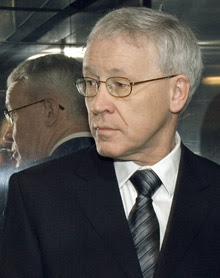
Thursday, May 8, 2008

Part Two: Dr. Ernest Cutz's Recommendations: Thinking Dirty V. Scientific Objectivity When It Comes To Sudden Unexpected Death of Children;

"FURTHERMORE, IT IS MY VIEW THAT RESEARCH SCIENTISTS ARE DISCOURAGED FROM PURSUING BASIC RESEARCH INTO SUDDEN INFANT DEATH SYNDROME SINCE IT REMAINS UNDER A CLOUD OF SUSPICION AND SUBJECT OF CRIMINAL INVESTIGATION."

Dr. ERNEST CUTZ: SUBMISSIONS TO THE GOUDGE INQUIRY;

-------------------------------------------------------------------------------

Dr. Ernest Cutz, a distinguished pathologist at the Hospital for Sick Children in Toronto, has drafted his personal recommendations for the Goudge Inquiry, which have been posted on the Inquiry's Web-site.

Dr. Cutz's views are well worth considering because he has been at the Hospital for several decades and is steeped in all aspects of the Pathology Department -including the Ontario Forensic Pediatric Pathology Unit.

This Blog continues our series on Dr. Cutz's submissions with his thoughts on the need to emphasize research aimed at preventing Sudden Infant Death Syndrome - rather then criminalizing parents and caregivers on the base of unsound sound.

Dr. Cutz addresses this recommendation to three of the systemic factors being explored by the Goudge Commission:

0: What is the approach that best balances the objective that no individual be wrongly accused of child abuse with the objective that children be protected from abuse?

0: What are the relative merits of “thinking dirty” or “thinking truth” or other alternatives? and,

0: How is scientific objectivity best maintained throughout the examination to avoid “tunnel vision” that merely seeks support for an a priori conclusion?


(In an earlier Blog, I recorded Dr. Cutz's disagreement with the controversial "think dirty" protocol released by then Chief Coroner Dr. James Young to all of Ontario's coroner's, pathologists and chiefs of police, on April 10, 1995. I have repeated this post below for the benefit of our readers who did not have the opportunity to peruse it; It ran under the heading: "Think Dirty"; Part One: Two Words At The Heart Of The Inquiry;")

"The (above) objectives can be achieved by the provision of correct pathologic diagnoses based on solid scientific foundations," recommendation begins;

"The acquisition of and advances in medical knowledge are dependent on robust scientific research that constantly evolves and progresses over time," it continues;

"The Inquiry has seen how this evolution in thinking occurs through exposure to the debate and recent changes in attitude with respect to the interpretation of findings relating to Shaken Baby Syndrome.

Similar changes in attitude and thinking have occurred in the areas of Sudden Unexpected Infant Death, Sudden Infant Death Syndrome, and related conditions.

For example, during the 1990s a prevalent, early view was that Sudden Unexpected Infant Death and Sudden Infant Death Syndrome occurred due to “positional asphyxia”, overlaying caused by co-sleeping, or homicide.

These views have not been substantiated by solid scientific evidence.

Now, the prone sleeping position and co-sleeping are recognized as risk factors but are not the actual cause of death in sudden Infant Death Syndrome;

Today we know that Sudden Infant Death Syndrome is a pediatric disease recognized by the World Health Organization as a distinct pediatric medical disease entity.

In addition, Sudden Infant Death Syndrome is not a uniform entity but rather a heterogeneous multifactorial disorder with variable triggering and potentiating factors.

This is as exemplified by the so-called “triple risk model”, i.e. Sudden Infant Death Syndrome occurs as a result of interactions involving (1) a vulnerable infant who possesses some underlining biological abnormality; (2) a critical period of development; and (3) an exogenous stressor such as maternal smoking, mild infection or an unsafe sleeping position.

Current thinking in this area, which reflects recent advances in molecular medicine, indicates that an underlining biological abnormality in large proportion of Sudden Unexpected Infant Deaths and Sudden Infant Death Syndrome cases may, in fact, be due to genetic or molecular disorders (i.e. defects in cardiac or neuronal ion channels, etc.) that are now detectable by modern techniques of molecular pathology.

Notwithstanding these changes, confusion between what are risk factors for Sudden Infant Death Syndrome and what is the actual cause of death in Sudden Infant Death Syndrome persists in certain forensic circles.

Individuals in these circles continue to identify the cause of death in Sudden Infant Death Syndrome cases as being, for example, co-sleeping, which is inaccurate and misleading.

If Sudden Infant Death Syndrome was due to this simple explanation, how could one explain the fact that babies have slept in these situations for many years, but only some die while many do not?

Identifying a baby’s sleep environment as the sole factor responsible for the infant’s death gives only part of the explanation and leads to feelings of guilt and, potentially, to wrongful accusations of parents and caregivers.

Given the importance of accurately identifying and describing cause of death, it is problematic that there is currently very limited or non-existent scientific research on Sudden Unexpected Infant Death and Sudden Infant Death Syndrome;

This is partly due to the fact that the mandate of the Chief Coroner's Office which oversees all pediatric forensic cases, does not include research into medical diseases and because the current legislation and all agreements between the Chief Coroner's Office and the Hospital for Sick Children (including the most recent Ontario Pediatric Forensic Unit agreement)... explicitly forbid the use of tissues for medical research.

Furthermore, it is my view that research scientists are discouraged from pursuing basic research into Sudden Infant Death Syndrome since it remains under a cloud of suspicion and subject of criminal investigation.

To overcome the obstacles surrounding the use of tissues for research individual parental consent can be obtained or a legislative change, similar to that of the State of California, which authorizes and mandates research into Sudden Unexpected Infant Death and Sudden Infant Death Syndrome could be made.

Consequently an “Ontario Center for the study of Sudden Infant Death Syndrome/Sudden Unexpected Infant Death, based on the San Diego Sudden Infant Death Syndrome/Sudden Unexpected Infant Death Research Project database model, should be established at HSC with collaboration projects that include other Ontario pediatric academic centers that perform autopsies on Sudden Infant Death Syndrome/ Sudden Unexpected Infant Death cases.

Funding for the Center should be provided by the Ministry of Long Term Health;

Further, to encourage research in Sudden Unexpected Infant Death and Sudden Infant Death Syndrome, targeted, competitive, peer-reviewed research grants into Sudden Unexpected Infant Death and Sudden Infant Death Syndrome in a form of “Request for Application” should be issued by the Government of Ontario and by the Federal Government through Canadian Institute of Health Research/Institute of Child Health.

The resulting research is important because it would define protocols and methods for molecular diagnoses of disorders underlying Sudden Unexpected Infant Death and Sudden Infant Death Syndrome (for example, the specific channelopaties affecting the cardiovascular or nervous systems).

These new diagnostic tests could provide objective scientific evidence that would be exculpatory in contentious cases of infant death.

The tests would be analogous to DNA tests used currently in the criminal justice system.

When, if at all, should the terms “Sudden Infant Death Sndrome" and "Sudden Unexpected Infant Death" be used in a post mortem report?

These terms are well established and widely accepted in Pediatric clinical and pathology practice.

There is no compelling reason to not to use them in a post-mortem report.

The definition and terminology related to Sudden Infant Death Syndrome and Sudden Unexpected Infant Death has been the subject of a recent review and update by an international panel of experts comprised of paediatric and forensic pathologists with extensive experience in Sudden Unexpected Infant Death Syndrome;

The panel also included pediatricians and an epidemiologist.

It is important to use the correct terminology with respect to Sudden Unexpected Infant Death and Sudden Infant Death Syndrome so that accurate statistics are generated to monitor the incidence and trends of Sudden Unexpected Infant Death and Sudden Infant Death Syndrome as well as to ensure that well-defined groups of cases are used in research studies.

My recommendation is to adopt the use the criteria and definitions outlined in the above publication in Ontario.

c) With advances in Sudden Infant Death Syndrome research it will be possible in the future to render specific pathological diagnoses which will have the effect of removing ambiguity as to the cause and manner of death.

This will reduce the number of cases that today are designated as “undetermined” or “unascertained”.

---------------------------------------------------------------------------------

Here is the earlier Blog on which articulates Dr. Cutz's disagreement with the controversial "think dirty" protocol released by then Chief Coroner Dr. James Young to all of Ontario's coroner's, pathologists and chiefs of police, on April 10, 1995:

"UNFORTUNATELY, IN THIS DAY AND AGE, CHILD ABUSE IS A REAL ISSUE, AND IT IS EXTREMELY IMPORTANT THAT ALL MEMBERS OF THE INVESTIGATIVE TEAM THINK DIRTY."

FROM PROTOCOL ISSUED BY DR. JAMES YOUNG TO ALL CORONERS, PATHOLOGISTS, AND CHIEFS OF POLICE IN ONTARIO ON APRIL 10, 1995.

Two words, containing only three syllables lie at the heart of the Goudge Inquiry: "Think Dirty."

They are contained in a protocol issued by former chief coroner Dr. James Young to all coroners, pathologists, and chiefs of police in Ontario on April 10, 1995.

The policy was ultimately dropped by Dr. Barry McLellan, Dr. Young's successor, after he became Chief Coroner in April, 2004;

The protocol read:

"Unfortunately, in this day and age, child abuse is a real issue, and it is extremely important that all members of the investigative team "Think Dirty."

They must actively investigate each case as potential child abuse, and not come to a premature conclusion regarding the cause and manner of death until the complete investigation is finished, and all members of the team are satisfied with the conclusion."

During the nine years the protocol remained in effect, these words communicated through "think dirty" slides that were used in presentations to coroners throughout the province and other members of the death investigation teams.

The obvious danger of the new policy was that it could be interpreted as requiring local coroners and pathologists to act like police officers instead of as impartial doctors and scientists.

There was also a risk that it could encourage pathologists and prosecutors to feel that they were required to search for criminality behind every death of a child.

A risk that it could turn most innocent death of a child into a murder with all of the horrific consequences, to loving parents, families and caregivers that we have seen thus far at the Goudge Inquiry - especially since Dr. Young's new policy was introduced at a time of heightened public fear over child abuse and pressure on the authorities to do something about it.

At the very least, this Bloggist wonders if the new policy may have validated Dr. Charles Smith's suspicious approach to his work in his own mind - when he still had years of work to accomplish.

In fact, Dr. Young testified that he got the idea from a cop, adopted it, and used it in his own presentations.

Dr. Young told the Inquiry that the "Think Dirty" approach was formulated during a period of world-wide concern "that pediatric deaths weren't being properly investigated."

"(We) were very aware and there were discussions, again, at any forensic meeting about the difficulties in investigating pediatric deaths, and the fact that they -- children died of different things than adults did; and the very difficult job of sorting out metabolic disorders, SIDS, cases of Shaken Baby, cases of
subtle -- suffocation, of subtle child abuse, and dating of injuries, you know, to make sure that what was attributed to the death was -- was relevant," he told Commissioner Goudge.

Young testified that the new protocol was simply intended to remind people to look out for signs of criminality during the course of their investigations.-

Young stressed that, " It was not -- absolutely not, and it was never contemplated or discussed at any meeting I ever attended where the phrase was used, to mean that make cases -- make cases criminal matters when they aren't.

But he agreed with Commission Counsel Mark Sandler that, "with the benefit of -- of what we've learned since, it might be advisable for the Chief Coroner's Office to -- to develop another phrase to communicate the same sentiment."

The new policy troubled Dr. Ernest Cutz, a distinguished pathologist and researcher at the Hospital for Sick Children.

Dr. Cutz is one of the world's leading authorities on the Sudden Infant Death Syndrome (SIDS);

Cutz told the Inquiry he found the concept of "thinking dirty" inappropriate because he interpreted as saying, "you are implying guilt up front, and, you know, until proven otherwise."

"I use the balanced approach," he said. "Looking at the facts and evidence, you know, regardless of what the motto is."

Cutz said that it made sense to be alert to the possibility of criminality in those relatively few cases where there had been a history with law enforcement or involvement with a Children's Aid Society.

However, he objected to the protocol because, "too heavy on the side of the forensic" as contrasted with the function of "Looking (at) what is the cause of death and...what what are the diseases and mechanism underlying it."

Doctor Cutz noted that he had voiced his objections to the protocol to the late Dr. Larry Becker, Head of the Pathology Department, but was not aware if Dr. Becker passed his objections on to the Chief Coroner's Office.

He said, however, that he had seen reference in correspondence to a meeting at ended by senior officials of the Chief Coroners Office, including Dr. Bernard Chiasson, at which Dr. Becker raised his own concerns about the policy.

On January 21, 1997, Dr. Cutz wrote a letter to Dr. Chiasson at the Chief Coroner's Office requesting a meeting to discuss information he had received from Dr. Becker that the Coroner's office was considering removing himself and a colleague from the rotation for performing medico-legal autopsies at the hospital.

The transcript of Dr. Cutz's testimony on this subject reads as follows:

MS. JENNIFER MCALEER: (Commission Counsel); And what -- what else did Dr. Becker tell you?

DR. ERNEST CUTZ: Well, you know, he said that, you know, if -- if I want any -- any sort of explanation as to the reasons and/or, you know, what -- what -- how can one mediate the situation, I have to -- to see Dr. Chiasson.

MS. JENNIFER MCALEER: And did you, in fact, meet with Dr. Chiasson --

DR. ERNEST CUTZ: Yes, I did.

MS. JENNIFER MCALEER: -- to discuss this issue?

DR. ERNEST CUTZ: Yeah.

MS. JENNIFER MCALEER: And what -- what was your recollection of those discussions?

DR. ERNEST CUTZ: Well, I sort of outline in my letter here that, you know, the -- my experience at doing these cases at the Hospital for Sick Children and
outlining my, you know, experience in the different kinds of conditions which include, you know, natural deaths as well as -- as well as cases of child maltreatment or suspected homicide. And I bring to his attention one (1)
particular illustrated case to show that I have the same level of concern and erudition in carrying out pathology investigations, and I give -- give him example of it.

MS. JENNIFER MCALEER: Well, did Dr. Chiasson explain to you why -- well, first of all, did he verify what Dr. Becker had told you, that there was a
prospect that you and Dr. Wilson would be removed from the roster doing medicolegal work? Did he tell you that was something they were considering?

DR. ERNEST CUTZ: Well, when I asked for the meeting I said, This is what I'd like to discuss with him. So he didn't sort of say, you know, You're going to
be removed. But, you know, we were discussing the -- the situation.

MS. JENNIFER MCALEER: And what was your understanding as a result of your letter and your meeting with Dr. Chiasson? Did you continue to perform
medicolegal autopsies?

DR. ERNEST CUTZ: Yes, I did.

MS. JENNIFER MCALEER: And was your performance of those medicolegal autopsies restricted in any way?

DR. ERNEST CUTZ: No, it wasn't restricted. I continued, as before, doing the non- homicide cases. You know, when I asked as to what the reasons were for removing me, it was sort of very vague. Something saying I was soft on crime, and I didn't collab-- or cooperate with the police which came to me as a 1 total surprise.

MS. JENNIFER MCALEER: Okay. So who said you were soft on crime?

DR. ERNEST CUTZ: Dr. Chiasson. Or there was a perception of.

MS. JENNIFER MCALEER: And do you know what the basis of that perception was?

DR. ERNEST CUTZ: He didn't explain, didn't give examples.

MS. JENNIFER MCALEER: And -- and the second reason was because you had difficulty communicating with the police?

DR. ERNEST CUTZ: No, that I did not cooperate with the police, which came as a total surprise, as I don't recall any incident. I was most cooperative at all instances with the police. I had no reason to -- so it came as a total surprise to me.

MS. JENNIFER MCALEER: And did Dr. Chiasson explain to you what the basis of that concern was --

DR. ERNEST CUTZ: He said he has -- he has no specific examples.

MS. JENNIFER MCALEER: Okay. Did you discuss this issue with Dr. Smith?

DR. ERNEST CUTZ: No.

MS. JENNIFER MCALEER: And after -- after this point in time, Dr. Cutz, you did continue to do medicolegal autopsies?

DR. ERNEST CUTZ: That's right. I thought the meeting with Dr. Chiasson was useful because we cleared the air, you know, this -- this -- to see what
the problems were. And, you know, actually I -- I -- part of the letter was -- you know, I gave him the breakdown of all the cases I did in the past five (5)
years, which was two hundred, twenty-five (225) cases, and -- and show him that, you know, it -- major portion were pediatric disease, which is no way anybody would have diagnosis outside of a pediatric centre. Okay. So -- so we -- we rendered a very valuable service to -- to making the right diagnosis for
the families. Okay. And then I show him the percentage of cases which went to inquests, which went to -- okay, which -- in every instance I was involved, a correct diagnosis was made, the crime was pursued, the crime was prosecuted and the person was jailed for -- for the crime.

For his part, Dr. Chaisson testified at the Inquiry that he had concerns about Dr. Cutz's and his colleague's "attitude over forensics."

Pressed by Commissioner Goudge over what he meant by their "attitude over forensics" Dr. Chiasson replied:

"From a pediatric pathology perspective, they were not insignificant, and -- and it wasn't simply the number of -- of cases as -- as much as my perception that when it came to cases they -- they weren't really as apprised at looking at injuries and the potential significance of -- of injuries as, was my view of, Dr. Smith, who was clearly interested in pediatric forensic pathology and -- and, you know, whose focus was in that - - that area."

The good news is that Dr. Barry McLellan put the "think dirty" protocol to rest when he became chief Coroner.

"(My) own teaching in recent years has been that it's important to keep an open mind. But, I can tell you that "think dirty" slides and the phrase "think dirty" was removed from many of the standard presentations that we were giving to members of the death investigation team".

"When I redid the presentation that the coroner's office gives as part of the major case management course, that was taken out of the course," McLellan explained.

"So, I can't say that there has been a specific effort to send out a communication saying, Don't think dirty, but the approach has been different through our educational courses, through our new courses for coroners, and the emphasis is to keep an open mind. And, as such, you know, we'll end up with the best quality of death investigation."

I will give the last word for this posting to Dr. Michael Pollanen, Ontario's Chief Forensic Pathologist, who told the Ontario Court of Appeal in the Mullins-Johnson case that new guidelines effectively tell Ontario's pathologists and coroners: "Don't think dirty; Think objectively. Think truth."


Harold Levy...hlevy15@gmail.com;